Showing posts with label ECOO. Show all posts

Sunday, 11 November 2018

ECOO BIT18: Reductionism and Ignorance in Educational Technology

I've been ruminating over the latest ECOO conference for a couple of days now.  Strangely, this technology conference began and ended for me with others suggesting that digital technology is a dangerous waste of time and that we should step away from it in our classrooms.  Looking at my ECOO reflections over the past eight years I'm seeing a clear shift from optimism that we will get a handle on the digital revolution to caution and now a determined luddite push to walk away from it entirely.  The now obviously deleterious effects of the attention economy seem to have produced an unprecedented negativity around educational digital technology in 2018, and ECOO book-ended it for me.


These aren't toys, they're tools!
Calling them toys says a lot
about how YOU use them.
I opened the conference bringing armfuls of emerging technology to Minds on Media.  I've long tried to avoid the 'here's-a-turnkey-tech-tool' presentation because it usually comes with corporate compromises.  That split focus in a lot of 'edtech' means much of it isn't really so much about learning as it is about data collection or closed ecosystems that drive profitability.  Besides, I've long advocated for teachers who push technology to actually understand the technology they are requiring students to use.  That kind of technical fluency means you don't get sucked into absurd situations like giving away student data for a 'free' service or driving students into expensive, proprietary, closed technology designed to make a profit when it inevitably breaks.

As in previous ECOO MoM demonstrations, I brought a variety of tech from different manufacturers and simply encouraged educators to become aware of an emerging new medium, in this case virtual reality.  I have no agenda and nothing to sell.  I get nothing for showing the technology and don't benefit from anyone buying one thing or another.  This platform agnosticism means I can talk about the tech without prejudice or hidden agenda.  I was happy to be attending another MoM day and looking forward to showing people this emerging medium.

At least I was until Peter went around the room having the stations introduce themselves.  It all went well until we got stuck on one station that repeatedly described what everyone else was doing in the room as 'playing with toys' while describing their own noble pursuit as being 'real' and technology free (though without ICT infrastructure they couldn't have done what they were doing at all).  This attitude isn't new.  A surprising number of educators refuse to leverage digital tools to make their teaching more effective, but to hear someone shit can what everyone else is doing at this edtech conference was shocking.  There was no opportunity to call her out on it then, but I can now:


Too bad we don't teach it like it matters.  Critical Infrastructure.  Jobs in ICT.

This Minds on Media presenter monopolized the microphone to suggest anything digital was essentially meaningless (a toy) and that when people were ready to stop playing with their toys here she was ready to show them something real.  As a technician who trains engineers and technicians to run the world we live in, this made me angry, especially considering it was done at an educational technology conference that should be advocating for technical fluency across our education system in order to understand and effectively participate in the world we live in.  This didn't put me in a great frame of mind to start the conference, but I soldiered on.

Cybersecurity in our classrooms.
I did two other presentations during the conference.  Both were presenting on platform agnostic technology opportunities that would teach students and teachers about a critical infrastructure (cybersecurity) and addressing our collective ignorance of 3d media.  In both cases I was advocating for not-for-profit digitally powerful learning opportunities that would enable Ontario educators and students to leverage the digital TOOLS at their disposal.  This is the opposite of the reductive and now recessive thinking I kept experiencing.


3d media in marketing & learning
There is now a two pronged attack on digital technology in the classroom.  The corrosive ra-ra edtech crowd seems increasingly determined to brand themselves behind proprietary corporate systems designed to deliver technology with no understanding required (and with lots of hidden profit centres), while the increasingly loud anti-tech crowd rises up against them, advocating that we receded from technology because it's a distraction and a waste of time.  Both sides seem determined to ignore a simple fact: we're supposed to be TEACHING students how this all works, not branding them or hiding them in a cave.  What edtech there is seems determined to follow consumerism into the most simplistic and ignorant relationship with digital tools possible.  In 2018 you can get branded or abstain from tech entirely and then feel mighty righteous about it.  Is anyone left just, ya know, teaching it any more?

There are technicians and engineers all around the world who provide digital infrastructure that we all depend on.  These people understand this technology and are much less likely to act like the sheeple who stare slack-jawed at their phones for hours on end.  To digitally literate people this technology is a powerful tool that is enabling us to do everything from gene editing diseases and linking disparate areas of study to creating more efficient critical utility systems.  Digital technology has become a vital part of the infrastructure around us, yet the vast majority of us, including many teachers, are completely ignorant of it.

For some baffling reason we seem intent on ignoring the actual teaching and understanding of these powerful digital technologies in favour of using them with the same perverse ignorance, and now fear, as the general public.  What is our role as educators in terms of technology if we aren't producing technically competent graduates who can successfully navigate and participate in the digital world around them?  By the way, our ignorance of digital technologies is staggeringly bad. If you haven't followed any of the supporting links in this so far, follow that one.


The closing keynote ended the conference by banging the same drum as that 'when you're done playing with these toys come and do something real' comment that kicked it off.  This time one of the engineers of the attention economy that is causing so much damage earnestly suggested that we need to recede from digital activity in order to preserve not just learning but our very humanity!  Rather than acknowledge the potential for digital technology to enhance learning, his entire talk was aimed at retreating from it.

This particular group of Silicon Valley architects now wants to save the consumers they got wealthy commodifying.  I get the impulse.  If I had a bank account full of blood money like that I'd feel bad about it too, but as a means of resolving this technological adolescence we're all living in, it won't work - they can't see past the mess they've made and they certainly aren't approaching it from an educator's mindset - but then neither are the educators.

There was not a single example of how digital technology might amplify or improve learning outcomes - a decidedly odd way to wrap up an edtech conference.  Our speaker went on to encourage the removal of personal technology from the hands of students and get back to a pre-digital time when everything was better.  As a digital immigrant I know that there was no such time.  If you think students weren't distracted in class in the 1980s you weren't a student in the 1980s.  These Silicon Valley wolves can't see people as anything other than the consumer sheep they used to prey on.  I'd hope that teachers see much more potential in their students than these attention peddlars do, but I'm starting to think that vapid consumerism is the only relationship we'll ever have with digital technology.


Invent a crisis and then offer a solution
to it. American business in action.
From an educational perspective digital technology offers a powerful tool for learning, but it doesn't work if the teachers, administrators and government driving it are ignorant of how it works.  If the teachers and parents can't manage the tech, then we can hardly expect students to.  I'd hope that ECOO and other curriculum support organizations would understand that and advocate for understanding and the development of broader technical fluency rather than encouraging willful ignorance.

Hiding digital tools and telling people to ignore the way the world works is a poor way to run an educational system, unless your goal is to produce ignorant consumers.  Instead of running away from the digital revolution that is driving innovation and increasingly managing the infrastructure around us, we should be teaching self regulation of personal technology and comprehension of how it all works in order to generate a genuine understanding the world we're creating.  Teaching effective digital fluency means we're less likely to be taken by the consumerist wolves and are able to effectively use digital tools rather than being used by them.

I'm all for being challenged in my thinking and often go out of my way to try on difficult ideas just to see how they fit.  I've weathered Nick Carr's The Shallows and watched society wobbling under the weight of the robber barons of the attention economy.  Now I've attended an educational technology conference that began and ended with an ignorant and frankly dangerous dismissal of digital technology as a toy for idiots that should just be taken away.  Meanwhile digital infrastructure made that very event happen.  It fed the people who attended it and provided them with the resources they needed to travel to it, yet it isn't worthy of teaching in our schools?  And teaching it is precisely the problem.  We pick up edtech and apply it without teaching it to staff or students, and now we're shocked that it isn't working well?  Sometimes I wonder how educationally aware our education system is.

I've been banging my head against this call for technology fluency for so long that I can't help but feel like this dismissal of technology both by participants and the conference itself in that closing keynote is a betrayal of what I thought were shared values.

I first attended ECOO in 2010.  I joined Twitter, began meeting other technology interested teachers, started blogging and became part of a vibrant online PLN as a result of attending.  Over the years ECOO has given me ideas and offered me a platform to present my own.  What I'd always hoped was an evolution towards greater understanding of the digital revolution we are all living through has faltered now.  We don't want to learn how the world we've built works.  Pro-edtech educators want to keep the curtain firmly in place and leave the understanding and management of technology to others while the increasingly noisy anti-tech crowd are advocating receding from it entirely.  Our only contact with digital technology is through the lens of vapid consumerism and the only response we can have to that other than participating is to run and hide.

I'm frustrated, tired and losing hope in our ability to manage an understanding of the digital revolution that surrounds us.  Education seems particularly incapable of seeing their way out of this digital hole we've dug for ourselves.  The answer has always been to teach technological fluency, but ironically, I'm finding it harder and harder to find an educator who wants to.

Saturday, 7 November 2015

ECOO15 1: Making Frustrations

Back from ECOO15 and, as usually, my head is full.  After a rough year of politics around Ontario Education it's nice to attend a conference made by teachers for teachers about... teaching!  Not a politician in sight, though attendance was wounded at this volunteer run conference by them.


ECOO may have been the site
of the first ever 3d photobomb!
I spent Wednesday with my robotics teacher showing people how to make 3d models using a Structure Sensor - a 3d laser scanner that is cheaper than the ipad it connects to.  It's one of those game changing bits of engineering that suddenly opens up the complex world of 3d modelling to pretty much anyone.

We put the scanner into hundreds of hands and Katy was on there to show them how our 3d printers took those models and made them tangible.  For many who have heard of the maker movement, 3d modelling and printing but had never seen it in action, it was a seminal moment.  I'm hoping it also means people start considering how we can move toward a maker mentality, because it's about as far removed from what we do in formal education as you can get.


Buddha Tim by tking on Sketchfab - @banana29's first 3d model, nicely done!

The next day, the opening keynote by Silvia Martinez was an overview of makerspaces and how they create a genuine learning environment.  Unfortunately, and like so many other educational books capitalizing on a trend, the keynote sold the concept of Making based on the fantastic contraptions shown at world class Maker Faires.  This is akin to saying everyone should play soccer like this, and then showing them the World Cup.


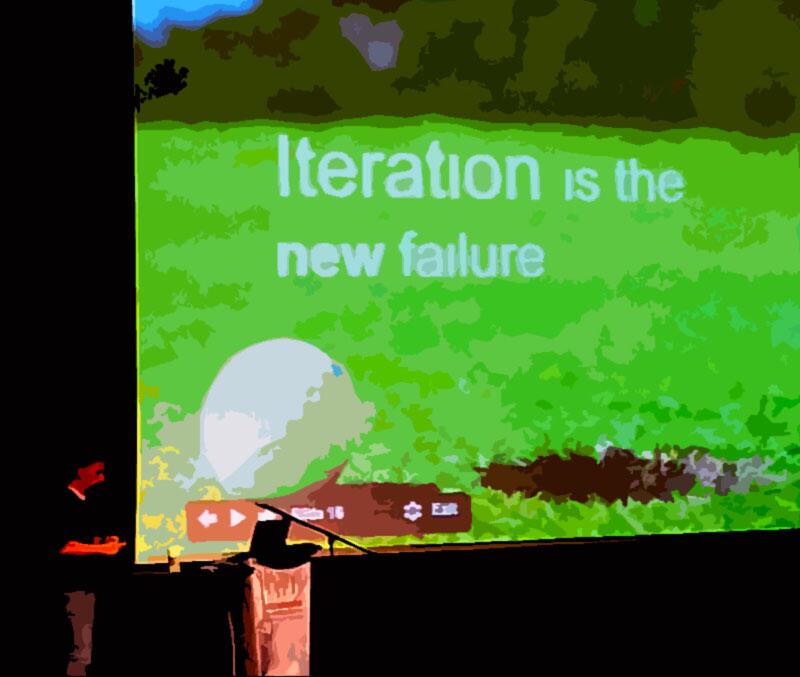
Education teaches students to expect success if they do what
they're told.  Engineering demands mastery, creativity and
resilience; reality is a demanding teacher.
As I said in the conference, making involves frustration and failure.  More often than not it results in a prototype that doesn't work.  I find that the grade nine students I am introducing this process to are greatly aggravated by the inflexible demands of reality.  They are quick to blame and even quicker to give up.  The most common comment is, "just tell me how to do it."  The sub-text is, 'I've learned to do what I'm told in order to show I'm learning.  Why aren't you doing that?'

Students are used to the education system jigging things to ensure success.  The process of invention doesn't do this and reality has no interest in modifying how it works so that students can feel good about their effort.  I don't teach 'I tried real hard' or 'guaranteed success'.  What I do teach is how computers and electronics work, and I expect students to develop skills sufficient to be able to work this these inflexible devices.  Once the mastery is managed, play can begin.  Shakespeare wasn't writing plays while he was still learning to write.


This was posted by Bre Pettis way back in 2009.
This kind of radical engagement isn't the managed

and directed engagement teachers are looking for.

If you want to build with electronics and digital technology (which are what are empowering much of the maker movement), you need to have something more than boundless enthusiasm.  Using digital technology isn't effortless despite the marketing.  There is mastery learning required before you are cranking out 3d prints of gears and building your own robot out of garbage.  Many of the people creating the things you see at a maker faire are trained engineers.  I'll bet that the kids shown at these Maker Faires are relying on some engineering expertise at home as well.  It's nice to see their creativity, but it isn't the only thing, or even the main thing, that is enabling these builds.  It's like watching the child of a scientist presenting a surprisingly fantastic science fair project.

My concern is that Ontario Education will rush into this exciting and trendy fad, buying stacks of Arduinos, Raspberry Pis and 3d printers which will then gather dust when teachers realize that this equipment isn't Lego, it doesn't build itself with enthusiasm.  Your code has to be flawless and your wiring exact for even basic things to happen, and even when you've done everything right it might not work anyway because the LED you used happens to be defective.  You can't simply lower expectations and then see results.  These are complex systems being created.

I struggle each year to get high school students to develop resiliency and master skills in electronics and digital technology so I would ABSOLUTELY LOVE to see the maker movement and its attendant philosophies infect Ontario's classrooms.  The kids are more than capable of developing this resiliency and expertise, but I suspect that the vast majority of educators (many of which I help to plug in their desktops each day) aren't.


The maker movement pushes back against vapid consumerism.  I'm a big fan of intimately knowing the machines I use.  The motorcycle I ride I restored after finding it in a field, the computers I use I build from scratch, but it took me years to build my mechanical and digital skills to this level.  Most people aren't that patient, or curious.  Most people want immediate satisfaction, which is why they drive their cookie cutter SUVs to shopping malls.

Most teachers are no different.  If it isn't their curriculum, it's of no interest. Trying to push maker tools into that kind of classroom is a disaster waiting to happen.  If you've never used Linux, let alone installed an OS onto an SD card, what makes you think you will make magical use of Raspberry Pis?


Saturday, 1 November 2014

ECOO 2014

ECOO 2014 approaches this week.  Once again I get to step away from the classroom for a couple of days and see the forest for the trees.  Instead of day to day/trying to make things work, I get a couple of days of strategic space to consider how things might be.

The ECOO conference is all about possibilities for me.  I know a lot of people go there to learn how technology works, and that's great, but for me it has always been about possibilities.

In school we're all in the trenches trying to make things work.  For tech-savvy teachers this can be a very frustrating experience.  We're not only battling the complications of getting complex information technology to function in the rough and tumble world of the classroom, we're also battling the negativity of colleagues who aren't buying in to the possibilities offered by this technology.

ECOO is a chance to get away from all that static and consider possibilities in a positive light.  The trick for me has always been not to get mired down in how-to sessions.  I like the big thinking/strategic talks.  The keynotes usually do this well, but it isn't always possible to find that kind of opportunity in the breakout sessions because a big part of ECOO is assisting new edtech aficionados into the fold.  When I can't find an edtech-philosophy or future-tech session I'm just as happy to bump into someone and have an unscripted chat.  You won't find a greater edtech braintrust anywhere than you will at ECOO.

What will I get out of ECOO this week?  Inspiration, I hope, and some idea of what's coming, so I can be ready for it before it gets here.

Tuesday, 5 November 2013

ECOO13: soaking in the future

When you see this in the morning, it's hard not to be inspired!
ECOO13 was bigger better, and better located that any of the ECOOs I've previously attended.  If you believe in ley lines then putting ECOO on the edge of a natural wonder captured some wonderfully thunderous energy.

I'm told that back in the day ECOO was enormous, much bigger, but those early immigrants were following a huge first wave of personal computing.  Since then computers have insinuated themselves into so many aspects of life that they often feel like just more work.

Informational democracy courtesy of computer networking on social media is a slow burn and is still building.  Instead of feeling disenfranchised by machines more and more people are recognizing them as an enabling influence, allowing individuals a voice where only mainstream media and large organizations once broadcast their influence.  ECOO has been building on this new wave of social media democratization every year since I've been attending.  It's always in peril of being spun by the powers that be, but I still hold out hope that places like ECOO will allow people to realize how powerful they are in our new, flattened mediascape.


How to think in a new era? ECOO asking some big questions with Jaime Casap.
On a personal level I've been finding it difficult to engage with educational technology in the past few months.  Between a new infatuation and a year of difficult technology events (GAFE summit. Pearson Social Media Event), I've been finding the business of education to be politically charged and inexplicably restrictive.  The cavalier and simplistic manner in which technology is rolled out frustrates me.  In a difficult year I've been finding personal growth in other areas.

I'd signed up for an ECOO presentation without any really clear sense of direction. The past two years were pretty easy, I knew what I wanted to say and went after it, but after developing a digital skills continuum around pedagogy rather than cost cutting, and instead watching monopolistic corporate buy in, I'm not feeling overly engaged.  Sometimes rolling the rock up the hill just gets too heavy.


They ain't kiddin!
It was with this sense of unease that I went to ECOO, but quickly found my happy place again.  From the conversations I had with intelligent, interrogative educators to the fantastically chosen keynotes that went straight after the larger questions around the information revolution we are living through, ECOO does indeed tackle tough issues.

I really enjoyed all three keynotes and they didn't shy away from asking what education isn't doing to help our students get ready for a world most of us have no idea is coming.  

Wired caught up with our ECOO keynotes in their latest issue. Coming back to the 19th Century, factory designed education system hasn't been easy after soaking in the future for a few days.  ECOO is what education could be like if there wasn't all the friction from dinosaurs.

If nothing else, ECOO reminded me that change is inevitable and not to give in to the pessimism of bureaucratic thinking.  Being an agent of change is difficult.  There are a lot of entrenched educational interests that have no interest in adapting to change.  After being at ECOO for a few days surrounded by educators who have already made steps into the future I realize I'm not alone in this, and I'm on the right side of history.

Friday, 5 July 2013

Coding Is A Hands-on Skill

I'm frustrated at how computer science seems to own coding.  In Ontario it is now an orphaned subject unto itself.  There is no way someone without a degree in computer science can teach coding, though coding isn't computer science any more than auto mechanics is theoretical physics.

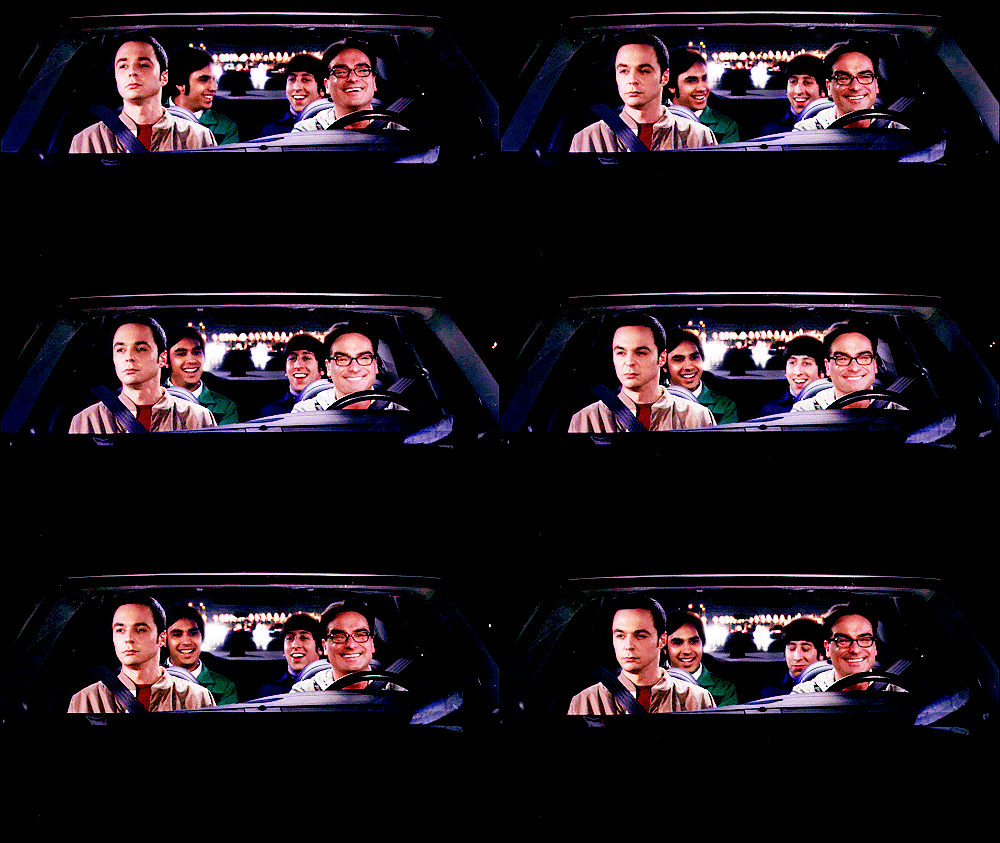
This reminds me of the Big Bang Theory when Leonard's car breaks down.  He asks, "does anyone here know how internal combustion engines work?" and all the the scientists in the car laugh and nod.  He then asks, "can anyone here fix a car?" And all the heads go down and they say no.

Computer science is the theoretical end of a spectrum of coding that goes from hands-on hacking through professional coding and into academic research.  That only math quants who were looking for a second teachable pretty much like their first can teach it greatly limits its appeal to the general population.

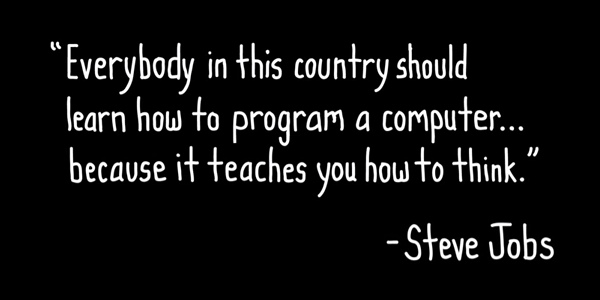
Code.org agrees with me, as does Steve Jobs, as does Codeacademy, Khan Academy and many other online groups.  These organizations are proliferating because we are not offering our students meaningful access to computer programming.

If we're going to treat coding (as a part of digital fluency in general) like other basic skills (literacy, numeracy), then we need to free up coding from the bizarre limitations placed upon it by the Ministry of Education and computer scientists.

Can you imagine if all the autoshop teachers had to be theoretical physicists or engineers before they could apply that knowledge to repairing vehicles?  It's a ridiculous idea, yet that is precisely what we are doing with coding in Ontario schools.  There are many ways a teacher could approach computer programming, limiting it to an extreme, theoretical end of the spectrum doesn't respect the variety of people who get into coding, and it doesn't offer students that variety in the classroom.  Coding isn't a theoretically biased branch of knowledge, in fact I'd argue that coding has much more in common with stochastic technical skills.

We are killing a vital 21st Century fluency stone dead with arbitrary limitations.  Coding should be a technology course, it should be hands on, and it should work hand in hand with engineering (because that is what it is and what it does).  That it is artificially separated into a null space between mathematics and computer studies helps no one other than old school computer scientists, and there aren't many of them.  The irony is that many of the math teachers with comp-sci as a teachable don't want to teach it because they never kept up with it other than as a theoretical/academic course of study in university; they don't love coding, it was simply an easy way to extend their mathematical degree work.

Computer science, like theoretical physics, is a vital subject, but it's highly specialized and how we teach it should recognize that.  Coding is a skill anyone can learn, and should.

Saturday, 16 March 2013

Digital House of Mirrors

The digital house of mirrors we all live in.
It's early days, ECOO isn't until next October, and I'm reticent to say what I'm going to present on months ahead of time.  The digital learning landscape can change quite significantly in eight months.

My previous ECOO presentations have followed an interesting arc, from philosophy to specific action.  My first go with Dancing in the Datasphere talked about fundamental changes happening to us as we transition to a data driven world.  The mini-lab followed a year later, the idea there being that we diversify technology in order to develop true digital fluency in students.  Last year the final step was to work toward a digital skills continuum.  Only by integrating a developing skill set into curriculum will we begin producing students who have the technical skills necessary to survive and thrive in the digital age.

That trajectory, no doubt pushed by my transition to computer studies from English, had me looking at developing greater student familiarity with computing tools because I see a great deal of ignorance in the 'digital natives' I'm teaching every day, but that focus was technically biased.

For those of us who have lived as adults through the last twenty years of technological revolution, we sometimes forget where we've come from because we're so engrossed with where we are.  For ECOO this time round I'm thinking about what technology is demanding of us as people. Our selves are being stretched and amplified in ways they never have before.  Nick Carr's The Shallows puts us on a pretty stark trajectory towards idiocy with what is happening to us.  The digitization of the self stretches us flat, making continuity of thought impossible and turning us all into distracted, simplistic cogs in a consumerist machine designed to turn us all into the lowest common denominator; none of us any smarter than our smartphones.

With the advent of social media we suddenly find ourselves existing in multiple places at once.  Our self is no longer geographically focused.  Our influence spreads across the internet. We are able to affect change in people and places formerly unconnected to us.  The people we communicate with (albeit in a minimalist way) are far flung and many.  The people we spend deep, attentive time with are fewer and diminished.  

Our digital selves are perceived in many different ways.  The aforementioned digital native tends to not differentiate between online and real world action.  They often consider social media as just another conversation they are having, and are then shocked when something said publicly is responded to by the public.  The generation of kids (our students) growing up in this ongoing social experiment never look at privacy settings, have little idea of the differences between social networks and tend to broadcast online what is on their minds in much the same way they would while hanging out with friends.  The veil between the physical and the digital, between public and private is all but non existent to them.  


Digital Footprints & Always On Teacher Faces
A more professional approach to managing the online self is to adopt marketing theory and develop your online brand.  Companies and celebrities approach social media in this manner, often using marketing firms to manage and run their social media presence.  I can't help but think that this lack of genuine presence games the system and ultimately fails.  It's exhausting to maintain if  you can't hire marketing monkeys to run it for you, and ultimately, it's fake.  I'd much rather read my favourite author's tweets from his own fingers than follow what someone trying to sell me something thinks I should be seeing.  Many teachers fall into this trap when tentatively stepping into online presences.  Spending your weeknights and weekends being mister or missus Teacher is nothing more than working all the time, forever.


The Cult of Done
If there is a positive future to a digitally enhanced self I'd hope it is through a genuine sense of self expression.  We should be aware of what the tools are and how they work, and then we should use them to empower our access to information, our ability to mine deeply into details, to collaborate and develop community, to share our own creativity, interests and sense of discovery.  The technology should not only allow us to do these things, it should be pushing us to maximize our effectiveness as thinkers and doers.  Any technology that produces distracted idiots will doom the people using it.  Evolution should still be eliminating the irrelevant, even in the digital realm.

It's early days in this sea change of how we deal with a digitally enhanced self.  In the future the hybrid intelligence of a digitized human will evolve toward a higher order of effectiveness.  Those made useless by digital tools will, much like those weakened by an inability to read, become marginalized.  Those able to harness information literacy will enjoy those advantages.  Those who ignore it will find themselves increasingly unable to compete.

What that effective digital self looks like in students, in teachers, in people in general is where I'm currently thinking about pushing my research this year. How we adapt to these changes now will establish effective habits as the technology rapidly spins out of its infancy and into maturity.  There is no better time to consider what a digitally enhanced human being should look like than now, when we're in the process of inventing the very idea.

The idea of Web3.0, or intelligent/self organizing information suggests that the future of digitized humanity will inherently push toward greater effectiveness.  The opportunity to be passive or stupid in a digital context will actually work against what the data wants to do for you; you'll learn in spite of yourself, you'll know what you need to know when you need to know it - the data itself will ensure this.  It would be interesting to show the evolution of digital humanity over the past three decades, and where it might be going in the next twenty years.

The era of stupid/passive information is ending. The people that it has created will have to adapt to technology that demands more of them, or risk being made irrelevant by it.

Sunday, 28 October 2012

Enhanced Self Awareness

At ECOO last year, digital footprints were the focus of many sessions.  The concern revolved around students (and teachers) showing anything of themselves online.  The fear was clear and present, as was the suggestion that we MUST craft a meaningful online presence.  Many were surprised at this year's conference when our keynote speaker talked about how digitization has gone beyond self presentation and become interactive as a means of self improvement.  Tech doesn't want to be passive, it wants to interact with us, become a part of us!


At the Educational Computing Organization of Ontario's conference this week we had Nora Young from CBC Spark talking about how digitization and the proliferation of data is creating a kind of self awareness that is entirely new.  She used examples of bio-metric tools and productivity time assessment software to present examples of this digital mirror.

This is a world that our students are immersed in 18 out of every 24 hours (when school is in session) - and it leaks into classrooms constantly on smartphones.  Trying to address that tide by telliing students to bring their own devices, or go on generic, years behind the times school computers is one of the many places you can see education failing.

Words like relevance and engagement are thrown around in panic.  People start flipping class rooms and attempting to engage students by offering the same un-directed over empowerment that kids receive through digital devices; that's an arms race that no one wins.  The resulting habitual usage at best offers minimum educational gains, at worst it actually impedes student abilities in other areas.  If you've ever watched a digital serf mindlessly copy an essay from the internet to submit, you're watching undirected digital empowerment in action.

Where Nora was talking about a kind of enhanced self awareness through digital tools, many 'digital natives' are blissfully unaware of how public their digital presence is, or where their data goes.  It's merely a part of their lives, and they don't think twice about posting material that makes them unemployable because in their minds it is the equivalent of talking to friends.  They haven't thought twice about publicity settings, it doesn't occur to them.

On top of that, the data that they might use to become more efficient, or digitally empower their learning, or self-organize are often out of reach because students, as digital natives, are unaware of anything but their self-taught habitual usage.  We certainly aren't doing much to address habitual usage in schools (a digital continuum would be a start), even going to far as to encourage it with BYO-device BYO-technology initiatives.

It's a nice idea to imagine digital tools offering us data that helps to make us better people (Wired did a cool article on this a while back).  The digerati will do this to great effect, once again empowering themselves in ways that Luddites will lack.  As a teacher my concern is that the digital native is as incapable of grasping these tools as the tech-hater.  It takes technological fluency to grasp these kinds of digital self-awareness opportunities.  Unless we're developing those fluencies, this is just another 21st Century opportunity lost to on our students.

Tuesday, 23 October 2012

Forming an ECOO Presentation

There were three key books I read in the past year that have clarified for me a direction we could head in educational technology.  Ideas from each of those books, which at first appear to be in direct odds with each other, helped form the content of my ECOO presentation this year.

After reading The Shallows, Nick Carr's carefully constructed argument held a lot of weight - the internet and how it is being adopted by the general public is actually making people less effective as both thinkers and doers.  As educators, we should all be concerned about this result.  At a conference this year a frustrated, thirty-something CEO said of the twenty-somethings she's tried hiring recently, "I just wish they could finish a thought!  I can't even get them to close a sale because they are checking Facebook!"  This problem goes well beyond education (where any teacher can tell you it's an epidemic).  Everyone involved in education should read this book, especially if they are trying to implement technology in the classroom.

From The Shallows I took a serious concern about technological illiteracy and habitual use of computers actually injuring people's ability to think.

I read Ray Kurzweil's The Singularlity is Near as a counterpoint to Carr's very accurate, and very depressing Shallows.  Kurzweil's giddy optimism in our engineering skills verges on evangelism.  He is a wonderfully interesting and eccentric character.  His belief goes well beyond merely living in a time of transformative change.  The singularity he refers to is a moment in the near future where we are able to develop a greater intelligence than a single human brain, or even a group of them.  He goes into mathletic detail about exponential growth and how this is occurring in computers.  Very soon we'll understand things in finer and more complete detail than we've ever been able to before and our management of the world will take on omniscient proportions.  Technologically enhanced humans exist beyond the technological singularity - living in a world that looks as alien to us now as ours would to someone from the middle ages.

From Kurzweil I recognized how technology is evolving in increasingly personalized ways.  This is an argument Carr makes from the other side too.  From external machines, we are on a journey to technological integration.  This integration is going to well beyond smartphones, that's just the latest step in an inevitable trend.  If education does everything it can to present technology as generic and impersonal, it is failing to notice a key direction in technology, it's failing to produce students who will be useful in their own futures.  This is perhaps the most controversial aspect of my BYOD/differentiated technology argument, but I believe it's a fundamental part of our technological evolution.  Computers want to become a part of us.  We're not going to develop a Skynet or Matrix that will take over.  Our technology IS us, and it wants a more perfect union.  This probably scares the shit out of most people.  My argument to that is: if you're going to amalgamate with other systems, make sure you the one directing them effectively.

Matt Crawford's wonderful philosophical treatise on the value of skilled labour goes well beyond simply being handy.  He argues that skilled labour psychically protects you from consumerism and makes management doublespeak and creative economies an obvious joke.  The value he places on objective, quantifiable skills development often savages the feel-good ethos of a lot of educational theory which then sounds like management double-speak nonsense.  I read the book after taking my AQ in computer engineering, and it made me re-evaluate (and recognize) the value of my skilled labour history - something I'd walked away from in becoming a teacher.  I'm loving being a tech teacher this year and working with my hands again.

From Shop Class For Soul Craft I took a recognition of the importance of hands on, skill based learning.  It brings real rigor to learning, and should be a vital part of developing past the poor digital literacy I see around me.  One other experience kicked this up a notch.  In the summer we visited the Durnin farm and Heather talked about how her husband teaches people to use the farm equipment.  He gives them the tools, and expects them to figure it out and get it done.  It's a high expectation, immediate result environment that puts a great deal of expectation on the student; Crawford would approve.  I tell my students, "no one ever learned how to ride a bike by watching someone else riding a bike" - it's an experiential thing that offers real (often painful) immediate feedback... what effective learning should be.

Into that mix of big ideas of warning, optimism and rigor I also mixed in the standard PLN secret sauce.  Concerns over BYOD abound with teachers online.  The idea that BYOD should just be thrown into curriculum struck me as simply wrong.  As Andrew Campbell suggests, it's more about stretching a divide (or Carr would argue intellectually crippling idiots) than it is about increasing digital fluencies.

Teaching competency, flexibility and self awareness on digital tools should be a primary goal of current educational practice.  We're graduating students who are dangerously useless to employers.  The idea of a continuum of digital mastery based on objectively developed skills linked to a gradual loosening of restrictions and access to increasingly diverse tools and online content was the result.

I present on Thursday, and I'm more interested in the discussion that ensues than I am in telling anyone anything.  ECOO is a wonderful braintrust, and usually super-charges my educational technology awareness.  I'm looking forward to the brain soup we create out of this!

Diversifying Edtech: the key to a digital skills continuum

Monday, 2 April 2012

EdCamp Waterloo

My second EdCamp in the past six months, I guess I'm hooked.  EdCamp Waterloo Region was, like EdCamp Toronto, a chance to break the mold on how PD is done to us.

I volunteered before hand to do a first round session mainly because, after seeing the nerves and reticence at EdCampTO, I thought I could bring some experience to it and help it start a bit smoother.  I started off with an excerpt from a TEDtalk looking at how future technology could become more interactive and intuitive in the class room, and how we could access and present data more seamlessly while teaching.  Everyone seemed content enough to be lectured at, so I made it difficult for them.

Being an edcamper means being a good listener too, something else we've learned not to do in PD.  I made a point of listening closely to comments from the audience, and tried to reply with a question that refocused the discussion on them rather than trying to get them back to what I want them to know (standard PD protocol).  It took about 20 minutes, but they started to realize that EdCamp was all about the US, not the 'expert'.  A few of the bolder people spoke up, but by the end I think everyone in the room had said something at some point, and we went 15 minutes over.  That doesn't happen too often in PD, but then PD doesn't happen on Saturday mornings too often either (unless you've got a PLN).

About half an hour in I said, "there are no rules in EdCamp, but I'm going to make one anyway, no more hands."  It became a running joke, but the conversation began to flow after we got that nineteenth century convention of teacher control put behind us.

***

As a survival mechanism, many of us have developed the habit of, at best, being passive in PD in order to make it end sooner, or worse, have found ways to wander off in our minds while it's happening so the condescension, repetitiveness and/or latest poorly performing American EduFad which we have no interest in, doesn't make us angry.

Edcamp throws all that on its ear.  It's all about you being there.  It assumes your experiences in your profession, which are current and unique, are as valuable as an entrepreneurial guest speaker's (who hasn't been in a classroom in decades and when they were tried to get out of it as soon as they could to become a paid speaker and sell their latest book on a fad they've invented).  It assumes that teachers talking to teachers and valuing each others experiences are what professionalism and developing it are all about.

***

For me this EdCamp started with teachers showing and telling what they are doing to make the future in technology available to their students.  I then wandered into a group talk on the nature of professional development that evolved into a deeply nuanced philosophical discussion about the subtle, individually powered profession of teaching.  After lunch I watched a bit on Edmodo then finished listening to a talk on technology use across k-12 curriculum.  The last one was on how to continue EdCamp ideas beyond EdCamp.  By that point I was intellectually fried; something that doesn't happen too often in PD.  I found the focus on how to cater to the disinterested tedious, but if you don't get where it's going, you can leave!

EdCamp is, by its nature, an experimental process.  After doing a couple, I still wonder at the blocking of time, like classes.  Some of the discussions still had a lot of steam, others were ready to end (or should have earlier).  A more flexible schedule might be interesting to try.  Perhaps having spill-off areas where groups that want to finish a discussion can go would offer an out there, or having enough rooms that they aren't booked one after the other might work; built in extra time if you need it.

The other trick is to ensure that it's easy for people to slip in and out of classes.  Regular classrooms are designed around the opposite idea (keep them contained and accountable).  There were a couple of times where rooms were full enough that getting out would have been overly disruptive.  The classroom seating arrangements of rows facing a central board also cater to the sage on the stage, something EdCamps ideals don't seem thrilled with.

If you've never done an EdCamp, I highly recommend the experience.  You'll find it personal, meaningful, intense and empowering.  You'll have to break through many of those learned PD habits, but it'll be nice to let your chained inner-professional out to see the sun for the first time in years.

The only PD experience I've ever had that came close was (is) ECOO conference, which is very teacher driven as well, and Barrie Bennett's Beyond Monet workshop, which was career changing.  The vast majority of the rest feel like an infomercial admin demands that you sit through.

The next time I'm grinding my teeth as another professional presenter with a new book to hawk is telling me how I have to revolutionize my practice by doing exactly what they suggest (and nothing else, until the next book comes out), and who has been flown up to us (business class), and paid thousands of dollars that could have gone into classrooms instead, I'll think back on EdCamp and wonder why administration is so afraid to trust us with our own PD.

EdCamp Waterloo Region Twitter Doc

Sunday, 26 February 2012

Authoring Your Digital Self

edtech: hobbled and impersonal for your safety
I've written about owning your digital self in previous posts, but how that ownership happens is a function of how capable you are of authoring it.  Developing that authorship requires freedom of choice, you can't make full use of any medium if you don't have creative control.

I'm currently working toward my qualifications as a computer technology teacher, and this technical ability that allows for creative, deep use of technology is on my mind.  The magic of being technically skilled is misunderstanding that I want to move past.  Teaching technology means freeing up our access to it, and expecting anyone who wants to use it to be competent with it.  21st Century skills need to be as ubiquitous as literacy or numeracy skills.

When we are teaching writing, we don't prescribe the type of writing tool or the type of paper.  If a particular pen or type of paper encourages a student to write more, we're overjoyed to use it.  As soon as we can, we have students writing about their experiences using their own style of forming letters (within readability parameters).  We encourage individualization of this complicated process in order to assist students in internalizing these complex skills; their ability to form letters is one of the most unique things they do as a person.

What we do with edtech is the equivalent of only showing students cards with words on them and then declaring them literate when they can string together a sentence of words.  We don't allow them to personalize their learning, and so make it impersonal, simplistic and ultimately forgettable.

A school computer is about as inflexible and impersonal as a computer can be made to be.  If we're going to recognize 21st Century learning as complex, inter-related skill sets that need to be nurtured and developed over time (like literacy itself), then we need to look at how we are presenting digital  learning opportunities in education.

Our students currently teach themselves 21st Century skills outside education.  When they come to school they meet panicky (usually older) teachers and administrators who fear the magic box of lights and discourage any use of them that aren't understandable parallels of familiar analogue activities (word processing/type writer, powerpoint/slide show, etc).  Activities that don't have a pre-digital analogue are morally wrong / intellectually bankrupt / a waste of time... pick one and frown.  Edtech is designed around this philosophy of belittling digital change, and ignoring the development of teaching in technology.

appears every time we open up IE, which forgets
all your settings when you log out again.. #edtechfail
If we want our students to be able to author their digital selves now and in the future, we MUST free up the technology and allow students to customize their digital experiences.  The broken installation of Internet Explorer on my board computers (the only browser of choice) doesn't cut it.  Browser choice (complete with apps, mods and other personalization) makes all the difference in developing a skilled approach to accessing the internet.  It should remember your customizations as well.

This flexibility needs to go deep into software.  A student who has had access to multiple operating systems (Windows, OSx and Linux minimally) immediately has a better sense of how computers work because they are able to develop some perspective around how OSes make use of the hardware they are on, not to mention the software ecosystems each possess.

students all doing the same thing on the
same hardware, in rows...

A truly agile edtech plan also breaks apart the hardware monotony found in every board.  The minilab goes a long way toward addressing this while also addressing the software miasma.  The only time in their lives they will ever be forced to use rows of identical desktops is in school (or a 20th Century factory).  Preparing students for an IT environment that hasn't existed for over a decade is positively backward looking

Educational technology is not about ease of administration for the board's IT department, and it's not about fear mongering about privacy that never existed, it's about teaching students real, usable skills that will serve them in the future.

It would be nice if we started doing that.