Showing posts with label Raspberry Pi. Show all posts

Saturday, 7 November 2015

ECOO15 1: Making Frustrations

Back from ECOO15 and, as usually, my head is full.  After a rough year of politics around Ontario Education it's nice to attend a conference made by teachers for teachers about... teaching!  Not a politician in sight, though attendance was wounded at this volunteer run conference by them.


ECOO may have been the site
of the first ever 3d photobomb!
I spent Wednesday with my robotics teacher showing people how to make 3d models using a Structure Sensor - a 3d laser scanner that is cheaper than the ipad it connects to.  It's one of those game changing bits of engineering that suddenly opens up the complex world of 3d modelling to pretty much anyone.

We put the scanner into hundreds of hands and Katy was on there to show them how our 3d printers took those models and made them tangible.  For many who have heard of the maker movement, 3d modelling and printing but had never seen it in action, it was a seminal moment.  I'm hoping it also means people start considering how we can move toward a maker mentality, because it's about as far removed from what we do in formal education as you can get.


Buddha Tim by tking on Sketchfab - @banana29's first 3d model, nicely done!

The next day, the opening keynote by Silvia Martinez was an overview of makerspaces and how they create a genuine learning environment.  Unfortunately, and like so many other educational books capitalizing on a trend, the keynote sold the concept of Making based on the fantastic contraptions shown at world class Maker Faires.  This is akin to saying everyone should play soccer like this, and then showing them the World Cup.


Education teaches students to expect success if they do what
they're told.  Engineering demands mastery, creativity and
resilience; reality is a demanding teacher.
As I said in the conference, making involves frustration and failure.  More often than not it results in a prototype that doesn't work.  I find that the grade nine students I am introducing this process to are greatly aggravated by the inflexible demands of reality.  They are quick to blame and even quicker to give up.  The most common comment is, "just tell me how to do it."  The sub-text is, 'I've learned to do what I'm told in order to show I'm learning.  Why aren't you doing that?'

Students are used to the education system jigging things to ensure success.  The process of invention doesn't do this and reality has no interest in modifying how it works so that students can feel good about their effort.  I don't teach 'I tried real hard' or 'guaranteed success'.  What I do teach is how computers and electronics work, and I expect students to develop skills sufficient to be able to work this these inflexible devices.  Once the mastery is managed, play can begin.  Shakespeare wasn't writing plays while he was still learning to write.


This was posted by Bre Pettis way back in 2009.
This kind of radical engagement isn't the managed

and directed engagement teachers are looking for.

If you want to build with electronics and digital technology (which are what are empowering much of the maker movement), you need to have something more than boundless enthusiasm.  Using digital technology isn't effortless despite the marketing.  There is mastery learning required before you are cranking out 3d prints of gears and building your own robot out of garbage.  Many of the people creating the things you see at a maker faire are trained engineers.  I'll bet that the kids shown at these Maker Faires are relying on some engineering expertise at home as well.  It's nice to see their creativity, but it isn't the only thing, or even the main thing, that is enabling these builds.  It's like watching the child of a scientist presenting a surprisingly fantastic science fair project.

My concern is that Ontario Education will rush into this exciting and trendy fad, buying stacks of Arduinos, Raspberry Pis and 3d printers which will then gather dust when teachers realize that this equipment isn't Lego, it doesn't build itself with enthusiasm.  Your code has to be flawless and your wiring exact for even basic things to happen, and even when you've done everything right it might not work anyway because the LED you used happens to be defective.  You can't simply lower expectations and then see results.  These are complex systems being created.

I struggle each year to get high school students to develop resiliency and master skills in electronics and digital technology so I would ABSOLUTELY LOVE to see the maker movement and its attendant philosophies infect Ontario's classrooms.  The kids are more than capable of developing this resiliency and expertise, but I suspect that the vast majority of educators (many of which I help to plug in their desktops each day) aren't.


The maker movement pushes back against vapid consumerism.  I'm a big fan of intimately knowing the machines I use.  The motorcycle I ride I restored after finding it in a field, the computers I use I build from scratch, but it took me years to build my mechanical and digital skills to this level.  Most people aren't that patient, or curious.  Most people want immediate satisfaction, which is why they drive their cookie cutter SUVs to shopping malls.

Most teachers are no different.  If it isn't their curriculum, it's of no interest. Trying to push maker tools into that kind of classroom is a disaster waiting to happen.  If you've never used Linux, let alone installed an OS onto an SD card, what makes you think you will make magical use of Raspberry Pis?


Wednesday, 30 October 2013

Free Range Computing

I'd initially gone into this with pi in the sky (sic) daydreams of students working entirely on open source hardware and software that they have assembled and coded themselves, free from the evil influences of corporations.  After attending ECOO this year I'm less on the hippy open source bandwagon and more on the inclusivity bandwagon.  It isn't an educator's job to ignore corporate technology, but it is their responsibility not to indoctrinate students in only one particular company's technology because it is easier or cheaper for them.  Student digital fluency has to drive technology access, not corporate carrots or teacher laziness.

I've noticed a real move toward the branding of education (and teachers) by technology interests.  This is almost always done to ensure their own monopolistic dominance rather than offering students the widest range of technology experience.  In order to indoctrinate students in a single means of access (in order to later capture them as consumers), many boards are locking students into company specific technology, usually because some kind of discount being offered.  Selling out student technological fluency in order to appear more cost effective isn't very pedagogically sound.


...but I'm certified with screwdrivers!
Would you trust the literacy teacher who only uses one publishing company and brandishes the logo like a qualification?   Does this not call a balanced approach to their discipline into question?  How can the same thing not be said for Google Certified or Apple Distinguished? 

It's one thing to get a professional certification from an platform agnostic professional organization that has no interested in monetizing you, it's another to brand yourself with the name of a profit driven company that is intent on turning you and your students into revenue streams while limiting access to alternatives.


My knee jerk reaction to this is what had me storming off into the woods and getting all back to nature with open source hardware and software:


***


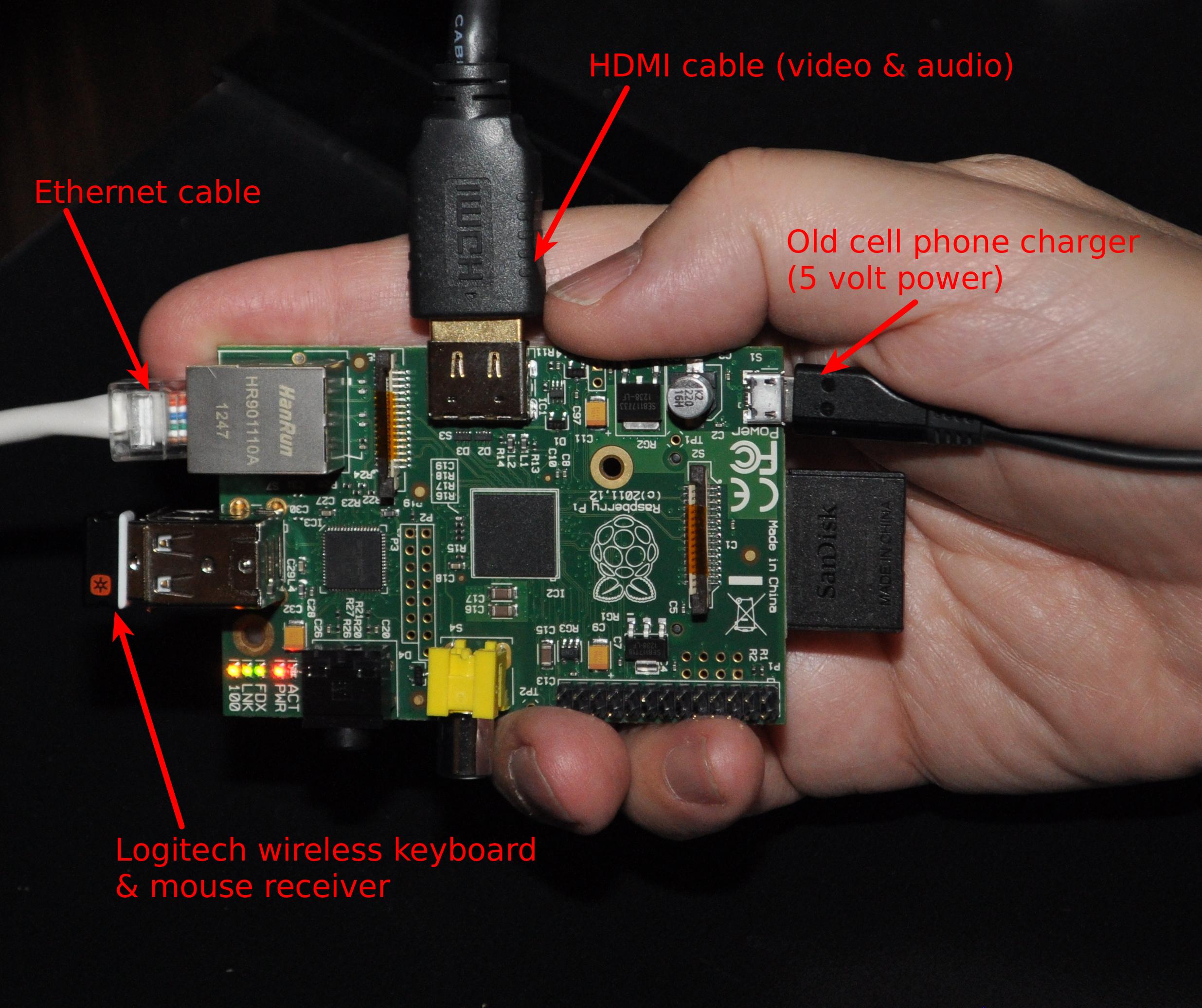
Raspberry Pi, almost fits in your wallet!
I've been thinking about the open source technology classroom I wish I could run.  Engineering based rather than brand based hardware with accessible, open software.  Hardware that could run free, crowd-sourced software.

Raspberry Pi is an obvious starting point.  As a way of showing students the basics of computing cheaply (it'll run a full GUI OS with internet for about thirty bucks per student), it's something that they can use to get familiar with how software and hardware work with each other.

I wish they'd come up with a Raspberry Pi à la mode, a 1 ghz 2 core unit with a gig of ram, hdmi and 2 usb 3.0 ports.  They can toss the video in and separate audio 3.5 jack out (hdmi has audio built in anyway).  If they could pull that off and keep it close to the same size I'd think twice about stepping up from the Pi.


***

It's beyond the Pi that open source hasn't developed enough high level hardware to take on more advanced learning environments, though having students build digital tools from a variety of components has its own value.  

There are plenty of software options, but ready made agnostic hardware is thin on the ground.  This is when I started to think about systems that, while branded and corporately developed, might be focused on access to a variety of technology rather than the tyranny of one:


***


In the meantime, from the Pi how do you create a free range system that lets students experience a variety of operating systems and software?  The recent nano-desktop round of computers offer some interesting options.


Intel NUC
The NUC (next unit of computing) by Intel is an engineering platform that crams an astonishing amount of processing power into a package the size of a paperback novel.  With an i5 processor and up to 16 gigs (!) of ram, this thing is a monster.  It would handily outperform any desktop in our school right now.

If we could get a NUC sorted out in some kind of student-proof Otterbox type enclosure we'd have a tough, durable, wickedly fast, open computer that would offer students a totally customizable platform for just over $400.  Presumably we could whittle that down to cost (maybe ~$300?).

Having a dock in labs that would allow students to plug their own PCs (personal again!) in would be one means of accessing the box.  Offering a plug in touch screen peripheral that could do the job of a screen/mouse/keyboard would be another avenue that would create a very powerful laptop/tablet option.  Pica-projectors would be another way to produce screens out of thin air, and they are rapidly becoming smaller and less energy consuming.

The nicest thing about the NUC is that it could work with pretty much any operating system you could want.  Students could come to class with a paperback sized computer that could boot into Apple OSx, the Windows flavour of your choice or any of a number of Linux distros (including Chromium).  You wouldn't have Mac labs, or Windows labs, you'd have whatever you wanted/needed to boot into.  

A truly agnostic hardware platform that would offer you access to any software on any operating system.
Foxconn Nano PC

Another (cheaper) option is the Foxconn Nano PC, which retails for substantially less (only $219 retail vs. the $420 NUC).  The Foxconn unit runs on an AMD processor (not Apple friendly) but offers strong graphics performance from its (Canadian!) graphics subsidiary ATI.

It would still run any flavor of Windows or Linux you could throw at it (including Chromium) and is as svelte as the Intel option.  Education purchasing could probably get these down into the $150 range.

***

The real goal would be to create opensourceedtech.org and have educators themselves crowdsource an open, upgradeable, accessible hardware system that is designed to teach students about technology in all its various forms.

The chance to develop personalized learning technology would take us away from the ignorance and learned helplessness we peddle today in education and offer all technology companies a level playing field on which to ply their wares.  Our students would experience a wide range of operating environments and software as well as being aware of how hardware impacts those systems.

Thoughts on mastery learning in digital spaces
(from my ECOO13 presentation)

Imagine high school graduates who have worked on a variety of operating systems that they have installed and maintained themselves.  


Imagine graduates who understand how memory, processor and storage work with software because they've experienced hands on changes in this hardware.  


Imagine graduates who are able to problem solve and resolve their own technological problems because the breadth of their familiarity with technology is such that any new digital tool they lay their hands on isn't a mystery to them.


Imagine students and educators who go to the tool they need to get the job done instead of having the tool dictate the job.


Imagine students who have enough familiarity with code that they can appreciate the complexity of the world we're living instead of being baffled by it.


I was having doubts about putting corporate logos on my office windows, but I don't any more.  Instead of taking down the Google stickers I've added Apple, Microsoft, Linux, Toshiba, Dell, Asus, IBM, Lenovo, Arduino, Raspberry Pi and will continue to add others.  The point isn't to run off into the woods and live in vegan austerity on open source hardware, it's to make all technology available to students so they can appreciate the astonishing variety of systems we're immersed in, and not be made helpless by it.