Showing posts with label teched. Show all posts

Saturday, 18 October 2014

Collegiality vs Teamwork and Digital Technologies

We re-aligned our computer courses last year.  Our school formerly was one of the few with a Computer Studies Department, with computer science and computer technology courses all existing under a single banner.  Last year the department was dissolved and computer science was put under the Mathematics Department while computer technology was re-integrated with the Technology Department.

I transitioned from Computer Studies Head to a co-head of Technology, but I'm finding working in such a diverse (we cover everything from metal work to food school to digital design) department challenging.  With so many horses pulling in so many directions, I can't help but feel that digital technologies tends to be a second thought.  Rather than feel excluded I've been finding ways to develop a stronger digital technologies continuum.

The computer lab has always been next to the design lab, though run by different departments.  Now that we're on the same team so to speak, I've been re-thinking how digital technologies, always minimally represented in terms of classes, should work within the school.  We've been developing an integrated digital technologies curriculum in order to facilitate that.

With the dissolution of Computer Studies the realigning of our school's digital technologies was inevitable.  No longer is Technology Design the lone digitally focused technology course in the department.  Combined with Computer Technology, our digital technology courses can now offer a continuum of learning across a wide variety of digital platforms.

I initially felt that dissolving the computer department was going to be bad for the discipline, but now I'm feeling a new synergy.


By drawing together our digitally focused technology courses under the many common threads they share we're able to offer 9-12 curriculum in a wider variety of areas.  For students in a rural area where digital-tech doesn't have the social impact it has in more urban settings this is a big deal.

The first step was to diversify our high-tech offerings.  I argued successfully at Heads for Tech-Design to offer Robotics (our tech design teacher has a background in it).  I also argued successfully for a Software Engineering option that would allow students interested in the field to experience industry standard practices around software development rather than the mathematics focus offered by computer science.


From the junior grades students get a wide variety of choice in 11 & 12 around what aspects of digital technology they want to pursue.  And even if the student isn't going into a tech-focused profession, they are at least able to develop the kind of digital fluency that will be handy in any 21st Century workplace.  Of course, digital-tech doesn't end at the workplace.  If we're going to graduate citizens capable of communicating in the 21st Century, they need to have digital fluency.

I always felt isolated as the head of computers with only a part time comp-sci teacher who wasn't interested in collaborating.  Now that I'm the co-head of tech, or perhaps Head of Digital Technologies fits better, I'm able to empower our tech-design as well as my own computer-tech fields and build a more complete set of options for our students to benefit from.

Change isn't always easy, but in this case I feel like it's led to a good place where teamwork and a common goal has replaced cold, distant collegiality.


A 9-12 Digital Technologies Continuum with a healthy variety of choice that will develop graduates ready to take on the challenges of the 21st Century:


The layout is so helpful I've expanded it out to the Technology Department as a whole:


Sunday, 19 January 2014

Straddling the Divide

I usually blog here to work out my thinking on a variety of education and technology situations I come across.  This one is no different.  I just read a series of suggestions for dismantling computer studies at our school.  I'm honestly curious as to the intention behind these suggestions, but in the meantime I'm trying to get the bees out of my head on this subject...


My school is odd in that it has a computer studies department.  This department is a combination of technology focused computer engineering credits (ICE/TEJ) and theoretical/math focused computer science (ICS) credits.  That our school combined these two very different disciplines into a single department has been both challenging and very forward thinking.

There is a push on now to align our headships with those of other schools.  Since the idea of a department that combines all aspects of computer technology under a single headship hasn't happened anywhere else, the urge is to dismantle computer studies.  The thinking behind this doesn't show a great understanding of what the computer subjects are (it was suggested the whole department just get put into business studies - a department that neither side of computer studies has anything to do with).  WIth so few people understanding what the fundamental computer subjects are, it makes it challenging to explain how things might evolve.  Ignorance drives many management decisions around digital technology education.

Trying to run computer studies has been a tricky ride.  Our computer science teacher only comes to our school for a semester, so the courses only run in the second half of the year.  On top of that other teachers aren't lining up to teach comp-sci.  Computer science would be better served in our school by being placed in our mathematics department and being taught by a variety of teachers, but then those teachers qualified in it should want to teach it and I get the sense that very few do.  

Computer science has been held captive by some strange teacher scheduling.  Attaching it to a larger department would be healthy for it.  I've tried to make moves in how and who teaches it, but nothing seems to have worked.  I'm frustrated and ready to hand it off.

Computer engineering is a hands-on technology course, much like auto-shop or manufacturing programs.  This course of study focuses on electronics and information technology.  Compared to computer science it's much more of a hands-on building and experimentally focused subject; it would logically belong with other technology credits.

The argument that we should re-align our headships with other schools feels like a step backwards to me though.  In five or ten years would our students be better served by a strong, comprehensive computer department, or by a traditional and arbitrary split in the subject?  Unfortunately, combining abstract mathematically focused computer programming with real-world engineering isn't easy, especially with how Ontario has handled teacher qualification in the subject.

Up until the past decade, computer science was the only computer qualification.  Like the guys in Big Bang Theory, the vast majority of computer science teachers have very strong theoretical backgrounds in the mathematics behind programming, but little experience in actually making computers work.  When computer studies was established as a technology course those theoretical computer science teachers were grand-fathered in as computer engineering teachers, though many of them had never installed a CPU in their lives and would have no idea where to even begin.  Asking them to provide onsite information technology support would be an impossibility for many of them.


That tech-ed certification took a mountain-load of paperwork
including industry certifications and proof of years of industry
experience.  If you were comp-sci when they brought it in, you
just got the certification...
So here we are in 2014 with many computer studies teachers who actually have little or no experience with the mechanical side of computing, though they have been given the OK to teach it.  This will eventually go away as those grand-fathered comp-sci teachers retire and future teachers will be expected to actually have an industry technology background in computers if they want to teach engineering.  In the meantime we've further muddied an emergent subject area that holds the key to producing  technologically fluent students who can function in the modern workplace.

What I suspect will happen with our forward thinking computer studies department is that it will be split and sent to math (comp-sci) and technology (comp-eng), and the onsite fix-it teacher role will not be considered a headship even though it manages just as much budget and far more equipment than any single department head.  This might be better for comp-sci, which has been dead-ended in our school as far as scheduling goes.  I don't think comp-eng will be hurt by moving to the tech department, so the splitting of the subjects into other areas doesn't really bother me, though it does make me wonder if we're moving in a direction opposite to social expectation.

I've been thinking about computer studies in terms of a specialization as well as a general fluency.  Perhaps future computer studies streams will include general technology fluency credits as well as specializations in engineering and coding, but I doubt it.  With computer fluency being a school (society?) wide expectation as well as the traditional fracture between computer science and computer mechanics, I fear that management energy will be spent on dividing and diminishing a subject that should instead be taking a central place as an integrated, adaptive department that produces 21st Century fluent graduates.


Monday, 8 April 2013

Objective Learning, Humility and Real Achievement

I'm re-reading Shopclass as Soulcraft, which begins with Matt Crawford asking what value hands-on work offers.  He questions the abstractions in which we all traffic (consumerism, academics, politics) in the information age.

There is value in learning about something external from ourselves, something with absolute requirements unlike the everyone's a genius in their own way/student success means everyone passes/let students direct their own learning so they aren't bored mantras you see whirling around edu-speak these days.  Crawford is focusing on trade skills in the book, but he's arguing for any skill that has needs beyond whatever criteria we choose to apply to it.  This would apply to languages (you either understand and can communicate in it or not), technical skill (you can rebuild that carburetor so that it works, or not), or even sports (you can ski down the hill, or you can't).  These kinds of skills get short shrift in schools these days because we can't bend the requirements sufficiently to pass everyone and claim success.

Conestoga's Motorcycle Training
This past weekend I took a motorbike training course.  It was exhausting, and very rewarding, and it had a six and a half percent failure rate. Those people paid four hundred and fifty dollars and were unable to complete the requirements of the course in a road test.  They left frustrated, and in some cases angry, but in a very real way they demonstrated that they could not control and place the bike.  The instructors were transparent and explained the failed components in detail, but people still left early with high emotions.  It's hard for people who are used to paying and passing to suddenly find themselves having paid and failed.  Doesn't payment equal success?  Doesn't consumerism replace competence?  It does in many situations, and increasingly in education.  Students become clients (especially in post secondary where they are paying directly for it), but even in k-12 tax payers are the clients and success for all is what they are paying for.

It's fair to say the test asked us to demonstrate about 60% of what we'd been asked to do that weekend - it wasn't brutal by any means, but controlling a motorcycle is a tricky business, and some people found the learning curve too steep.  Whether it was full body coordination or keeping what you're doing organized in your head, there was a lot to manage in doing this test.  The criteria were clearly explained and had been practiced relentlessly for two full days, there were no surprises yet some people were unable to *do* what was required.  Alternatives weren't offered, differentiation was self directed - by you - while you were learning on the bike, the instructors offered advice and it was up to you to take it or not.  Those that failed generally didn't take it.  Riding a bike isn't like driving a car.  You're alone on it, you don't have a voice in your ear making suggestions or stepping in with alternate controls, it's all up to you.

The curriculum was demanding and had specific requirements that couldn't be ignored. It was physically exhausting and required twenty four hours of your time over a single weekend, early wakeups and hours outside in very changeable April weather.  When someone showed up late on Sunday they were dropped out of the course (and seemed utterly flabbergasted at the situation); 100% attendance was required, and in order to see success you had to be there mentally, physically and emotionally.  There was a high correlation between failures and people who were always the last to show up.  As Crawford mentions in his book, learning an objective skill requires a degree of submission and humility to the task at hand - something that we ironically iron out of schools in order to demonstrate success.

For the rest of us, marks were given and certificates (which include a big drop in insurance costs as well as a direct pass to the next level of licensing) were given out in a ceremony.  People who got perfect scores were mentioned, and applauded. Everyone still in that room realized how much work they'd put into their success that weekend.  But they'd put in more than effort, they'd also been willing to be taught, to check their pride at the door and learn something challenging and new from the ground up.

There is an important difference between submission and humility. One can be humble and it enhances self worth, and allows learning in the oldest educational context we possess.  Submission is about the power of the strongest, humility is about an honest awareness of one's circumstance.  A master at a skill is honoured when their apprentice is humble before the task because they are receptive and teachable, and they are also respecting the skill that the master possesses. That humility allows you develop perhaps the most powerful learning tool available to us, self-discipline, which in turn grants the serious student the ability to master skills that would otherwise defeat a dilettante. You assume the mantle of a serious, even professional student when you are able to apply self-discipline gained through the humble acquisition of meaningful skill.  In school we constantly seek ways to amateurize learning in order to satisfy a Taylorist economic logic.  We try to streamline and ease student passage, forgiving absence and inattention in a misguided effort to generate successful data.  Any statistic you've ever seen about education has nothing to do with learning.

This sounds like throw back language, especially in light of the MBA edu-babble popular today. Students teaching themselves in order to stay engaged?  Best not done around a band-saw, as Crawford suggests.  Students able to 'pass' with a 50% average? Or with weeks of absenteeism?  They've hardly mastered anything.  Students given multiple avenues to success with targets that get closer the more they miss?  This learning is empty and pedantic, and students recognize that. Reward comes with real effort, and real failure.  Guaranteeing success for all?  The surest way to a systemic failure of learning.

I hurt all over from this past weekend, but it was profoundly satisfying.  I worked hard, didn't treat it like a joke, gave it my full attention and realized early on that the people instructing know so much more than I do that it would behoove me to be humble before their skill and experience.  I think that humility is what led to my success.  That success may very well save my life one day.  Engagement was never an issue.

I won't see much of that humility and openness to learning in the diploma factory I'm returning to today, though I'll try and try to put reality's demands in front of my students and let them be frustrated by it.  It's real success when you overcome an obstacle and figure something out, especially if you experienced failure in the process.  Not so much when people systemically remove obstacles to keep nearly inert objects in motion.  As self discipline erodes and humility dries up, the process of learning itself begins to break down.

Are you teaching curriculum today?  Or are you teaching how students should passively pass through the Kafkaesque education factory in which they find themselves?

Being taught how to actually do something with objective demands has made me proud, humble and grateful for the skillset I have as a learner.  When I see opportunities to approach learning with humility and develop self-discipline missing from so much of what we do in school, it makes it seem an empty, even dangerous place.

Wednesday, 3 April 2013

Meet Your Maker

www.arduino.cc
I'm working my way through my second semester with grade nines in computer studies. I've tried to bring as much 'shop' as I can into computer studies.  My background was in I.T., so getting into the nitty gritty of electronics has been an expansion of my craft which I've enjoyed as much as the students seem to.

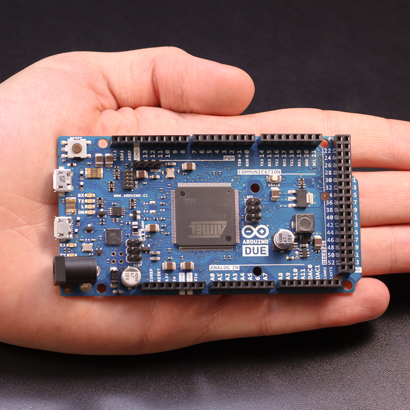
Using Arduino microcontrollers we bridge the gap between hardware and software and get students comfortable with the idea of building circuits as well as controlling it with code.  This year I've also gotten a Raspberry Pi up and running as well as building dozens of desktops. A resurgent maker culture has made electronics much more accessible and customizable; it's a good time to be teaching computers.

Maker Culture
This semester we've been pulling apart broken electronics and reusing digital displays, microphones and other components in our Arduino Frankenstein creations.  Some of it will work, some of it won't, but the process will make Makers of many of the students.

The real fear in using technology is that many users don't have the faintest idea how things work.  When it breaks there isn't a frame of reference of where to begin, fixing anything seems impossible.  After breaking apart their first digital clock, or radio, or electronic game, students begin to recognize the components because they're already familiar with the bits and pieces having used them to assemble a dozen Arduino projects already.  With the mystery gone, they begin to grasp the power their minds and hands have.

I'm re-reading Matthew Crawford's Shopclass as Soulcraft.  It's such a complex read, with so many ideas packed into each page, a second run through will do me good.  If you're an educator, and you can take some well intended criticism, reading the first couple of chapters will challenge many of the assumptions we wrongly found current educational theory on.   I imagine most educators won't find the criticism comfortable, no matter how well intentioned.

I'm about to get my first motorcycle and I've found myself casting about, trying to figure out who I can get to maintain it for me.  A chapter in and this ex-mechanic is getting his hands on a shop manual and doing it himself.  One of the reasons I want to begin riding is to develop a closer relationship with the machinery I use.  The plastic covered, warrantied cars I drive don't do that.  The nakedness of a motorcycle begs for it; I'm looking forward to that quiet, focused mind driving busy hands.

There is something inherently valuable in being able to fix what you use.  I've never had to argue for the value of what we do in computer studies, the learning has inherent worth, is immediately useful, and applicable in a surprisingly wide range of situations.  From the insides of an operating system to the flow of electrons around a circuit, these students develop a familiarity and comfort level with something that most people are more than happy to use in blissful ignorance (until it breaks).  The tactile nature of the work also draws in even the most reticent.  Working with your hands, making something real work through trial and error, offers an experience missing from much of academia.  Crawford's philosophical attack on the globalized knowledge economy happens every day in my classroom.

Many of these students will move on to other interests in other fields, but none of them will ever again be at the mercy of their ignorance while working with a computer.  I'll have to paste rubrics and marks over all this to make it credible to the establishment, but the moment a student who has been whacking his head against his own bad wiring for half an hour realizes what he's done and fixes it himself, he has developed a tiny bit of independence, and perhaps realized that paying attention is a powerful ally.  Learning shouldn't be frustration free, if it were, it wouldn't mean anything.  With minds and hands engaged in a battle with realistic demands, the rewards are hard to quantify in a mid-term mark.

Tuesday, 23 October 2012

Forming an ECOO Presentation

There were three key books I read in the past year that have clarified for me a direction we could head in educational technology.  Ideas from each of those books, which at first appear to be in direct odds with each other, helped form the content of my ECOO presentation this year.

After reading The Shallows, Nick Carr's carefully constructed argument held a lot of weight - the internet and how it is being adopted by the general public is actually making people less effective as both thinkers and doers.  As educators, we should all be concerned about this result.  At a conference this year a frustrated, thirty-something CEO said of the twenty-somethings she's tried hiring recently, "I just wish they could finish a thought!  I can't even get them to close a sale because they are checking Facebook!"  This problem goes well beyond education (where any teacher can tell you it's an epidemic).  Everyone involved in education should read this book, especially if they are trying to implement technology in the classroom.

From The Shallows I took a serious concern about technological illiteracy and habitual use of computers actually injuring people's ability to think.

I read Ray Kurzweil's The Singularlity is Near as a counterpoint to Carr's very accurate, and very depressing Shallows.  Kurzweil's giddy optimism in our engineering skills verges on evangelism.  He is a wonderfully interesting and eccentric character.  His belief goes well beyond merely living in a time of transformative change.  The singularity he refers to is a moment in the near future where we are able to develop a greater intelligence than a single human brain, or even a group of them.  He goes into mathletic detail about exponential growth and how this is occurring in computers.  Very soon we'll understand things in finer and more complete detail than we've ever been able to before and our management of the world will take on omniscient proportions.  Technologically enhanced humans exist beyond the technological singularity - living in a world that looks as alien to us now as ours would to someone from the middle ages.

From Kurzweil I recognized how technology is evolving in increasingly personalized ways.  This is an argument Carr makes from the other side too.  From external machines, we are on a journey to technological integration.  This integration is going to well beyond smartphones, that's just the latest step in an inevitable trend.  If education does everything it can to present technology as generic and impersonal, it is failing to notice a key direction in technology, it's failing to produce students who will be useful in their own futures.  This is perhaps the most controversial aspect of my BYOD/differentiated technology argument, but I believe it's a fundamental part of our technological evolution.  Computers want to become a part of us.  We're not going to develop a Skynet or Matrix that will take over.  Our technology IS us, and it wants a more perfect union.  This probably scares the shit out of most people.  My argument to that is: if you're going to amalgamate with other systems, make sure you the one directing them effectively.

Matt Crawford's wonderful philosophical treatise on the value of skilled labour goes well beyond simply being handy.  He argues that skilled labour psychically protects you from consumerism and makes management doublespeak and creative economies an obvious joke.  The value he places on objective, quantifiable skills development often savages the feel-good ethos of a lot of educational theory which then sounds like management double-speak nonsense.  I read the book after taking my AQ in computer engineering, and it made me re-evaluate (and recognize) the value of my skilled labour history - something I'd walked away from in becoming a teacher.  I'm loving being a tech teacher this year and working with my hands again.

From Shop Class For Soul Craft I took a recognition of the importance of hands on, skill based learning.  It brings real rigor to learning, and should be a vital part of developing past the poor digital literacy I see around me.  One other experience kicked this up a notch.  In the summer we visited the Durnin farm and Heather talked about how her husband teaches people to use the farm equipment.  He gives them the tools, and expects them to figure it out and get it done.  It's a high expectation, immediate result environment that puts a great deal of expectation on the student; Crawford would approve.  I tell my students, "no one ever learned how to ride a bike by watching someone else riding a bike" - it's an experiential thing that offers real (often painful) immediate feedback... what effective learning should be.

Into that mix of big ideas of warning, optimism and rigor I also mixed in the standard PLN secret sauce.  Concerns over BYOD abound with teachers online.  The idea that BYOD should just be thrown into curriculum struck me as simply wrong.  As Andrew Campbell suggests, it's more about stretching a divide (or Carr would argue intellectually crippling idiots) than it is about increasing digital fluencies.

Teaching competency, flexibility and self awareness on digital tools should be a primary goal of current educational practice.  We're graduating students who are dangerously useless to employers.  The idea of a continuum of digital mastery based on objectively developed skills linked to a gradual loosening of restrictions and access to increasingly diverse tools and online content was the result.

I present on Thursday, and I'm more interested in the discussion that ensues than I am in telling anyone anything.  ECOO is a wonderful braintrust, and usually super-charges my educational technology awareness.  I'm looking forward to the brain soup we create out of this!

Diversifying Edtech: the key to a digital skills continuum

Thursday, 20 September 2012

The Lab That Isn't A Lab


I'm teaching Computer Engineering in a school computer lab.   It's the nicest lab in the school, and I don't want it any more.

I recently described it to my principal as, "trying to teach auto mechanics in a new car show room where you can't touch anything."

Computer engineering in school underlines everything I don't like about school computer labs (and that list is long).  I don't think school computer labs teach students anything helpful about computers.  In fact, I think they are specifically designed to be out of date, glitchy, inaccessible and frustrating - hardly the mindset you want to put students in when you're teaching them how to learn effective operation of an extremely powerful learning tool.

Essentially, what we try to do in school computer labs is teach students how to ride a bicycle by having a professional bike rider come in when they aren't there, maintain and ride an old bike, then leave it there for them.  We then tell the students to get on it and ride with no hands on experience, practice, training or intent.  We then get angry with them when they fall off and damage the bike, or ride it pointlessly in circles.

Whether it's media arts labs, or school computer labs in general, I'm not a fan.  The fact that they haven't changed significantly in form or function since I graduated from high school in 1989 should bother people, but the real bee in my bonnet is the lack of ownership in our understanding of technology.

If you want to use technology in your classroom (and in 2012 you'd have to bury your head pretty deep in the sand to not want to), then you the teacher need to understand how it works, and you need to teach this to your students.  The willful ignorance I meet in staff is sometimes good for my ego, but never productive in developing technical literacy in our students.

With our old tech, people are familiar enough to know what they are doing:
... but not so much with our new technology.  We need to address that.  Until we're all familiar enough with the digital tools we're expected to be literate in that their use is second nature, we need to spend time, especially in the classroom, learning what they are, and you can't do that in a school board IT straight jacket.

I'm not advocating for a ground up build your own computer when you want to type out an English paper (that's what computer engineering is for), but I am advocating for an open, author-able, stable, up to date system that allows teachers and students to become familiar with the options and customization available on this equipment (something impossible in our board, locked down, forget-everything-when-you-log-off terminals).

Back to the lab that isn't a lab.

When I was doing my AQ for computer engineering in the summer, our instructor showed us his new classroom in his new school.  It was fantastic.  Work benches filled it, fabrication tools and a few tables for the odd sit down talk.  It looked like a room where making happened.  There wasn't a single board computer in there.

Later in the summer, when I was picking up computers from a school in Guelph (a teacher, working in the summer?  Evidently), I saw their lab and it was the same idea: workbenches and stacks and stacks of parts; a room where hands-on learning happens.

I'm not entirely sure why we feel that computer engineering should be happening in a computer lab at my school.  My seniors don't use the school computers at all, and my juniors are only on them because they are there.  I'd much rather they be hands on with machines, except there isn't enough room in a lab full of school computers to make another network.

What do I want?  One of the de-labbed classrooms where there are plenty of electrical drops.  I'd be willing to evacuate the much in demand lab if I could get a room that let me store my equipment and set it up as I need; a room that was truly a lab where experimentation and hands-on discovery happens.

Wednesday, 22 August 2012

Credible Work


I just finished reading Matthew Crawford's "Shop Class for Soulcraft", a philosophical look at the value of skilled, physical labour.  Having come from a mechanical background into an academic one, a philosopher-mechanic's critical examination of the 'creative economy' we're all dying to jump into was refreshing.

http://www.bbc.co.uk/news/magazine-12108000
I've often missed the clarity and satisfaction I found in repairing machines, and now I have a philosophical explanation of that sense of loss.  Crawford delineates meaningful work in terms of objective standards, a sense of community and individual agency.  He then goes on to disembowel the MBA speak found in the otherworldly knowledge economy that can only exist in an entirely abstract sense of work, one I fear that has been applied to the skilled trade of teaching courtesy of lawyers and politicians.

It's been a few weeks now since I finished the book.  I'm finding that the lasting impression is one of embracing my smart hands again.  The idea that mind work is somehow superior to hand work is nonsense, though our school is streamed according to that logic (academic/applied, university/college).  The argument that we discover the truest aspect of human intelligence when we work our minds through our hands continues to ring true for me.

The other, unintentional side effect has been a re-awakening of my love of motorcycles.  I'd originally gone after one when I was 16, but my parents offered to up what I'd saved to get me into a car.  It's probably one of the reasons I'm here today, it was a smart move.  At 43 I'm not interested in wrapping myself around a pole.  Riding is a way to be alone with your thoughts, no obtrusive media, and the development of a constant awareness; you can't let your mind wander on a bike, they are ruthlessly observant of incompetence. Riding also offers an intimate familiarity with a machine in a very minimalist way that is appealing.

I come by my urges honestly.  Here is a picture of my Grand-dad Bill in the late nineteen forties... I need to get myself some white riding shoes!
I hope to be licensed and riding in the spring.