Showing posts with label onted. Show all posts

Friday, 3 September 2021

A Numbers Game

Can't say I'm a big fan of Marx, I'm more of a
Leibniz guy, but he's a useful tool for examining
the blind spots around systemic privilege.

One of the perils of having a degree in philosophy is that it provides you with a wide range of tools for dismantling bureaucratic doubletalk.  One of the most dangerous of these tools is Karl Marx.  I can't help but apply Marx' aggressive economic analysis to any idea from the powers that be being floated as, 'dismantling systemic prejudice'. This week in PD this reflex was twinged by how the upcoming destreaming of grade 9 mathematics is being framed in Ontario education.

The way destreaming was portrayed to us (in keeping with current educational value theory) is as anti-racist pedagogy.  We were earnestly told that destreaming destigmatizes our students of colour and sets them free from educational oppression.

It helps to live in a rich area that offers
limited access to specialist schools that
don't admit the proles if you want to science!
I'm no fan of streaming.  The myth of STEM and many other educational prejudices are founded on a university focused system being run by academics from that same privilege powered university system.  In extreme cases this ends up creating specialist urban academic schools that cater to privilege and create social barriers between people.  Some of the things that get said by people in these ivory towers would shock you - they aren't good for anyone.

I believe that there is a distinct advantage to running de-streamed classes.  The neuro-diversity in an open level class offers all students insight into how people other than themselves think and also offers a qualitative performance advantage when students can leverage many different thinking approaches rather than all following the same (terrifyingly tedious) route to a singular solution.  This implies open level classes are at least (if not more) pedagogically rigorous than current, streamed academic classes.  Having said all that, my last principal said that my open level classes 'were too difficult' and that I 'should make them easier' (even though we hadn't had a failure in years).  I've never found an open level de-streamed class an excuse to do less.  It's an opportunity for students to escape their intellectual ghettos and understand the world and how to solve it from many perspectives.  If only de-streaming were treated as a pedagogical tool rather than a financial one we'd see real advantages to de-streaming, but the cynic in me suspects that pedagogy isn't actually what's motivating de-streaming.

I teach technology courses and all my classes have been de-streamed forever.  Even my 'M' level supposedly post-secondary focused senior classes are typically filled with 10-20% essential students and an even split between applied and academic streams (I'm still capped like an academic class at 31 though).  What this means is that the system drops high-needs essential students in my class while offering no increase in resources to support these children.  In my experience, de-streaming is an excuse to offload more work onto teachers while pulling funding in sections and resources.

Ontario's current push to de-stream grade 9 mathematics is, I believe, a good idea, but I have little faith in the system doing it for the high-falutin equity ideals they claim are motivating them.  When equity is used as a marketing tool for financial oppression, no one wins, and when we're all sitting in larger classes with more diverse, higher-need learners and less resources to help them find success I can't help but wonder how the people marketing this can sleep at night.

The current representatives in Ontario government
are taking educational oppression to new heights.
A brutally honest Marxist analysis might look like this:

A school has 20 sections of grade 9 mathematics, 2 essential level, 10 applied level and 8 academic level classes.  Essential classes are currently capped at 21 out where I am in order to provide more support for these high-need learners.  Applied classes are capped at 23 and academic classes at 31.  I imagine you can see where this is going but I'll take you there anyway.

In our imaginary school this would result in 2 sections for 42 essential students, 10 sections for 230 applied students and 8 sections for 248 academic students.  That's 20 mathematics sections serving 520 students.  In our system, open level classes are capped at 27 students, so our 520 students would find themselves in 19 sections once de-streamed, which begs the question: are we doing this to save money or help students find success?  I know what Karl would say:  we're doing this in order to concentrate capital in the oppressing class while reducing the ability of the proletariat to upset systemic privilege.

I don't know what the caps are for these new, de-streamed classes, but if the system ignores its own class caps for open level classes and magically sets the class cap for de-streamed math at 28 or 29 students (changes like this always offer an opportunity to get more for less), suddenly our 520 students are being stuffed into even fewer sections and larger classes, which makes the whole 'we can decolonialize and produce greater equity in education by destreaming' angle look a bit disingenuous.


Ontario's de-streaming is being heavily marketed as an anti-colonial escape from systemic oppression,
and it could be if it isn't actually cost cutting lurking under an equity marketing banner.


There are genuine benefits to destreaming.  Prompting more neuro-diversity in a learning context offers rich alternatives to rote learning catering to the neuro-uniformity prompted by streamed classes.  Struggling students are surrounded by peers who can show them better habits and capable students can soak up rich opportunities to mentor while also exploring alternate pathways to solutions.  There is also an equity benefit in that everyone is humanized and formerly streamed students are less likely to look down on their peers or turn into teachers who dismiss blue collar subjects out of hand.

These advantages are predicated on de-streaming happening in order to nurture student success, not as the result of hidden financial imperatives designed to cut costs while marketing the whole exercise as the enlightened removal of systemic oppression.  If this really is a numbers game then everyone loses, and who loses the most?  The kids with less social privilege to begin with.

Sunday, 28 October 2018

Forcing An Apple To Become An Orange

We emigrated to Canada in 1977.  Unfortunately, my parents weren't really paying attention and moved us (an English speaking family from England) into Lasalle in Montreal, Quebec.  If you don't know what was going on in Quebec in 1977, it wasn't good for an eight year old English kid.  While we were struggling to adapt to a new country we'd also wandered into a nationalist revolution.  Bill 101 made it illegal for immigrants to learn in English.  Since that was my native language and I had no background in French, the provincial government told my parents I'd have to attend a french school and get dropped back two grades to accommodate my lack of language skills.

While that was going on, the kids in our predominantly French neighborhood had overheard me talking with my lovely Norfolk accent while walking home from school and had decided that I would be a great opportunity to express their Quebecois pride. Getting beaten up by half a dozen kids at once wasn't any fun, but when they started bringing their german shepherd along to help, it was even less fun.  You'll have to excuse me if I'm not enthusiastic about Quebec's very singular approach to immigration.

Government letters arrived telling my parents that they had to move me out of English school or they would be charged and jailed.  My dad's new job did backflips, opened up a branch office in Toronto and we escaped to free Canada in 1980.  I've had a soft spot for Ontario's open arms approach to immigrants ever since.


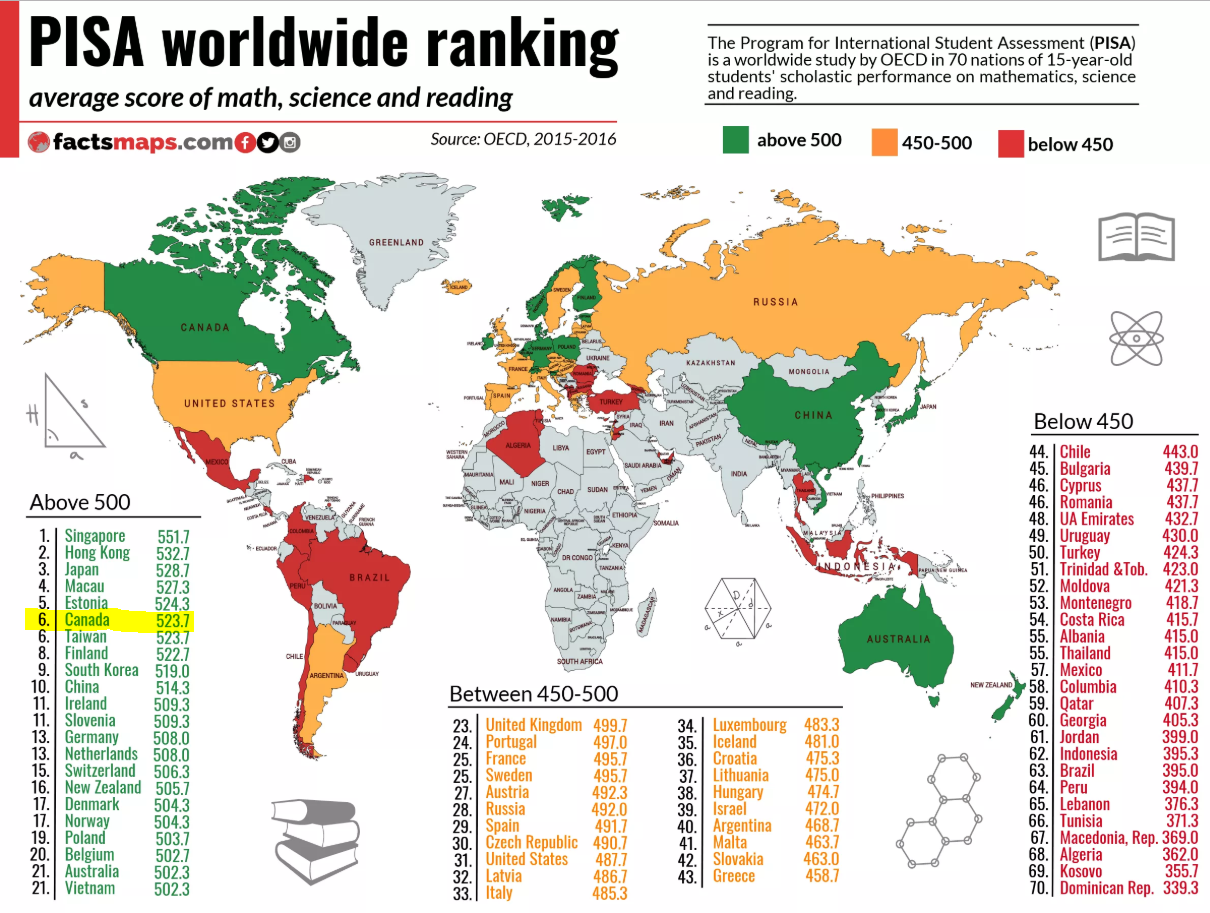
@dougpete shared an article on Quebec's math prowess this morning.  I have some strongly held beliefs about how they've managed this result that the article itself goes to great lengths to ignore.  While Ontario has what is described by many people as too many public school systems, Quebec has one, and it's one that caters aggressively and exclusively to a single language supporting a single culture.  They don't enjoy immigration and their provincial politics have backed that up since I was an eight year old way back in 1977.  If you're looking  for a province that struggles to embrace multiculturalism, Quebec's a fine example:

"Among the provinces, the greatest increase in the absolute number of police-reported hate crimes was observed in Quebec, where incidents rose from 270 in 2015 to 327 in 2016. This increase was mostly attributable to more hate crimes targeting Arabs and West Asians, the Jewish population and sexual orientation."  
- Stats Canada Daily: Police reported hate crime, 2016


With the exception of New Zealand (which is significantly less
multi-cultural than Canada
anyway), there are few other countries
in the top 20 that sport a significant immigrant population.
I would argue that if you're dealing with a less diverse population you're dealing with an easier education process.  In addition to removing hard barriers like language and the various qualities of education in home countries, you're also bypassing many of the less tangible complexities like cultural expectations around gender and religion.  These benefits are clearly seen in international education rankings where monocultural societies are much more willing and able to force compliance and efficiently produce results for standardized tests; standardized populations feed strong standardized results.  With no language barriers or cultural confusion, it pays to be monocultural in standardized testing.  Canada is exceptional in those results, especially considering how it's a country built on immigration.  That we are able to produce these results even while working with diverse often ELL populations is astonishing.  Statistics show just how challenging trying to cover curriculum while also teaching the language of instruction is.  Stretching your education system to provide support for such a diverse population means you aren't going to score as well on a standardized test because your students aren't standard.

Quebec students pay a third what Ontario university students do.
They can afford to stay in four year programs for teacher training
while Ontario teachers would end up paying tens of thousands of dollars
more for that privilege.  You can encourage extended teacher
training when you know it isn't going to bankrupt your citizens.
In addition to the diversity of their students, there are a number of assumptions made in that article that ignore the cultural landscape that has allowed Quebec to produce this outstanding mathematical outcome that is out of step with the rest of the country.  Under more extensive teacher training is this:

Teacher preparation programs in Quebec universities are four years long, providing students with double the amount of time to master mathematics as part of their teaching repertoire, a particular advantage for elementary teachers. In Quebec faculties of education, elementary school math teachers must take as many as 225 hours of university courses in math education; in some provinces, the instructional time can be as little as 39 hours.

That Quebec students receive much more support for post secondary than Ontario students is a matter of fact.  Quebec looks after its teachers in training by not financially crippling them with this long term training.  Expecting Ontario teachers in training to foot an Ontario sized bill for their Quebec length training only goes to highlight the fundamental differences between the provinces.  Quebec students pay more than a third less what Ontario students do for that university training, and so they are able to extend their training.  It's little wonder that they are producing better results on this standardized test.

The article kicks off rather hyperbolically sounding an alarm for Ontario's math's results:  
"That populist election cry resonated with Ontarians because Ontario students continue to lag in mathematics and were the only ones in the country to show no significant improvement on national tests from 2010 to 2016."
Saskatchewan also has a dip in results and most of the other provinces were all within a couple of percentage points of their previous scores.  More importantly, Ontario led the results for English speaking Canada in 2010, 2013 and 2016, and even managed to slightly improve on it.  So this emergency in Ontario is based on the fact that we've always been leading in mathematics scores in multicultural Canada?  I hope everyone else catches up with us one day, but with the provincial government about to pull one of the top performing English Canada education systems to bits, I wouldn't bet on it.

In researching this I came across some evidence that the Quebec of today isn't as totalitarian as the Quebec I emigrated to in 1977.  This research on current Quebec schools summarized it this way:

"Quebec’s traditionally homogeneous French-language education system has undergone some radical changes over the past 30 years and continues to be shaped by public policies geared toward promoting French and openness to ethno-cultural diversity. The province has come a long way and now compares favourably with other immigrant-receiving societies. Nevertheless, many challenges lie ahead. Among other things, the marginalization of some ethnic groups, and most especially that of the Black community, must be better understood and actively prevented."

Perhaps Quebec is a bit less mono-cultural than I remember, but it still enjoys all the benefits of encouraging only primary language speakers into their system.  With that language of instruction time and energy freed up and with government subsidized education that allows their teachers to enjoy extended training without financially crippling them, Quebec is enjoying the results it deserves.  I'd rather Ontario didn't try to copy them though.  As an immigrant myself, Ontario made me feel welcome in a way that Quebec didn't, and I hope we'll continue to do that for the people across the world, regardless of the language they speak, who come here to find a home.

The article ends up questioning its own bias on Quebecois superiority in math as it wraps up:

Quebec is markedly different when it comes to mathematics. Immersed in a French educational milieu, the Quebec mathematics curriculum has been, and continues to be, more driven by mastery of subject knowledge, didactic pedagogy and a more focused, less fragmented approach to student intellectual development. Socio-historical and cultural factors weigh heavily in explaining why Quebec continues to set the pace in mathematics achievement. A challenging curriculum produces higher math scores, but it also means living with lower graduation rates.

Perhaps the Ontario panic over mathematics could do with a bit of context, but I fear that won't happen in the populist, reactionist times we live in.  It's better to invent an emergency, compare ourselves to a system that couldn't be more different and then try to imitate their results than it is to continue to lead English speaking Canada in mathematics?  I sincerely hope not.


Other Research For This Piece:

Visble minority population by urban centre: https://www12.statcan.gc.ca/nhs-enm/2011/as-sa/99-010-x/2011001/tbl/tbl2-eng.cfm   Montreal barely makes the top 5 and is similar to Winnipeg in terms of immigration.  I couldn't find language details, but Quebec's focus on french is absolute.

https://www12.statcan.gc.ca/census-recensement/2016/dp-pd/hlt-fst/imm/Table.cfm?Lang=E&T=11&Geo=00
https://canadaimmigrants.com/canada-international-students-by-province-2016/
http://www.chereum.umontreal.ca/publications_pdf/Publications%20de%20la%20titulaire/Quebec%20Question%20Stephane%20Gervaisch19.pdf

https://www.canadastudynews.com/2018/03/19/canada-is-home-to-nearly-half-a-million-international-students/
https://www150.statcan.gc.ca/n1/daily-quotidien/171129/dq171129a-eng.htm

https://www150.statcan.gc.ca/n1/daily-quotidien/171129/dq171129a-eng.htm
https://www12.statcan.gc.ca/census-recensement/2016/dp-pd/hlt-fst/imm/Table.cfm?Lang=E&T=11&Geo=00

Sunday, 1 April 2018

Competitive Urges and Real World Expectations: How to Differentiate For Experts

One of the ways I differentiate my courses in order to cater to students who will become digital engineers and technicians is to find opportunities to compete in skills based competitions.  Not only does this offer them advanced study in specific areas of computer technology, but it also provides curriculum material that often trickles down into my regular course work.

In the fall we took our first run at the CyberPatriot/CyberTitan IT security competition.  Cyber-security is a high demand field we don't produce enough of in Canada.  With a very strong team of seniors we made big steps forward in each round figuring out how the competition works and what we needed to focus on to get better at it.  Once we knew to focus on Windows and Linux operating systems and Cisco networking, we got a lot better.  By the final round we'd fought our way up to the sharp end of the competition and ended up finishing in the top 10 out of 90 odd Canadian teams.  We're off to Fredericton in May to see how we fare in the national finals.


I've been looking at ways to bring cyber-security into my curriculum and this ICTC run competition has provided me with a pile of material on all levels of IT security from the desktop all the way up to networking.  In the meantime, I've got four students who are national finalists, which looks mighty fine on both a job and post-secondary program applications.  The team isn't a mono-culture either.  One student is aiming at software engineering, another at information technology, another at teaching and the last isn't ICT focused but is a strong, multi-talented student who can solve esoteric problems well.  They also work well as a team, so we're looking forward to seeing how we fare in the finals in New Brunswick.

Meanwhile, we've got four students aiming for Skills Ontario provincial finals in Toronto in May.  Unlike last year when we tried to commute into the GTA for the event (utter misery), we are lining up hotel rooms and staying overnight, so everyone will arrive early and well rested - no seven hour school bus commutes for us this time.  We've got last year's bronze medalist at IT and Networking who is angling for a higher finish, last year's 7th place electronics student in the hunt for a medal and last year's 10th place web developer looking for a top five finish.  I've also got a ringer for the first ever coding competition at Skills Ontario provincials.  Like the CyberTitan competition, I've been able to lift a lot of useful course focuses out of Skills scopes.  Our electronics have diversified and become much more complex thanks to our competitor's work in skills (and I love that she's beating the boys in a predominantly male competition).  The web development we started last year is going to provide much of the coding focus for our new grade ten computer class that starts next year.

I get a real charge out of competition.  I used to coach soccer at school but now I spend my time focused on supporting technology curriculum.  The differences are many.  Instead of only catering to students who are wealthy enough to not work and have the free time to play games at school all week, I find myself supporting a wide socio-economic range of students, which I find more gratifying.  In the process I've been able to show many of them opportunities and post secondary pathways that they hadn't considered before.  I didn't manage to produce a single professional soccer player in years of coaching, but I've managed to help engineers, technicians and digital artists begin their careers.  Of course, I don't get paid to do any of this, but finding students and helping them develop into competitive provincial and national challengers is one of the favourite aspects of my job, even though it isn't actually my job.  The hardest part is convincing them that it's possible; doubt is the hardest thing to overcome.

Meanwhile, in the classroom this semester I'm running yet another round of capped at 31 students software engineering (it's tricky to stuff 31 student computers into a classroom, but I manage it).  I started this course three years ago as a bit of a joke, but I couldn't run it like one, the opportunities it provides are too real.  Our school started offering courses in hockey and camping and I jokingly suggested I make a video game course if we're giving credits out for recreational activities.  I spent much of my youth playing hockey, camping and video gaming, so why not?  Of course, I didn't get high school credits in those things, but I digress.


Our software engineering class has become an applied coding course that focuses on engineering process rather than the mathematical minutia of coding, which I leave to computer science.  We start with IEEE's Software Engineering Body of Knowledge (SWEBOK) to get a handle on best practices in real-world software building, then we learn 3d modelling in Blender and scripting in C# in Unity in order to prepare everyone for some game development.


This class has produced published software since the first year it ran and has allowed students to produce digital portfolio work that has gotten many graduates into some of the most challenging post secondary programs in the province.  Like the competition opportunities described above, software engineering has turned into an intense but demanding real world opportunity that allows senior students to step up and demonstrate leading edge digital skills.


We've just finished the training portion of the course where the grade twelves introduce the grade elevens to SWEBOK, the basics of 3d modelling and the Unity game development platform.  With these basic skills in place everyone then reorganizes into startups and proceeds to develop software titles for the rest of the semester.  This time around we've got a mini putt VR simulator, a VR based survival game called Grave Dug, a nostalgia arcade title called Devil's Hollow, a two player cooperative asymmetrical puzzle game called Shield and Staff, an atmospheric stealth title called Instinct and for the first time we're also developing a non-interactive title focused on 3d animation that should offer our 3d artists a less restricted and more experimental approach to modelling without the complexities of interactivity.  We hope to use VR (Tiltbrush, Oculus Medium) and our Structure Sensor 3d scanner to produce less Blenderized looking models and experiment with our design process.


My senior computer technology (TEJ) courses also focus on real world problem solving.  We cover CompTIA industry testing for A+ technician in 3M and NETWORK+ administration in 4M, and both courses also do in-school tech support.  We're also building VR ready systems for our board SHSM program to distribute to other schools.  Working in real world situations with live problem solving and deadlines is something my students find invaluable, whether it's in class or in competition.  It gives them strong portfolio work (check out our ever expanding collection of 3d models, in 3d!) and prepares them for the intensity of life outside of the rubber walled, failure-not-an-option world of high school.  It's a lot of extra work, but I didn't get into teaching computer technology in order to be able to spin the same lessons out year after year; the constantly changing nature of the subject area is one of the reasons I chose to do it.  The real world challenges and intensity of competition keep things interesting for me too.


How to Resolve Poor Technical Fluency in Ontario Education

I'm revising my Computer Technology (TEJ) course offerings to encourage students of all technical skill levels to become more fluent with the digital tools used in pretty much every job these days. This has happened, in part, because of an article I read a few months ago about the atrocious technical skills human beings in general, and our graduates in particular, have.

Teaching computer technology has a number problems associated with it at a systemic level in Ontario education, but this is my local attempt to resolve some of those problems in terms of accessibility and functionality.


The presentation above describes how even a least a basic understanding of computer technology has become a useful skill in pretty much every pathway a student can take.  From straight into the workplace, through apprenticeships and college to PhDs, being able to make functional use of computers will assist you in many aspects of your Twenty-First Century workplace.

I was recently talking to a dairy farmer who was telling me about the computer network they use for milk capture and assessment.  This wireless system allows them to keep track of individual cow health and has produced a significant bump in the quantity and quality of their produce; he also thought it made for happier cows.  Last summer we gave a ride to a French PhD student from the University of Guelph who got stuck on a bicycle in a thunderstorm, he was a doctor of genetic engineering.  When I asked him if he wished he'd studied anything else he immediately said, 'computer programming.'  When I asked why he said that all of the gene sequencing they are doing is taking place in computer simulations and not being able to program meant he couldn't do it as well as he wanted to.  From farmers to gene sequencers - technical fluency in computer technology is influencing and redefining the work they are doing.


Individualized technology training for students at all
levels of experience and skill.
My previous approach in M-level (post secondary bound) TEJ (computer technology) courses was to focus on students looking to make a career in the field.  This intensity frightened away a lot of students who were just looking to increase their technical fluency.  I'd initially thought this might have been resolved by offering essential level computer tech courses, but the poor handling of students in this high school stream made for an expensive and frustrating semester dealing with several students who have been groomed by the system to expect zero consequences for bad behaviour.  My goal now is to make M level courses more accessible and engaging for all students, regardless of technical experience.  I'm hoping that this also brings in more female students as they are vanishingly few in our conservative, genderized school where digital technology isn't considered an appropriate course of study for a girl.

I've changed my grading and assessment from an absolute skills analysis to a vectored improvement approach.  I don't measure what students know, I measure how much their knowledge and skills have improved, and grade them based on that improvement.  In this way a student with no background in computers can still improve their fluency and get grades that don't drive them away from the course.  Post secondary focused students tend to be marks focused, so holding them to hard standards when they don't have the background means chasing people out of computer tech, but if I treat it like a form of literacy rather than a specialty, students of all experience levels can improve their technical fluency without worrying about grades.  

Research indicates that the general technical fluency of Canada's population is abysmal.  Holding students to an absolute standard isn't a way to induce them into voluntarily (unlike geography, history, phys-ed and art, ICT isn't a required course in any Ontario classroom) improving this deficit.  If we believe the simple fact that information and communication technical fluency will help you in pretty much every job these days, then this approach focused on accessibility and empowerment should be the norm, not the exception.

Ontario Education's Neglected Computer Technology Curriculum

The primary function of Dusty World is for me to reflect on my teaching practice in order to resolve problems.  This one's going to sound like a lot of complaining, but it leads directly to the following posts (resolving poor technical fluency and competition and real world differentiation) that suggest outlets and ways to manage this overwhelming curriculum.

***

I've long had difficulty managing the byzantine history and fractured approach to computer technology in Ontario high school classrooms.  Our subject council email is clogged with desperate pleas for qualified teachers to fill absences that, if not filled, will result in the closure of programs; most of them don't get filled.  Meanwhile, existing computer-tech programs are treated as an afterthought, often overloading teachers and students with multi-stacked classrooms.

A colleague recently noted that less than 30% of Ontario high schools even offer the computer technology course of study.  In 2018, being able to make effective use of computers is a fundamental skill that will assist students across the entire spectrum of employment and post-secondary training, yet few students enjoy access to this vital Twenty-First Century skillset.  If you can get a computer to work for you, you immediately have a socio-economic advantage; fluency in computer technology is foundational skill in the Twenty-First Century, but only 30% of students in Ontario can access it?  And in my school where we have a relatively healthy computer tech program, less than 10% of students ever sign up for this entirely optional course of study.


Ontario technology curriculum is based around absolute skills arranged in a hierarchy, so as courses progress they become less and less accessible to students with no previous experience.  This is at odds with the TEJ3M curriculum that describes the course as having no pre-requisite, yet the technical expectations of TEJ3M are complex and wide ranging (starting on page 76 - give them a read, they're astonishing).  In post-secondary programs and industry, any one of the strands in this curriculum would be its own course of study and most are degree programs, but in Ontario high schools they are all lumped together in a course with no previous experience required.

Many students, even those who have taken the optional junior TEJ course, struggle to grasp the wide range of knowledge and build the experience required to cover the 3M curriculum.  Senior TEJ M-level courses are the equivalent of asking a student to walk into senior advanced science with no previous experience and then study biology, chemistry, environmental science, space science and physics simultaneously.  All of this highlights Ontario education's poor handling of computer technology.  Yet fluency with information and communication technology is becoming a fundamental requirement in pretty much every pathway a student can choose in 2018, while specialists in the field enjoy clear advantages in the workplace.  I feel I'm well within my professional scope to revise and make these poorly formulated requirements more accessible for my students.  In the process I hope to address, in a small way, the digital illiteracy that plagues Canada's (and the world's) population while also supporting my digitally focused experts.

The fractured computer technology curriculum is one of many reasons why there are a dearth of educators qualified to teach computer tech (less than 30% of Ontario high schools even offer the subject).  Our subject group frequently gets emails saying programs from ICT to robotics will be shut down unless a qualified teacher can be found, but there are none available.  This seems at odds with how many computer tech programs are treated in the few places they exist.  In our own board we have schools closing down irreplaceable computer tech labs in order to support subjects more designed to entertain than employ.

The few teachers willing and able to take on digital technologies are overwhelmed by the expansive curriculum they are expected to attempt.  My technical background was as a millwright and then a computer technician.  I am professionally competent in information technology and networking and have a considerable (though not equal) amount of experience in electrical work.  My experience in electronics is passing at best, but I make do.  My coding background, which I'm also supposed to be an expert in, is mostly self-taught (Ontario has been failing to provide an applied technical education for computer focused students for decades).  Finding a teacher who can teach the Ontario computer technology curriculum is the equivalent of finding someone who isn't just qualified academically in multiple fields, but also has working experience across multiple industries - if such people do exist they are polymaths making millions.  We accept science teachers who have never worked a day in the private sector, but computer technology teachers are required to show years of industry experience in addition to academic qualifications.

Then there is cost of teaching tech.  I used to take home about $920 a week as a millwright in 1991, and that was with a full pension and benefits package.  As a senior teacher with 13 years of experience, 5 years of expensive university training and three additional qualifications including an honour's specialist I had to spend months and thousands of dollars on, I bring home about $250 more a week in 2018.  I often wonder why I'm teaching when I could have been making a lot more doing what I'm teaching, and with a lot less political nonsense.


The vast majority of Ontario Education is
designed to feed that 10% unemployment
rate
 in the Canadian youth job market.
Then there is the split focus of Ontario education with digital technologies falling somewhere in between.  If you teach in academic classrooms you're what the whole system is designed around.  If you're teaching a hard tech like transportation, carpentry or metal shop at least you fall into another category, albeit one that is often treated like more like a necessary evil than a valid pathway for millions of people.  However, digital technologies get the worst of both worlds.  Hard techs have reasonable course caps of 21 students in order to ensure safety.  Academic courses in standard classrooms get capped at 31, but digital techs have no specific Ministry size limits and are capped at whatever local admin wants.  At my school that's a class cap of 31 students, the same as a senior academic English class, which is absurd.  31 students might work (barely) when you're working out of texts in rows, but trying to teach 31 students soldering with guns running over 400 degrees, or working inside computers with power supplies powerful enough to knock someone unconscious?  

Safety is a constant stress in the computer tech lab.  We're expected to maintain all the same safety standards and testing as hard techs, but with a third more students.  On top of that, since my classes are capped at 31, if 20 students sign up for it (which would run as a section in any hard tech), my courses are dropped or combined into stacked nightmares of assessment, management and differentiation.  Classes that only load to 60% are usually cut.  Last semester I had five preps, four of them in one period.  If you think the breadth of computer technology curriculum is already too much, try teaching it in a stacked class with four (4!) different sections at once.  The majority of computer tech teachers experience this joy every semester.  Taking all of this into account, it's no wonder there aren't more computer technology courses running in the province.

With little hope of the curriculum getting sorted or computer technology being treated as anything more than an afterthought, I'm still working to try and make my courses as applied, effective and accessible to as many students as I can, because it's important that young people understand the technology that so influences their lives.  If more people knew how it all worked, we'd have less abuse of it.

I spent time on March Break getting my heart tested because I've been having trouble sleeping and have been getting a jittery feeling in my chest.  My doctor tells me I'm strong and healthy physically, the nerves and jittery feeling are a result of stress.  I can't imagine where that comes from.  He suggests I take steps to reduce it, but I told him it's not in me to mail in what I'm doing.  I find teaching to be a challenging and rewarding profession and I believe my technical background is an important field of study.  I tend to dig my heels in when I believe that something is important, even more so when there is systemic prejudice against it.  I intend to keep fighting for what I believe is important learning for my students, but this is one of those times when swimming against the tide of indifference feels overwhelming.

Tuesday, 13 February 2018

The Failure of STEM

This has been taken apart and rewritten several times now.  It started with a colleague sharing an article about how STEM grads aren't particularly useful to STEM based industries.  I've long found STEM to be overly white collar focused and exclusive.  This article about how the predominantly wealthy, white, males of STEM aren't being benefited by their exclusively designed courses made me start to deconstruct my own experiences (mainly failures) in STEM, and led to this...

***


http://michiganfuture.org/01/2018/google-finds-stem-skills-arent-the-most-important-skills/
What this actually means is Google isn't
happy with how we're teaching STEM?
I've seen several articles about how we need to produce less STEM (Science, Technology, Engineering, Mathematics) focused students.  Most recently Google noted that the soft skills it needs aren't found in STEM focused students.  This isn't a function of the STEM subjects being taught, it's a function of how they are taught.  STEM has traditionally been treated as an exclusively academic discipline.  This white collar approach to STEM means that teachers focus on theory and academics to the exclusion of everything else.  If any applied activity does happen in a traditional STEM class it's a pre-conceived experiment with a directed, single outcome.  Students in many traditional STEM classrooms aren't given open problems to solve and generally don't tend to solve what they are given collaboratively.  Traditionally, STEM defines itself by heavy, repetitive, solo workloads.

Not so strangely, Google and other technology companies aren't finding these theoretically focused science-matheletes particularly good at actually building things, or working with other people.  In fact, Google has found STEM graduates lacking in all of the 4 C's that are generally considered vital for success in the 21st Century workplace.

Critical thinking, creativity, communication and collaboration aren't unique to the liberal arts, but when I was in high school one of the things that alienated me from maths and the sciences I wanted to make a part of my future was a stubborn disregard for all of those things.  My maths and science teachers made a point of grading based on theoretical knowledge and individual work, usually based on hours of daily homework that a kid working seven days a week found difficult to get to.  If group activity happened at all, anything that came of it was based on solo, theoretical analysis usually shunted to after school hours when I was busy working.  There was always a proper way to do something with very strict process guidelines - my STEM teachers thought that good students all hand in logically and visually identical hours of homework.

Perhaps it is my messy, and mocked liberal arts background has enabled me to approach STEM in an applied way that many STEM teachers find less academically rigorous, but then I don't think demanding thirty identical projects from my students to be particularly academically rigorous, I'd actually call it academically lazy.  That supposedly academically rigorous STEM program doesn't appear to be producing STEM grads that STEM industries find useful, though it is handy at making a socioeconomically homogeneous STEM culture.

Who this homework heavy, compliance based learning does benefit are the socially enabled, neuro-typical alpha academics - the kids who tend to look like the white, middle-class, neuro-typical people who populate STEM jobs.  These students are pre-selected for STEM success because homework is the only work they have to do, and they play for grades because they have a socioeconomic status that allows them to focus on school work to the exclusion of everything else.  Socially enabled, neuro-typical, wealthy, white, North American males tend to fall into STEM for these reasons.  The party line is that these are the best students.  The fact that they all tend to come from the same background is a happy accident.

As a neuro-atypical student from a lower SES, I was preordained to struggle with STEM.  Expectations of hours of homework, easily picking up the mathematics and the promise of some exclusive future in STEM industries which my family had no experience with had no currency with me and seemed designed to diminish me.  When you come from a lower income background you tend to be pragmatic.  Being an immigrant with ASD and constantly wondering why people are doing what they are doing tends to make you pretty damned pragmatic too.  I have always been proud of my hands-on skills and how they have provided for me, but now I realize that those skills are a necessity of my socio-economic status as much as anything else.

I just finished reading Guy Martin's autobiographical When You Dead, You Dead.  Guy has always had an impact on me because he's an ASD technician who has stumbled into celebrity.  Guy is fiercely proud of his hands-on skills and still considers being a mechanic his primary focus even though he is also a successful motorcycle racer and television personality.  Any neuro-typical person would drop the dirty work and immediately double down on the celebrity, but not Guy.  I identify with him because he too comes from a lower SES and has found success in spite of various social pressures against him.  Between this book and the research for this piece, I'm left with the belief that STEM is what it is because it has been designed to knock all but a certain class of people out of succeeding in it.  If we're wondering why wealthy, white males constitute the bulk of our academically focused, homework heavy STEM programs, then this singular focus on socio-economically enabled, homework intensive, conformity driven learning is a clear reason.

***

A senior student build presentation to lead junior engineers
through why communication and collaboration can lead to
better creativity and problem solving.  Exactly what Google
feels is missing from STEM graduates, but mine learn it.
This semester I'm teaching another packed to capacity class of software engineering students.  As a kid who dropped out of computer science because he wasn't good at doing everything by someone else's exclusively particular and time consuming rules, this might seem odd.  However, my software engineering class isn't designed to chase students out with steep academic demands.  In fact, my students range from essential to applied to academic, and they will all see success and feel that STEM is something they are capable and worthy of.

Applied engineering courses, especially in software, are thin on the ground, but they are exactly what we need to be doing to fill the gap between what we're graduating and what companies like Google need.  Academically focused STEM teachers need to recognize that they can't keep producing one trick ponies who are only good at being in school.  That skill-set becomes useless the moment you graduate, and while they are producing graduates people find difficult to work with, they are excluding the majority of students who should have at least a passing acquaintance with STEM as it has so much influence over our lives.


“We don’t want to just increase the number of American students in STEM,” President Obama said in March. “We want to make sure everyone is involved.”

On the left is a slide from one of my grade eleven student's introductory presentations to the course.  Her skills are well rounded and jump all over the look-fors Google wants.  The purpose of these presentations is to get hired into student designed and built projects that run in the second half of the semester.  These feel like job interviews as everyone in the room is looking for who they can most effectively work with, they feel high stakes and important.  The last thing on anyone's mind are hard technology skills or a lack of theoretical knowledge.  Some of the juniors worried about it in their presentations, but as one of the seniors said while teaching the seminar on Friday, "if you can listen and work with us, we can teach you the technical stuff."  And that work will happen in class, not on your own time in the hours after school.

This course has been packed to cap with 31 students each
semester over the past 2 years while academic senior science

classes run half full - prejudice in action? Students recognize that
this course teaches them the tangible skills needed to get into
competitive post-secondary programs in the field.  Many of
our graduates can attest to that now that we're in year four.

Most of them are applied students in college.
I've worked hard these past five years to develop a program that helps students from all streams into a working relationship with computer technology.  I've graduated a number of engineers in a variety of disciplines, which is very satisfying, but my greatest successes have been enabling applied students to find their genius in technology.  Those students, overlooked or punished for their lack of academic prowess in other STEM classes, find themselves winning provincial competitions and going on to successful careers through college programs.  As Obama suggests, STEM should be for everyone.

The engineers were always going to find their way (and unsurprisingly they have all been socially empowered middle class white males), but enabling a student who was never considered STEM and who had been labelled essential to find her genius in electronics and gain access to a competitive post-secondary college program?  That feels like the kind of magic STEM is capable of.  It's what drives me.

Helping another into a technically challenging digital arts program with almost impossible entry requirements?  Yet another STEM refugee finding her way back to what she has a talent for.

Taking a student from struggling to show up to school to finding his genius as an IT technician, winning a provincial championship and going on to succeed in a challenging post-secondary program?  He was considered mediocre by other STEM programs.

Unsurprisingly, a number of ASD and other neuro-atypical students find their way to me because I give them a space to express their love of technology and the science that supports it without the arrogance and exclusivity.  All of these disenfranchised people are who STEM should have been helping in the first place.  Computer technology programs like mine run in less than 30% of Ontario high schools.  For the vast majority of Ontario students, you better be well off and able to spend hours a night on homework to prove yourself STEMworthy.  If you live in a conservative area like I do, you also better be male, because those science and technology jobs are for boys.

All Ontario graduates, regardless of gender, race, SES or neuro-atypicality need flexible and inclusive access to STEM programs, and those STEM programs need to be about so much more than theoretically intensive, homework heavy courses designed to chase economically disadvantaged and/or neuro-atypical kids out of the STEM classroom.  My son is heading to high school next year and it is through his ASD that I've come to better recognize my own.  I fear most for him in STEM classrooms.  I remember how it felt to be told I was incapable in science and math.  Getting the STEM dreams beaten out of me in high school took years to unravel and repair, and I'll carry the bruises my entire life.

Every graduate we produce should have some grasp of STEM as it's a vital 21st Century need.  STEM needs to be accessible to everyone regardless of their circumstantial ability to deal with expectations founded on abusive, compliance driven workloads.  This would not only prevent the pre-selection of circumstantially advantaged students making STEM programs more diverse, it would also make STEM programs more functionally useful to the industries that need these graduates.

We've designed a system that creates a stunted skillset that only does a few things well.  In doing so we've done a disservice to dimensionless STEM graduates who industry finds impossible to work with.  While that is going on, the majority of students are chased out of STEM because of a mythology of academic stringency that is really based on socioeconomic circumstance.  Our STEM education appears to not be working for anyone.

If there was ever a time to re-vamp how we teach science, technology, engineering and mathematics, this is that moment.  In the 21st Century we need everyone to have a working knowledge of STEM as it touches all our lives all the time.  We also need to diversify the pool of STEM experts in order to create a resilient and creative industry that reflects the people it serves.  Then there are all the applied STEM jobs we aren't able to fill because academically focused STEM programs ignore them.  The obvious place to start is in public high schools where we need to stop pre-selecting for a dangerously homogeneous STEM population that is increasingly unable to understand, let alone represent the interests of us all.


Some Research on how we've handled STEM:

https://eric.ed.gov/?id=EJ1144312   "...low-SES students are disadvantaged in the pursuit of STEM majors. Higher family SES compensates for negative predictors of STEM enrollment, such as gender and race, and strengthens the effect of positive predictor, such as math preparation. The gender and racial gaps in STEM enrollment narrows for students from higher SES families, and the positive correlation between math preparation and STEM enrollment strengthens with the increase of family SES"

How Socioeconomic Inequality Affects STEM Education:  "schools give “unequal access to rigorous mathematics content” between low- and high-income students" - the correlation between SES (socioeconomic status) and Ontario's streaming system in high school is well established.  We save the rigorous mathematics for the socially empowered kids, so they get the nice STEM jobs.  Except evidently we're not even doing them any favours.

STEM Education: "...gender disparities continue to be a defining characteristic of STEM education."

The STEM Workforce: An Occupational Overview:
"In STEM, there is under-representation of women and minorities; where minorities and women are employed they are often concentrated in lower-paying technical occupations."
"Black and Hispanic or Latino STEM professionals still earned thousands of dollars less than White and Asian STEM professionals in 2014."

Understanding the STEM Path through High School and into University Programs: "...key determinants of the decision to stay on the ‘STEM preparation path’ are the students’ previous grades in science and math, especially at the point when the subject becomes optional."   ... and especially in the sciences.  

I'll take a swing at this one.  The "gatekeepers of university" I met as science teachers in grade 10 and 11 failed me despite my obvious interest in the subject.  The main reason I didn't get the grades I needed in STEM courses was because working 20+ hours a week (I was helping pay for my family's mortgage) meant my homework was never as shiny as the wealthier kids whose job was homework.  Having ASD, I also had problems understanding and meeting the very specific communications conventions that others seemed to grasp intuitively.  Those gatekeepers are still alive and well in high school math and science classes all over the province now.  Want to know why lower SES students aren't in STEM?  It's reserved for the neuro-typical rich.  A lower SES kid touched by ASD never had a chance.

That fake sense of 'academic credibility' tied to an inflexible schedule that caters to wealthier students' ability to concentrate on studying to due dates means the kids who don't have to work or worry about food or a safe place to spend the night get to be successful.  The digital divide has only exacerbated this since my time in school  The neuro-atypical kids who need extra time to grok the material?  They too are excluded.  U
ltimately, if you want to be in something intellectually demanding like STEM, you need to be advantaged.  That is why STEM is predominantly an upper class, white, male field.

Science minister, Trudeau encourage young girls to pursue STEM studies at U of T conference:
"We are committed to strengthening science in Canada by improving the representation of women in STEM (science, technology, engineering and mathematics) disciplines,”
“We try to shake the stigma attached to studying math that many young women experience in high school,”
Science Minister Kirsty Duncan

Equality And Diversity Toolkit: socio-economic background:  "Those facing the greatest inequality are more likely to be young people who are disabled, from lower socio-economic backgrounds, refugees, ethnic minorities, asylum seekers, Gypsies and Travellers, lesbian, gay, bisexual and transgender, and young mothers."

THE INEXCUSABLE LACK OF DIVERSITY IN GENETIC STUDIES:
"Whites of European ancestry still make up the vast majority of subjects in large genetic studies — over 80 percent."

Business is now dominated by white, privately educated 'tech bros' – and that's bad news for the rest of us


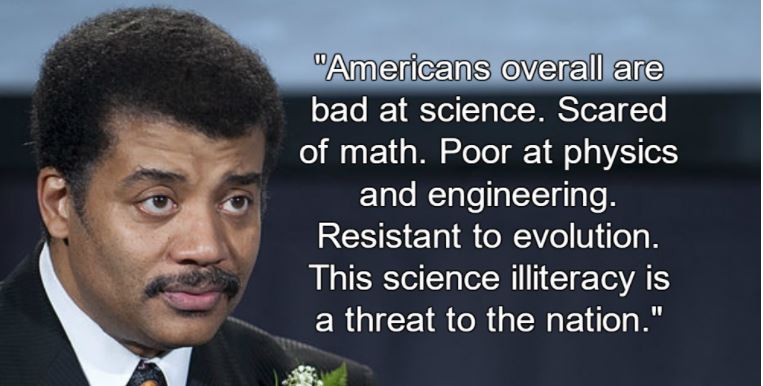
Neil deGrasse Tyson: Scientific Illiteracy Threatens U.S.


These are just a few of the articles and research I found on a lack of diversity in STEM.  If you don't like these links, there are thousands of others.


An experiment:  

Googling Scientist produced 40 identifiable people.  23 of them (58%) are white males.


Googling Engineer produced 46 identifiable people, 42 of them (91%) white males.