Showing posts with label teaching computers. Show all posts

Sunday, 26 January 2014

Rebranding & Refocusing on Applied Computer Technology


After learning about the messy history of computer studies in Ontario, I've been catching up on our school's history.  The computer studies department was created just prior to the new computer curriculum in order to create a headship for a computer science teacher who has since moved on.  The headship consolidated computer technology, computer science and the school IT support role all in one place.

When computer studies (actually computer science) became its own area of study independent from the rest of computer technology in 2009, our departmental divisions minimized that damage by keeping the now separated computer studies/technology (what's the difference? It's hard to tell with the vague titles) together.
  
Was it a good idea to keep computer studies and computer technology (two apparently completely different courses of study) together?  I'd argue that it's a pointless distinction based on a prejudice deeply ingrained in Ontario education.  Computer science teachers, like the majority of teachers, come from university/academic backgrounds.  These teachers are catered to in Ontario education with easier access to high pay grades (it's much easier for an academic teacher to gain level 4/honours specialist).  Many technology teachers who come into teaching through industry experience and apprenticeships (many of which are as long or longer than university programs) never achieve the highest pay grades in teaching.  Teaching in Ontario is inherently geared toward academics.

When computer science was amalgamated into computer technology (as a technology course), many comp-sci teachers thought it a demotion into 'tech'.  It took them eight years to get their academic subject back.

In a perfect world computer studies would be just that - computer studies, meaning a curriculum that addresses the subject completely from the most academic/theoretical side (computer-science) to the most applied/immediately useful (information technology, computer repair).  As in science (biology, chemistry, etc), we could have teachers with different backgrounds and training teaching complimentary subjects and collaborating within the same department.  It happens throughout the school (arts, science, tech), but apparently it can't happen in computer studies.  I believe this is because it attempts to straddle that academic/applied divide.

Between the political history of Ontario's computer studies and my own school's focus on consolidating heads, it looks like our computer studies headship will go away and computer science and computer technology will fly apart.  Personally, this is a relief.  Trying to give students access to coding through a computer science department that does more photocopying than English and clings to Turing as the be-all and end-all of programming languages has been a continuing frustration.  Being able to refocus around the more open technology curriculum in comp-tech would allow me to develop real world computing skills for students, something that I think 'computer studies' has failed to do.

If applied computing is the focus of computer-technology, then I don't intend to leave coding to computer science.  They can have the theoretical end of it all, and teach to university bound students interested in advanced mathematics, but I've long contended that coding is a universal skill that everyone should at least have a passing knowledge of, especially in the 21st Century.  To that end I've been remapping our course offerings in Computer Technology (as well as rebranding my subject area, because that is apparently - and sadly - what we have to do in Ontario).


A grade 9-12 curriculum of applied computer technology study using current technologies that would give students
immediately applicable skills. A student who took this path would be literate in information technology, computer
repair, networking and coding, as well as have an understanding of industry practices in all those fields.
Would this dig into computer science's sections?  Yes, but isn't it more important to introduce a computer technology curriculum that increases digital fluency school wide?  Computers may have once been a theoretical subject area, but they've long since become a daily part of our lives.  Our computer curriculum should be introducing computer fluency to as many students as possible.  Our comp-sci department hasn't had a single girl in any senior course in the past four years.  That has to change.  Many other students who have an interest in digital technology are chased out of computer science by the photocopies, mistakenly thinking that comp-sci will teach them applicable skills.  That has to change too.


Rebranding computer studies to computer technology, because that matters to people in Ontario Education (though
it causes a lot of confusion for everyone else).  It'd be nice if pedagogy instead of prejudice dictated our computer
studies curriculums.
Here are some other pieces created for the rebranding:


Taken from code.org's fantastic array of promotional material and ICTC's Canada specific technology industry research.
And yes, I cut out the word science after computer because that apparently causes confusion in Ontario.  Is this really
how we do computer studies in Ontario?  Yes, yes it is.

Here is the  post on the computer technology graphics.
Here is the post from grade 8 parent's night, where computer studies was still a subject headship, that's all gone now.

The computer studies prezi: showing parents a coherent focus on computer studies (comp-sci included)
The computer technology prezi: showing parents a coherent focus on applied computer technology (no comp-sci in sight).


Other Reading:

Straddling The Divide: the end of computer studies at CWDHS.
Do You Teach Computer Studies or Computer Studies?:  where Tim stumbles into the political distinctions in Ontario's computer curriculum.

Sunday, 19 January 2014

Straddling the Divide

I usually blog here to work out my thinking on a variety of education and technology situations I come across.  This one is no different.  I just read a series of suggestions for dismantling computer studies at our school.  I'm honestly curious as to the intention behind these suggestions, but in the meantime I'm trying to get the bees out of my head on this subject...


My school is odd in that it has a computer studies department.  This department is a combination of technology focused computer engineering credits (ICE/TEJ) and theoretical/math focused computer science (ICS) credits.  That our school combined these two very different disciplines into a single department has been both challenging and very forward thinking.

There is a push on now to align our headships with those of other schools.  Since the idea of a department that combines all aspects of computer technology under a single headship hasn't happened anywhere else, the urge is to dismantle computer studies.  The thinking behind this doesn't show a great understanding of what the computer subjects are (it was suggested the whole department just get put into business studies - a department that neither side of computer studies has anything to do with).  WIth so few people understanding what the fundamental computer subjects are, it makes it challenging to explain how things might evolve.  Ignorance drives many management decisions around digital technology education.

Trying to run computer studies has been a tricky ride.  Our computer science teacher only comes to our school for a semester, so the courses only run in the second half of the year.  On top of that other teachers aren't lining up to teach comp-sci.  Computer science would be better served in our school by being placed in our mathematics department and being taught by a variety of teachers, but then those teachers qualified in it should want to teach it and I get the sense that very few do.  

Computer science has been held captive by some strange teacher scheduling.  Attaching it to a larger department would be healthy for it.  I've tried to make moves in how and who teaches it, but nothing seems to have worked.  I'm frustrated and ready to hand it off.

Computer engineering is a hands-on technology course, much like auto-shop or manufacturing programs.  This course of study focuses on electronics and information technology.  Compared to computer science it's much more of a hands-on building and experimentally focused subject; it would logically belong with other technology credits.

The argument that we should re-align our headships with other schools feels like a step backwards to me though.  In five or ten years would our students be better served by a strong, comprehensive computer department, or by a traditional and arbitrary split in the subject?  Unfortunately, combining abstract mathematically focused computer programming with real-world engineering isn't easy, especially with how Ontario has handled teacher qualification in the subject.

Up until the past decade, computer science was the only computer qualification.  Like the guys in Big Bang Theory, the vast majority of computer science teachers have very strong theoretical backgrounds in the mathematics behind programming, but little experience in actually making computers work.  When computer studies was established as a technology course those theoretical computer science teachers were grand-fathered in as computer engineering teachers, though many of them had never installed a CPU in their lives and would have no idea where to even begin.  Asking them to provide onsite information technology support would be an impossibility for many of them.


That tech-ed certification took a mountain-load of paperwork
including industry certifications and proof of years of industry
experience.  If you were comp-sci when they brought it in, you
just got the certification...
So here we are in 2014 with many computer studies teachers who actually have little or no experience with the mechanical side of computing, though they have been given the OK to teach it.  This will eventually go away as those grand-fathered comp-sci teachers retire and future teachers will be expected to actually have an industry technology background in computers if they want to teach engineering.  In the meantime we've further muddied an emergent subject area that holds the key to producing  technologically fluent students who can function in the modern workplace.

What I suspect will happen with our forward thinking computer studies department is that it will be split and sent to math (comp-sci) and technology (comp-eng), and the onsite fix-it teacher role will not be considered a headship even though it manages just as much budget and far more equipment than any single department head.  This might be better for comp-sci, which has been dead-ended in our school as far as scheduling goes.  I don't think comp-eng will be hurt by moving to the tech department, so the splitting of the subjects into other areas doesn't really bother me, though it does make me wonder if we're moving in a direction opposite to social expectation.

I've been thinking about computer studies in terms of a specialization as well as a general fluency.  Perhaps future computer studies streams will include general technology fluency credits as well as specializations in engineering and coding, but I doubt it.  With computer fluency being a school (society?) wide expectation as well as the traditional fracture between computer science and computer mechanics, I fear that management energy will be spent on dividing and diminishing a subject that should instead be taking a central place as an integrated, adaptive department that produces 21st Century fluent graduates.


Wednesday, 3 April 2013

Meet Your Maker

www.arduino.cc
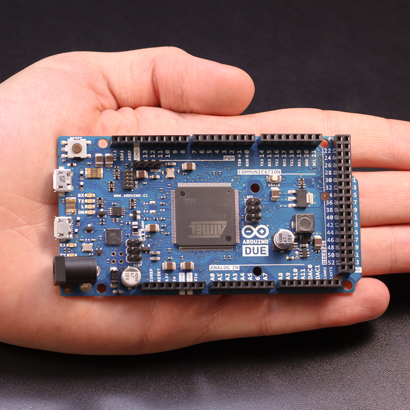
I'm working my way through my second semester with grade nines in computer studies. I've tried to bring as much 'shop' as I can into computer studies.  My background was in I.T., so getting into the nitty gritty of electronics has been an expansion of my craft which I've enjoyed as much as the students seem to.

Using Arduino microcontrollers we bridge the gap between hardware and software and get students comfortable with the idea of building circuits as well as controlling it with code.  This year I've also gotten a Raspberry Pi up and running as well as building dozens of desktops. A resurgent maker culture has made electronics much more accessible and customizable; it's a good time to be teaching computers.

Maker Culture
This semester we've been pulling apart broken electronics and reusing digital displays, microphones and other components in our Arduino Frankenstein creations.  Some of it will work, some of it won't, but the process will make Makers of many of the students.

The real fear in using technology is that many users don't have the faintest idea how things work.  When it breaks there isn't a frame of reference of where to begin, fixing anything seems impossible.  After breaking apart their first digital clock, or radio, or electronic game, students begin to recognize the components because they're already familiar with the bits and pieces having used them to assemble a dozen Arduino projects already.  With the mystery gone, they begin to grasp the power their minds and hands have.

I'm re-reading Matthew Crawford's Shopclass as Soulcraft.  It's such a complex read, with so many ideas packed into each page, a second run through will do me good.  If you're an educator, and you can take some well intended criticism, reading the first couple of chapters will challenge many of the assumptions we wrongly found current educational theory on.   I imagine most educators won't find the criticism comfortable, no matter how well intentioned.

I'm about to get my first motorcycle and I've found myself casting about, trying to figure out who I can get to maintain it for me.  A chapter in and this ex-mechanic is getting his hands on a shop manual and doing it himself.  One of the reasons I want to begin riding is to develop a closer relationship with the machinery I use.  The plastic covered, warrantied cars I drive don't do that.  The nakedness of a motorcycle begs for it; I'm looking forward to that quiet, focused mind driving busy hands.

There is something inherently valuable in being able to fix what you use.  I've never had to argue for the value of what we do in computer studies, the learning has inherent worth, is immediately useful, and applicable in a surprisingly wide range of situations.  From the insides of an operating system to the flow of electrons around a circuit, these students develop a familiarity and comfort level with something that most people are more than happy to use in blissful ignorance (until it breaks).  The tactile nature of the work also draws in even the most reticent.  Working with your hands, making something real work through trial and error, offers an experience missing from much of academia.  Crawford's philosophical attack on the globalized knowledge economy happens every day in my classroom.

Many of these students will move on to other interests in other fields, but none of them will ever again be at the mercy of their ignorance while working with a computer.  I'll have to paste rubrics and marks over all this to make it credible to the establishment, but the moment a student who has been whacking his head against his own bad wiring for half an hour realizes what he's done and fixes it himself, he has developed a tiny bit of independence, and perhaps realized that paying attention is a powerful ally.  Learning shouldn't be frustration free, if it were, it wouldn't mean anything.  With minds and hands engaged in a battle with realistic demands, the rewards are hard to quantify in a mid-term mark.

Sunday, 4 March 2012

The New Literacy

I recently became the head of Computer & Information Technology at my high school.  To many this might cause confusion, not many schools appear to have a head of digital technology.  When recently asked to join up with the other two heads of Comp/Info tech in our region I discovered that there aren't any, I am the sole head of digi-tech in my area.

A day in the life of that rare creature: the head of info-tech
I was supposed to be meeting up with them to plan our upcoming PD day.  Being the resourceful fellow I am, I started putting together ideas for the pd on prezi.  In thinking it through, I want to go after three ideas:  how we administer computer studies, how computer studies are presented in ministry curriculum (and the problems around that), and what the future of computer studies holds.

The general response I get from teachers around digital technology is that very few know anything about it, but they're all expected to be comfortable with it.  The other response is that the digital natives won't learn anything from us because they already know everything.

The myth of the digital native is just that, a myth.  Student digital fluency is pretty much the same as the general population, except they spend a lot more time doing the same, limited activities in digital space.  The digital native is, in  many cases, actually the digital serf.

After working my way through thinking about computer studies and how it's taught in my school (and board), I want to try and change the way computer studies are delivered.  The current state of curriculum is that of a still maturing discipline, hogtied to its past.  In talking to other computer teachers, they find themselves (variously) under math or business headships as a sub-department.  On top of that computer studies are divided into two sections: computer engineering (hardware) which falls within the tech department (along with carpentry and automotive repair amongst others), and computer science (programming), which tends to get swallowed by business or math.

It's common for computer science teachers to have nothing whatsoever to do with computer engineering teachers.  This makes it tricky to develop coordinated curriculum, share resources, plan field trips or even just advocate effectively to hire the vanishingly few qualified computer teachers there are out there.

As I mention in the prezi, this is the equivalent of us teaching music by having a course on maintaining, tuning, building and repairing musical instruments, and then having a completely different course on how to read and write music; theory separated from mechanics.  In the case of music, an ancient discipline that has evolved over millenia, we recognize an obviously unified course of study.  Computers do not have the benefit of these years of evolution.  We need to start unifying these skills.

The division of the discipline results in crushingly small numbers in computer science.  When I was in computer science in the 1980s, we ran six sections of senior computer science a year... on card readers!  Last year my high school (roughly the same size as the one I attended back in the day), ran a single, mixed (academic/applied) section of computer science at the grade 12 level, and it wasn't full.  Did computers hit a high point in the 80's and become a less relevant part of modern life?  Why on Earth would we teach fewer people how they work now?

Computers are a part of everyday life in 2012.  We have come to expect a level of competency in our population equivalent to the universality of literacy or numeracy, but we don't teach to this need, and it is largely unmet.  We are instead producing graduates who teach themselves bad habits on computers and then we fear their apparent familiarity; we wouldn't dream of teaching literacy or numeracy like this.

A coherent push to unify computer studies would reduce staff technology fears, improve digital pedagogy, build digital fluency in both staff and students and actually prepare people for the digital world that is being built around them.  Failure to do this is sending our students into the future without addressing an increasingly urgent and important skillset.