Showing posts with label non-linear learning. Show all posts

Sunday, 5 June 2016

Skills Canada Nationals

I've never been on a provincial team before, it's quite the experience. In addition to the unnatural process of leaving school, getting on an aeroplane and flying away from the classroom in early June, it also puts you together with all the other gold medalists, some of whom you lost against in other categories, except now you're team mates.  

There are a lot of different students on Team Ontario, from the quietest introverts to the loudest extroverts you can imagine, yet they have all demonstrated advanced skills in their particular field of study and are proven craftspeople.  They range from cocky and arrogant to nervous and uncertain; there is no typical Skills Ontario gold medalist.  

There are a lot of different ways to coach a Skills competitor as well and the teachers here reflect that, but the one thing they all have in common is engagement - I've yet to see a shrug of indifference from anyone.  I've been accused of not always playing well with others, but when the others are this capable and willing, it's hard not to get caught up in it all.

We did a solid day of sight seeing yesterday (photos below) and today we've had the day off before the opening ceremonies in a couple of hours.  I'm studiously taking notes so I can understand this new part of the process we haven't done before.

I've brought the most experienced IT/Networking student I've had to date.  It occurred to me the other night that IT, like many other stochastic technology skills, depends largely on experience driven intuition to overcome unclear problems in complex systems.  A student who was willing to try and fail many times ended up developing into my best candidate because of that resiliency.  I've brought students more skilled in academics to Skills Ontario, but never seen them break through because everything had to be just so.  You can't clarify a problem let alone solve it if you aren't willing to flounder around in the dark trying things first.  If you read any modern text on how to teach, floundering around isn't favourable to a transparent, linear process of problem resolution.  If everyone else keeps doing that, we've got an edge.


If you're involved in Ontario education at all, the hashtags to follow on twitter are #teamON and #teamOntario, and the National Skill Competition hashtag #SCNC2016.  Re-tweets of Team Ontario are appreciated (there is a team spirit award based on social media participation).

Later today and tomorrow we'll be knee deep in the competition, and then I'll be able to assess how well we prepared for this unknown.  Until then, isn't New Brunswick beautiful?

Team Ontario at Hopewell Rocks in The Bay of Fundy


Pointe-du-ChĂȘne
Dinner at Catch 22 in Moncton


9lb lobster is watching you - 9lb lobster is unimpressed

Wednesday, 3 April 2013

Meet Your Maker

www.arduino.cc
I'm working my way through my second semester with grade nines in computer studies. I've tried to bring as much 'shop' as I can into computer studies.  My background was in I.T., so getting into the nitty gritty of electronics has been an expansion of my craft which I've enjoyed as much as the students seem to.

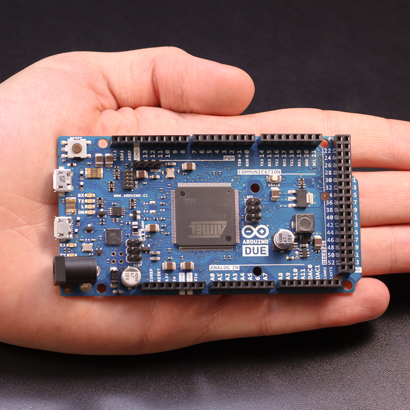
Using Arduino microcontrollers we bridge the gap between hardware and software and get students comfortable with the idea of building circuits as well as controlling it with code.  This year I've also gotten a Raspberry Pi up and running as well as building dozens of desktops. A resurgent maker culture has made electronics much more accessible and customizable; it's a good time to be teaching computers.

Maker Culture
This semester we've been pulling apart broken electronics and reusing digital displays, microphones and other components in our Arduino Frankenstein creations.  Some of it will work, some of it won't, but the process will make Makers of many of the students.

The real fear in using technology is that many users don't have the faintest idea how things work.  When it breaks there isn't a frame of reference of where to begin, fixing anything seems impossible.  After breaking apart their first digital clock, or radio, or electronic game, students begin to recognize the components because they're already familiar with the bits and pieces having used them to assemble a dozen Arduino projects already.  With the mystery gone, they begin to grasp the power their minds and hands have.

I'm re-reading Matthew Crawford's Shopclass as Soulcraft.  It's such a complex read, with so many ideas packed into each page, a second run through will do me good.  If you're an educator, and you can take some well intended criticism, reading the first couple of chapters will challenge many of the assumptions we wrongly found current educational theory on.   I imagine most educators won't find the criticism comfortable, no matter how well intentioned.

I'm about to get my first motorcycle and I've found myself casting about, trying to figure out who I can get to maintain it for me.  A chapter in and this ex-mechanic is getting his hands on a shop manual and doing it himself.  One of the reasons I want to begin riding is to develop a closer relationship with the machinery I use.  The plastic covered, warrantied cars I drive don't do that.  The nakedness of a motorcycle begs for it; I'm looking forward to that quiet, focused mind driving busy hands.

There is something inherently valuable in being able to fix what you use.  I've never had to argue for the value of what we do in computer studies, the learning has inherent worth, is immediately useful, and applicable in a surprisingly wide range of situations.  From the insides of an operating system to the flow of electrons around a circuit, these students develop a familiarity and comfort level with something that most people are more than happy to use in blissful ignorance (until it breaks).  The tactile nature of the work also draws in even the most reticent.  Working with your hands, making something real work through trial and error, offers an experience missing from much of academia.  Crawford's philosophical attack on the globalized knowledge economy happens every day in my classroom.

Many of these students will move on to other interests in other fields, but none of them will ever again be at the mercy of their ignorance while working with a computer.  I'll have to paste rubrics and marks over all this to make it credible to the establishment, but the moment a student who has been whacking his head against his own bad wiring for half an hour realizes what he's done and fixes it himself, he has developed a tiny bit of independence, and perhaps realized that paying attention is a powerful ally.  Learning shouldn't be frustration free, if it were, it wouldn't mean anything.  With minds and hands engaged in a battle with realistic demands, the rewards are hard to quantify in a mid-term mark.