Showing posts sorted by relevance for query no such thing as sTEM. Sort by date Show all posts

Saturday, 14 December 2019

Dirty Vocational Subjects Sullying the August Disciplines

https://www.wired.com/story/how-we-learned-to-love-pedagogical-vapor-stem/

"just tell me what STEM is. Above all, I want to know how science, a byword for all knowledge, and mathematics, the great harmonies of the universe—two august disciplines that have defined education since antiquity—yoked themselves to the vocational field of engineering and, worst of all, to “technology,” which could mean almost anything from space mirrors to VSCO girls."

... I can't tell if Virginia is being faceitious or not.  Probably not.  Brains are paramount in academics, they may as well be in jars.
I wonder what Matt Crawford would say about this dismissal of manual intelligence.

https://temkblog.blogspot.com/2019/09/there-is-no-stem.html


As one of those vocational teacher types the 'august disciplines" have yoked themselves to, I'm once again thumped in the head with just how classist the education system is, but it was a bit of a shock to see WIRED advocating it.  I wrote about how there really is no such thing as STEM, at least in Ontario classrooms, in September.   Nice to see WIRED weighing in on the pedagogical smokescreen that is STEM, though I don't think they disentangled it very effectively.


Good to remember that not all academics are so prejudiced.

Mathematics (aka: 'the great harmonies of the universe') and science ("a byword for knowledge") are pretty much all STEM are about when it comes to application in the classroom.  There has been no real movement on technology and engineering in the high schools where we are.  All STEM has done is paid for math manipulables and fund science.  Technology and especially engineering are still an afterthought at best.  If you've been fooled by the STEM smokescreen to think that there is any collaboration between those august disciplines and the filthy vocational classes, you can relax, because there isn't.  If you want to be an engineer in university, take science and maths courses, because that's all there are in most high schools.


If you've ever wondered why technology students (and their teachers) feel disenfranchised in their own schools, WIRED has made that adundantly clear in this month's edition.  We're less than, we get it.
An op-ed piece on how the august disciplines that have defined education since antiquity have yoked themselves to vocational fields, along with a cover article about one of those vocational types who dropped out of engineering to make things.  WIRED's come here go away editorial stance is a bit hard to follow.
You'd expect academic types in The Atlantic to rip on skills based education in favour of their own university disciplines, but WIRED ripping on engineering and technology?  I'm at a loss to understand the end game there.  The philosopher in me wants to pull out Aristophanes' Clouds and take a swing at the hallowed halls of academia while the technician wants to point out that people were apprenticing in the trades millenia before anyone was throwing square hats in the air, if we're going to talk about what has defined education since antiquity.

STEM is indeed nonsense, and I don't disagree with a lot of what Virginia says about how the STEM smokescreen has gone down, other than to say that STEM never really happened at all for those of us at the bottom end of the educational value spectrum.


... because there isn't.  It's a just SM, as it's always been: https://temkblog.blogspot.com/2019/09/there-is-no-stem.html

Sunday, 15 September 2019

There is no STEM

There has recently been a fair bit of push back against STEM as a focus in schools, but as a classroom technology and engineering teacher I have to tell you, there is no STEM.  By sticking science, technology, engineering and mathematics in an acronym, many people, especially people who aren't in classrooms, think that this is some kind of coherent strategy, but I can assure you it isn't, at least not in Ontario.

Maths and sciences are mandatory courses throughout a student's career.  Technology and engineering are not, ever.  Maths gets even more additional attention because of EQAO standardized testing, so numeracy is an expectation for all teachers throughout the school.  Science is mandatory throughout elementary grades and high school students are required to take two science credits to graduate.  Maths and science are baked into a student's school experience.

Want to feel the sting of irrelevance?  Waterloo University (and many others) do a fine job of underlining how little technology and engineering programs matter in high schools.  If you're signing up for their software engineering program you need lots of maths... and lots of science.  Engineering for an engineering program?  Well, there's no point in making it a requirement because it's an optional course that is barely taught anywhere in Ontario.  At one point I heard less than 15% of Ontario schools run any kind of coherent computer engineering program.  The technology prejudice is a bit different, that's more of a blue collar white collar thing, but engineering, as an academic focus, has been swallowed whole by science and maths.

SM has always been a foundational piece of public education, and remains so, but the entire 'STEM push' is really an SM push, engineering and technology remain barely taught and entirely optional and peripheral in Ontario classrooms, assuming they exist at all.  Tactile, hands on technology programs with their lower class sizes, expensive tools and safety concerns are the first to get canned when the money tightens up.  It's cheaper to stuff 30+ kids into an 'academic' (aka: text based/theory) course where you can sit them in efficient rows and learn linearly until everyone gets the same right answer.  It doesn't do much for them in the real world, but it's cheaper.  Math and science make sense in a school system focused on those kinds of academic economics.

Governments get voted in by creating panic about student mathematics skills, and how science is taught is another political hot-spot that gives politicians lots of traction.  I have no doubt that these two subjects enjoy the attention they do because of this political fecundity.  Engineering and technology?  The skills that build the critical infrastructures that allow us to feed, connect and house people?  Not much political mucking to be done there, it just needs to work.

Last year I had a student graduate and go on to college for computer technology.  He had some trouble in school, but was on track to be a successful computer technician.  In his first post-secondary computer technology courses he was feeling well ahead of his classmates and was confident of success, but not all his classes went so well.  He ended up failing his maths course and eventually dropped out of the whole program.  Talking to his mother after this happened, she implied that I'd failed to teach him the mathematics he needed to succeed.  I didn't argue the point (I don't teach mathematics other than in conjunction with what we're doing in computer technology).  There is an entire mathematics department with ten times more personnel, resources and infinitely more presence in the school than me an my oft-forgotten program, but with STEM ringing in her ears we're all lumped into that failure.

This year I'm rocking a budget (which I've already exceeded in the second week of September) that is 25% of what it was a few years ago.  Everyone is seeing cuts, but the mandatory departments are protected in a way that our optional courses are not.  Where they might see a 10% cut, I'm seeing 75%, because what I teach is not a priority.  That cut is happening while I'm actually up in sections due the success we've had in various competitions and the media attention we've received (but not in our own yearbook).

You can rail against STEM all you like, but there is no such thing.  If there has been any STEM funding with this focus it hasn't found my technology and engineering courses because not all STEMs are considered worthy of political attention.  The best I've seen out of this are a few more manipulatives in maths classes based on corporate tech-in-a-box, but building a kit isn't engineering.  When you're engineering there are no instructions and the end goal may not even be possible, you certainly don't end up with everyone looking at the same finished product.  That kind of stochastic process is another reason why eng/tech is frowned upon in academic settings; they like everyone to arrive at the same correct answer.  It makes for a clear sense of progress, but learning to deal with potential failure in reality isn't wasted time in school.


In the article that kicked this off, you get a very articulate and scholarly take on the value of a liberal arts education and how it can free you from economic bondage in our overpopulated and automated world.  The down-your-nose 'yeomanship' / servitude argument pasted on STEM and CTE as a preparation for the workplace ignores the many soft skills that hands-on technical training can provide in favour of the argument that students of technology are dimensionless corporate shills whose only interest is to find work in a system that doesn't really need them.  But aren't we all yoked to our broken economic system?  A degree doesn't somehow free you from that commitment, but it will bury you in debt and the attendant servitude to it.  A technical education costs less and teaches you some valuable soft skills that will help you in any vocation, while also offering you a shot at something other than general labour.  The engineering design process technology training is predicated on would help anyone in any aspect of life where they must self-organize and tackle a problem that may not have a solution.

I have a liberal arts education (English and philosophy majors) and I greatly value the discipline it has brought to both my thinking and writing, but that doesn't mean I don't value hands-on mastery and the attendant good habits that accompany it.  It took me a long time to value my technical, hands-on skills against the constant noise of academic/white collar prejudice and privilege.  Since moving to technology from English teaching, I face that pressure daily, as do my tech-teaching colleagues.  In speaking to many people I still get the sense that technical, hands-on skills are inferior to academic skills, but I find them complimentary, not less than.  It would be quite a thing if we could value a student's technical hands-on mastery as much as we value their academic grades... or even their sports abilities.

I get the sense that Professor Zaloom believes the future will be full of highly educated academics elucidating on the state of humanity while they float above economic necessities with their intellectual freedom.  I'd argue that learning hands-on technical skills gives you a variety of soft-skills (persistence, self-organization, resilience, humility to name a few) that will help students deal with that overpopulated, automated future every bit as much as a degree might.

If you follow that article through, it's less about STEM and more about what we're going to do in an increasingly automated world populated by more and more people with less and less to do.  In that no-win situation, the value of being able to repair your own technology and understand the hidden systems that regulate your life is another kind of literacy that I think all students should have, especially if they are going to depend on those systems and let them direct their lives.


A good read on the fecundity of hands-on mastery.
Technology education offers that insight along with a plethora of tough-soft skills that are wanting in many academic programs where established reality is whatever the teacher thinks it should be.  There is a hard, real-world edge to technology training that is often hard to find in the mentally constructed world of academic achievement.  Matt Crawford describes management thinking in Shop Class as Soulcraft as having a 'peculiarly chancy and fluid character' due to its success criteria being changeable depending on the whims of the people in charge.  That was my experience in too many academic situations.  You know where you stand in technology because reality isn't fickle.

It's a shame that this pointless acronym has thrown a blanket over the grossly neglected curriculums of technology and engineering, while giving even more attention to two of the Disney princesses of academia.  To be honest with you, I think technology and engineering would be just where it is now had this STEM focus never happened, which tells you something about how this ed-fad has gone down.


Additional Reading:


The rich intersection of a liberal arts background and technology expertise:  Zen and the Art of Motorcycle Maintenance.


Shop Class as Soulcraft is a must read, but so is Matt's follow-up, The World Beyond Your Head.  A philosophical look at the power of tactile skills to free us from consumerism and the mental world of the digital attention economy.

Tuesday, 13 February 2018

The Failure of STEM

This has been taken apart and rewritten several times now.  It started with a colleague sharing an article about how STEM grads aren't particularly useful to STEM based industries.  I've long found STEM to be overly white collar focused and exclusive.  This article about how the predominantly wealthy, white, males of STEM aren't being benefited by their exclusively designed courses made me start to deconstruct my own experiences (mainly failures) in STEM, and led to this...

***


http://michiganfuture.org/01/2018/google-finds-stem-skills-arent-the-most-important-skills/
What this actually means is Google isn't
happy with how we're teaching STEM?
I've seen several articles about how we need to produce less STEM (Science, Technology, Engineering, Mathematics) focused students.  Most recently Google noted that the soft skills it needs aren't found in STEM focused students.  This isn't a function of the STEM subjects being taught, it's a function of how they are taught.  STEM has traditionally been treated as an exclusively academic discipline.  This white collar approach to STEM means that teachers focus on theory and academics to the exclusion of everything else.  If any applied activity does happen in a traditional STEM class it's a pre-conceived experiment with a directed, single outcome.  Students in many traditional STEM classrooms aren't given open problems to solve and generally don't tend to solve what they are given collaboratively.  Traditionally, STEM defines itself by heavy, repetitive, solo workloads.

Not so strangely, Google and other technology companies aren't finding these theoretically focused science-matheletes particularly good at actually building things, or working with other people.  In fact, Google has found STEM graduates lacking in all of the 4 C's that are generally considered vital for success in the 21st Century workplace.

Critical thinking, creativity, communication and collaboration aren't unique to the liberal arts, but when I was in high school one of the things that alienated me from maths and the sciences I wanted to make a part of my future was a stubborn disregard for all of those things.  My maths and science teachers made a point of grading based on theoretical knowledge and individual work, usually based on hours of daily homework that a kid working seven days a week found difficult to get to.  If group activity happened at all, anything that came of it was based on solo, theoretical analysis usually shunted to after school hours when I was busy working.  There was always a proper way to do something with very strict process guidelines - my STEM teachers thought that good students all hand in logically and visually identical hours of homework.

Perhaps it is my messy, and mocked liberal arts background has enabled me to approach STEM in an applied way that many STEM teachers find less academically rigorous, but then I don't think demanding thirty identical projects from my students to be particularly academically rigorous, I'd actually call it academically lazy.  That supposedly academically rigorous STEM program doesn't appear to be producing STEM grads that STEM industries find useful, though it is handy at making a socioeconomically homogeneous STEM culture.

Who this homework heavy, compliance based learning does benefit are the socially enabled, neuro-typical alpha academics - the kids who tend to look like the white, middle-class, neuro-typical people who populate STEM jobs.  These students are pre-selected for STEM success because homework is the only work they have to do, and they play for grades because they have a socioeconomic status that allows them to focus on school work to the exclusion of everything else.  Socially enabled, neuro-typical, wealthy, white, North American males tend to fall into STEM for these reasons.  The party line is that these are the best students.  The fact that they all tend to come from the same background is a happy accident.

As a neuro-atypical student from a lower SES, I was preordained to struggle with STEM.  Expectations of hours of homework, easily picking up the mathematics and the promise of some exclusive future in STEM industries which my family had no experience with had no currency with me and seemed designed to diminish me.  When you come from a lower income background you tend to be pragmatic.  Being an immigrant with ASD and constantly wondering why people are doing what they are doing tends to make you pretty damned pragmatic too.  I have always been proud of my hands-on skills and how they have provided for me, but now I realize that those skills are a necessity of my socio-economic status as much as anything else.

I just finished reading Guy Martin's autobiographical When You Dead, You Dead.  Guy has always had an impact on me because he's an ASD technician who has stumbled into celebrity.  Guy is fiercely proud of his hands-on skills and still considers being a mechanic his primary focus even though he is also a successful motorcycle racer and television personality.  Any neuro-typical person would drop the dirty work and immediately double down on the celebrity, but not Guy.  I identify with him because he too comes from a lower SES and has found success in spite of various social pressures against him.  Between this book and the research for this piece, I'm left with the belief that STEM is what it is because it has been designed to knock all but a certain class of people out of succeeding in it.  If we're wondering why wealthy, white males constitute the bulk of our academically focused, homework heavy STEM programs, then this singular focus on socio-economically enabled, homework intensive, conformity driven learning is a clear reason.

***

A senior student build presentation to lead junior engineers
through why communication and collaboration can lead to
better creativity and problem solving.  Exactly what Google
feels is missing from STEM graduates, but mine learn it.
This semester I'm teaching another packed to capacity class of software engineering students.  As a kid who dropped out of computer science because he wasn't good at doing everything by someone else's exclusively particular and time consuming rules, this might seem odd.  However, my software engineering class isn't designed to chase students out with steep academic demands.  In fact, my students range from essential to applied to academic, and they will all see success and feel that STEM is something they are capable and worthy of.

Applied engineering courses, especially in software, are thin on the ground, but they are exactly what we need to be doing to fill the gap between what we're graduating and what companies like Google need.  Academically focused STEM teachers need to recognize that they can't keep producing one trick ponies who are only good at being in school.  That skill-set becomes useless the moment you graduate, and while they are producing graduates people find difficult to work with, they are excluding the majority of students who should have at least a passing acquaintance with STEM as it has so much influence over our lives.


“We don’t want to just increase the number of American students in STEM,” President Obama said in March. “We want to make sure everyone is involved.”

On the left is a slide from one of my grade eleven student's introductory presentations to the course.  Her skills are well rounded and jump all over the look-fors Google wants.  The purpose of these presentations is to get hired into student designed and built projects that run in the second half of the semester.  These feel like job interviews as everyone in the room is looking for who they can most effectively work with, they feel high stakes and important.  The last thing on anyone's mind are hard technology skills or a lack of theoretical knowledge.  Some of the juniors worried about it in their presentations, but as one of the seniors said while teaching the seminar on Friday, "if you can listen and work with us, we can teach you the technical stuff."  And that work will happen in class, not on your own time in the hours after school.

This course has been packed to cap with 31 students each
semester over the past 2 years while academic senior science

classes run half full - prejudice in action? Students recognize that
this course teaches them the tangible skills needed to get into
competitive post-secondary programs in the field.  Many of
our graduates can attest to that now that we're in year four.

Most of them are applied students in college.
I've worked hard these past five years to develop a program that helps students from all streams into a working relationship with computer technology.  I've graduated a number of engineers in a variety of disciplines, which is very satisfying, but my greatest successes have been enabling applied students to find their genius in technology.  Those students, overlooked or punished for their lack of academic prowess in other STEM classes, find themselves winning provincial competitions and going on to successful careers through college programs.  As Obama suggests, STEM should be for everyone.

The engineers were always going to find their way (and unsurprisingly they have all been socially empowered middle class white males), but enabling a student who was never considered STEM and who had been labelled essential to find her genius in electronics and gain access to a competitive post-secondary college program?  That feels like the kind of magic STEM is capable of.  It's what drives me.

Helping another into a technically challenging digital arts program with almost impossible entry requirements?  Yet another STEM refugee finding her way back to what she has a talent for.

Taking a student from struggling to show up to school to finding his genius as an IT technician, winning a provincial championship and going on to succeed in a challenging post-secondary program?  He was considered mediocre by other STEM programs.

Unsurprisingly, a number of ASD and other neuro-atypical students find their way to me because I give them a space to express their love of technology and the science that supports it without the arrogance and exclusivity.  All of these disenfranchised people are who STEM should have been helping in the first place.  Computer technology programs like mine run in less than 30% of Ontario high schools.  For the vast majority of Ontario students, you better be well off and able to spend hours a night on homework to prove yourself STEMworthy.  If you live in a conservative area like I do, you also better be male, because those science and technology jobs are for boys.

All Ontario graduates, regardless of gender, race, SES or neuro-atypicality need flexible and inclusive access to STEM programs, and those STEM programs need to be about so much more than theoretically intensive, homework heavy courses designed to chase economically disadvantaged and/or neuro-atypical kids out of the STEM classroom.  My son is heading to high school next year and it is through his ASD that I've come to better recognize my own.  I fear most for him in STEM classrooms.  I remember how it felt to be told I was incapable in science and math.  Getting the STEM dreams beaten out of me in high school took years to unravel and repair, and I'll carry the bruises my entire life.

Every graduate we produce should have some grasp of STEM as it's a vital 21st Century need.  STEM needs to be accessible to everyone regardless of their circumstantial ability to deal with expectations founded on abusive, compliance driven workloads.  This would not only prevent the pre-selection of circumstantially advantaged students making STEM programs more diverse, it would also make STEM programs more functionally useful to the industries that need these graduates.

We've designed a system that creates a stunted skillset that only does a few things well.  In doing so we've done a disservice to dimensionless STEM graduates who industry finds impossible to work with.  While that is going on, the majority of students are chased out of STEM because of a mythology of academic stringency that is really based on socioeconomic circumstance.  Our STEM education appears to not be working for anyone.

If there was ever a time to re-vamp how we teach science, technology, engineering and mathematics, this is that moment.  In the 21st Century we need everyone to have a working knowledge of STEM as it touches all our lives all the time.  We also need to diversify the pool of STEM experts in order to create a resilient and creative industry that reflects the people it serves.  Then there are all the applied STEM jobs we aren't able to fill because academically focused STEM programs ignore them.  The obvious place to start is in public high schools where we need to stop pre-selecting for a dangerously homogeneous STEM population that is increasingly unable to understand, let alone represent the interests of us all.


Some Research on how we've handled STEM:

https://eric.ed.gov/?id=EJ1144312   "...low-SES students are disadvantaged in the pursuit of STEM majors. Higher family SES compensates for negative predictors of STEM enrollment, such as gender and race, and strengthens the effect of positive predictor, such as math preparation. The gender and racial gaps in STEM enrollment narrows for students from higher SES families, and the positive correlation between math preparation and STEM enrollment strengthens with the increase of family SES"

How Socioeconomic Inequality Affects STEM Education:  "schools give “unequal access to rigorous mathematics content” between low- and high-income students" - the correlation between SES (socioeconomic status) and Ontario's streaming system in high school is well established.  We save the rigorous mathematics for the socially empowered kids, so they get the nice STEM jobs.  Except evidently we're not even doing them any favours.

STEM Education: "...gender disparities continue to be a defining characteristic of STEM education."

The STEM Workforce: An Occupational Overview:
"In STEM, there is under-representation of women and minorities; where minorities and women are employed they are often concentrated in lower-paying technical occupations."
"Black and Hispanic or Latino STEM professionals still earned thousands of dollars less than White and Asian STEM professionals in 2014."

Understanding the STEM Path through High School and into University Programs: "...key determinants of the decision to stay on the ‘STEM preparation path’ are the students’ previous grades in science and math, especially at the point when the subject becomes optional."   ... and especially in the sciences.  

I'll take a swing at this one.  The "gatekeepers of university" I met as science teachers in grade 10 and 11 failed me despite my obvious interest in the subject.  The main reason I didn't get the grades I needed in STEM courses was because working 20+ hours a week (I was helping pay for my family's mortgage) meant my homework was never as shiny as the wealthier kids whose job was homework.  Having ASD, I also had problems understanding and meeting the very specific communications conventions that others seemed to grasp intuitively.  Those gatekeepers are still alive and well in high school math and science classes all over the province now.  Want to know why lower SES students aren't in STEM?  It's reserved for the neuro-typical rich.  A lower SES kid touched by ASD never had a chance.

That fake sense of 'academic credibility' tied to an inflexible schedule that caters to wealthier students' ability to concentrate on studying to due dates means the kids who don't have to work or worry about food or a safe place to spend the night get to be successful.  The digital divide has only exacerbated this since my time in school  The neuro-atypical kids who need extra time to grok the material?  They too are excluded.  U
ltimately, if you want to be in something intellectually demanding like STEM, you need to be advantaged.  That is why STEM is predominantly an upper class, white, male field.

Science minister, Trudeau encourage young girls to pursue STEM studies at U of T conference:
"We are committed to strengthening science in Canada by improving the representation of women in STEM (science, technology, engineering and mathematics) disciplines,”
“We try to shake the stigma attached to studying math that many young women experience in high school,”
Science Minister Kirsty Duncan

Equality And Diversity Toolkit: socio-economic background:  "Those facing the greatest inequality are more likely to be young people who are disabled, from lower socio-economic backgrounds, refugees, ethnic minorities, asylum seekers, Gypsies and Travellers, lesbian, gay, bisexual and transgender, and young mothers."

THE INEXCUSABLE LACK OF DIVERSITY IN GENETIC STUDIES:
"Whites of European ancestry still make up the vast majority of subjects in large genetic studies — over 80 percent."

Business is now dominated by white, privately educated 'tech bros' – and that's bad news for the rest of us


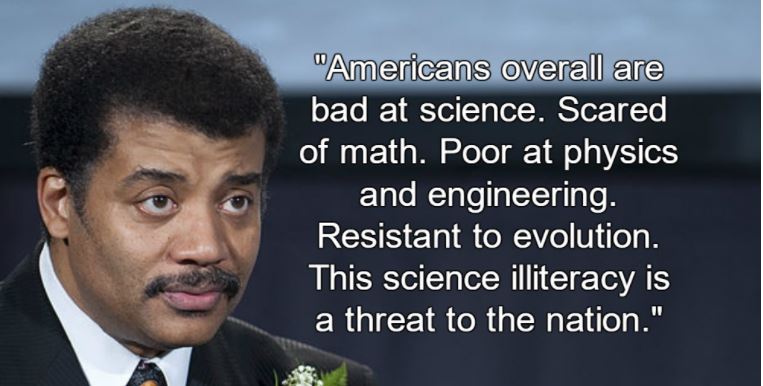
Neil deGrasse Tyson: Scientific Illiteracy Threatens U.S.


These are just a few of the articles and research I found on a lack of diversity in STEM.  If you don't like these links, there are thousands of others.


An experiment:  

Googling Scientist produced 40 identifiable people.  23 of them (58%) are white males.


Googling Engineer produced 46 identifiable people, 42 of them (91%) white males.

Monday, 9 June 2025

Reframing Digital Literacy: what it is and how to teach it

I did a research piece for Canadian School Libraries last winter that looked at how you might develop the complex, multi-disciplinary digital skills you find in cybersecurity in a relatively short period of time. When I first put it together I found myself spending a lot of the time at the front of the paper trying to define the digital skills we find ourselves lacking. I came to the conclusion that adopting high abstraction digital tools such as those you find in cyber, A.I. and other emerging technologies makes for an impossible leap when we don't have the basics in place.

How we've missed this in education is a good question. Anyone with a background in the field knows that there is no such thing as a 'digital native' and that this myth, which has caused so much damage as it prevents education from building meaningful digital pedagogy, kicked off what has become a multi-generational skills shortage that is doing real damage to both the economy and students' future prospects.

Digital technology has worked its way into everything in 2025, so being unable to make productive use of it damages our ability to compete in a digitally connected world. That we continue to hum and haw about what digital fluency is and how to build it suggests that we're not going to resolve this problem any time soon in Canadian classrooms.

We've seen coding and computational thinking finally worm their way into education curriculums, but this is the tip of a much bigger iceberg when it comes to understanding what digital skills are and how we should approach them.

Originally created for this post on why education is seemingly unwilling to address a persistent digital skills shortage (from 2023).

I've been pushing the boundary of what constitutes digital skills ever since I first got knocked out of digital technology by the compsci grads who had claimed the keys to the kingdom. It took me decades to recover and come around to the approach I have now that nurtures my hacking mindset rather than dismissing it.

A few weeks ago I attended a STEM space technology event put on by a partner of ours in Mississauga. Moonshot was designed to introduce students to the interdisciplinary nature of STEM careers - something we go out of our way to avoid in our departmentalized schools. If you're building space technology as an electronics engineer your job doesn't end where the wires stop, it also involves collaborating with all the other teams to ensure the electronics are working in conjunction with mechanical, communications, logistics and many other systems. Why do schools insist on siloing subjects like they do?

That siloing is also hobbling digital literacy development. The current coding/computational thinking fixation is just the latest in a long line of compsci blinkered approaches to addressing digital technology literacy. What would it look like if we represented the true breadth of digital and taught that wider scope of understanding in our classrooms? We use this technology daily to do everything from operate our schools to deliver learning across all subjects, but then avoid teaching how it all works at all costs.

At the Moonshot event I was introduced to the CEO of MineConnect, an organization that represents and works to promote the mining industry in Ontario. Our chat at Moonshot led to introductions with Science North over their Mine Evolution game. I'm hoping to get a web based version of that running on UBC's Quantum Arcade - perhaps with a quantum add-on as quantum sensing is going to drastically improve s in how we mine in the next decade.

What does this have to do with digital literacy? The fact that you're asking this question shows how little most people understand about where digital technologies come from, and that understanding should be a part of their literacy, don't you think? If you look up 'digital supply chain' you don't get what we need to build digital technologies, instead you only information on how to 'go digital'. Even industry goes out of its way to ignore what digital technology is... except in rare mineral mining, hence my work with Mine Connect and Science North.

It's incredible to me that this late in our adoption of this technology that we still go out of our way not to teach what is needed to make digital happen. The current wholesale adoption of A.I. in education is a great example of this ignorance, as was the rush to the cloud. There is no cloud (it's someone else's computer) and A.I. isn't intelligent, but we'll grasp at digital straws with willful ignorance if we think it'll make our lives easier.

In the CSL research I created a pyramid that showed how I taught digital awareness from the ground up in my rural high school. The assumption is that 'kids nowadays' know all of this, but that simply isn't the case. If you want to disable a 'digital native' it's as easy as flipping a switch they don't usually use. If you want to send a room of them into a panic unplug the Wi-Fi router (assuming you know what that is and where to find it).

Start with the physical substrata and work your way up into the more abstract realms of digital technology; starting digital fluency at coding is like starting literacy at poetry. 

In grade 9 I got a lot of digitally engrossed students who thought they knew it all because adults who lack even basic digital familiarity have been telling them that for years. Revealing that this perceived expertise is merely familiarity with a couple of devices and specific software doesn't take long. In many cases these kids had owned a series of game consoles and phones and that's it. Familiarity with software is limited to games and social media. Very few knew what an operating system was let alone the firmware that kick start it; this is literally how all computers work yet almost no one seems to know it.

Last week I was in Ottawa doing an introduction to OSes on our cyber range. The grade 5s didn't know what an OS was, but by the end of our 90 minutes they certainly did. They also learned the boot process any digital device goes through from firmware start-up to OS loading to where most users think computers start - when the desktop appears. They also got to interact with Linux as well as Windows on their Chromebooks (we use a cloud based cyber range so you're not limited to the restrictive OS on your local device). None of the students knew what Linux was, but they use it everyday because their Chromebook ChromeOS is Linux based. By the end of our afternoon they were navigating the settings in multiple OSes and understood how you could interrupt boot sequences to gain control and interrupt processes.

That we hand students tools like these without any understanding of what they are or how they work is a great failure in modern education, especially as we are only accelerating our use of these machines in classrooms. Considering how widespread their use is now, digital skills have become an ignored foundational literacy.

***

How did I tackle this ever widening digital divide in my program? We started by making our lab DIY. My seniors and I built the first iteration out of e-waste and then kept improving it as we found resources. In 2015 I returned tens of thousands of dollars in board run desktops which then got converted into half a dozen chromebook carts for other classes to use. In that first year our DIY conversion saved the board over tens of thousands of dollars.

In 2016 I contacted AMD and asked if they'd provide CPUs for our next upgrade, and they did! Our board's SHSM program provided additional funding and for a fraction of the cost of a board run computer lab we had significantly better hardware and control over installing our own OSes and software, which allowed us to provide digital learning opportunities others couldn't reach.

By 2018 we had a mix of AMD APUs that could handle the graphic modelling we were doing in our game-dev class. This meant they were also more than capable of running any other software we needed to build digital fluency from scratch. In the process my one teacher department went on to win multiple national awards across a staggering range of digital domains ranging from coding and electronics to IT & Networking, 3d modelling and cybersecurity. DIYing is essential if we're to build digital skills without those compsci coding blinkers on. Even worse is buying a ready-made 'edtech solution' which does it all for you and doesn't teach anyone (staff or students) how technology works. It also tends to trap you in a single brand rather than striving for agnostic digital comprehension.

Having a flexible digital learning environment that we built ourselves allowed us to create unique student projects. In grade 9 that means starting with Arduino micro-controllers. Not only did these open source electronics allow us to develop an understanding of the circuits that all digital technologies depend on, it also offered a tangible approach to programming where the lines of code would produce direct outputs like turning on lights or making music. By the end of the Arduino unit students were confident in building circuits and for many it was also their first opportunity to code in text as opposed to blocks.

As you can see by the gif, getting into Arduino in grade 9 means that by grade 10 students are building customized electronics solutions to everything from the PC temperature system you see to various robotics and digital art installations. One of my seniors worked out an Arduino based fuel management system for his pickup that he then sold to others. Understanding the electronics substrata that digital operates in is imperative for well rounded digital literacy.

From that basis in electronics and introductory coding we moved to information technology and networking - two subjects studiously ignored in schools even though every one of them depends on both to operate every day. We begin I.T. by walking students through PC parts in our recently delivered Computers For Schools desktops. After covering the safety requirements for tools and working with machines that can contain enough electricity to knock you out if you don't treat them with respect, we dug in.

The biggest point I make in PC building is about static management. As long as students respect the delicacy of the electronics (which they already understand thanks to Arduino), they quickly gain confidence and are never again tyrannized by this technology. After this unit no one calls a desktop PC a "CPU", because that's just one part of a much bigger device. Calling a desktop a CPU is like calling a car an engine.

We typically spend a week taking a part desktops and putting them back together. Getting them is no problem because no one wants desktops these days and CFS has piles of them they're aching to give to classrooms. When we wrap up the IT unit anyone who wants to take their computer home can - you'd be surprised how many students (and teachers) don't own a home computer. The best part? If it ever goes wrong they know how to fix it because the built it from the hardware up.

Once we got the hardware figured out we installed operating systems. This involves interrupting boot processes and learning how to navigate BIOSes and other types of firmware. Everyone gets to the point where they have Windows and Linux installed, but some students want to build an epic stack. This can involve adding extra hard drives and going through install processes on up to a dozen OSes. By the end of week two we've got OSes installed and students have explored many more than the one that came on their phone or game system (which are often Linux based). We've even had our share of Hackintoshes in the lab.

Our final step in the IT/Networking unit is to connect the desktops together on a local network and figure out IP addressing and all those other connectivity details most people have no concept of even though they use them daily. Building a network like this takes it out of theory and into tangible practice, as does the PC building. By the end of the week no one is calling connectivity 'WIFI' any more. Ethernet is ethernet and wireless is wireless and everyone knows how to configure and troubleshoot both. The motivation is that once we've got our network up and running on a domain where everyone can see each other we cue up a LAN party and everyone plays networked games on their DIY systems.

Our wide ranging and borderless approach to digital skills created interesting opportunities to mash up different technologies that are typically taught in siloed departments (if at all). In this case a student leveraged Arduino electronics, PC building and networking with robotics to build a whimsical LAN party robotrain.

We do eventually get to coding of course, but starting that far up the tech pyramid is absurd. High level coding languages (the only ones schools teach) are resource heavy because they spell out commands in easy to understand English (easier for humans = harder for machines). We did HTML and associated languages in grade 9 so the internet didn't baffle anyone anymore. In grade 10 it was Python simply because it's in such wide use. In the senior grades students choose their own coding focus, but not before I drag them through an introduction to low level 'machine language' programming so they have an appreciation for all the work those high level languages are doing for them. After you've had to do your own memory addressing, it changes you.

Leveraging this digital literacy, my seniors helped keep the tech in our building running smoothly. This not only saved money but also gave students invaluable public facing support experience. Perhaps the best example of this was our Chromebook graveyard. We would take in broken machines and then repair them with bits from others. After a couple of years of service most high schools in our board had lost over a quarter of their Chromebooks to abuse and accidents - we enjoyed a 90%+ active rate meaning more computers for more students at no extra cost.

The 'that's not your job' thinking that most boards operate under prevents this kind of innovation and cost savings. I always am left wondering to whose benefit.

The other benefit was that our digital fluency made us resilient. When COVID struck and everyone else folded up their classes and went home early, the digitally fluent students in my program didn't want to lose their semester's work and we went online, created our own Discord and landed it remotely. It took a bit of re-culturing because the students needed reminding that this isn't a gaming Discord - you're at school, but they quickly adapted and were sharing 3d models, Unity code snippets, circuit designs and network details back and forth to build complex demonstrations of their skills. In many cases they were doing it on the PCs they'd built when they were in grades 9 or 10 because many parents thinking digital technology is a toy.

So what's stopping us from graduating digitally fluent students with a wide range of skills who are ready to go into any field they choose because every one of them these days involves some kind of digital technology? I come from a time when home computers were brand new and no one had worked out how to 'do them' yet. In that primordial binary goo I hacked my own software and learned how to build my own hardware. My millwright apprenticeship turned to IT because of my familiarity with this new technology but I never came at it as a scientist might, but rather as a mechanic would. Hacking isn't bad, it's humans finding ways to approach digital technology as agents rather than consumers.

If we're going to tackle complex interdisciplinary digital technologies like artificial intelligence with anything other than willful ignorance, we need to start building an understanding of digital from the ground up so students and teachers can see beyond the box tech companies want to keep you in. If we're putting children on it, we should be showing them how it works so that they become more than what most of us are: consumers.


This is from a decade ago. FB has faded from relevance, but every 'tech' we use follows the same approach: your attention is the product being sold.

It might sound counter-intuitive, but cybersecurity offers a unique approach to tech that other subjects lack. Cyber is inherently about edge cases and encourages a 'meta' mindset when approaching digital environments. You're not a component inside the system, you've recognized its limitations and are working beyond it where being human is not only a benefit but essential. With all the 'AI doing it for you' going on these days does being human matter? Other approaches seem easier and wear 'academic credibility' better, but what is academic credibility but another system meant to contain your thinking? If we keep our current status quo we will, at best, produce another generation of passive consumers. We've tried that and it isn't going well. Time to hack this problem by putting students back in control of the technology we are using to control them. It's time to embrace your inner hacker.