
This has been taken apart and rewritten several times now. It started with a colleague sharing an article about how STEM grads aren't particularly useful to STEM based industries. I've long found STEM to be overly white collar focused and exclusive. This article about how the predominantly wealthy, white, males of STEM aren't being benefited by their exclusively designed courses made me start to deconstruct my own experiences (mainly failures) in STEM, and led to this...
***
I've seen several articles about how we need to produce less STEM (Science, Technology, Engineering, Mathematics) focused students. Most recently Google noted that the soft skills it needs aren't found in STEM focused students. This isn't a function of the STEM subjects being taught, it's a function of how they are taught. STEM has traditionally been treated as an exclusively academic discipline. This white collar approach to STEM means that teachers focus on theory and academics to the exclusion of everything else. If any applied activity does happen in a traditional STEM class it's a pre-conceived experiment with a directed, single outcome. Students in many traditional STEM classrooms aren't given open problems to solve and generally don't tend to solve what they are given collaboratively. Traditionally, STEM defines itself by heavy, repetitive, solo workloads.***
 |
| What this actually means is Google isn't happy with how we're teaching STEM? |
Not so strangely, Google and other technology companies aren't finding these theoretically focused science-matheletes particularly good at actually building things, or working with other people. In fact, Google has found STEM graduates lacking in all of the 4 C's that are generally considered vital for success in the 21st Century workplace.
Critical thinking, creativity, communication and collaboration aren't unique to the liberal arts, but when I was in high school one of the things that alienated me from maths and the sciences I wanted to make a part of my future was a stubborn disregard for all of those things. My maths and science teachers made a point of grading based on theoretical knowledge and individual work, usually based on hours of daily homework that a kid working seven days a week found difficult to get to. If group activity happened at all, anything that came of it was based on solo, theoretical analysis usually shunted to after school hours when I was busy working. There was always a proper way to do something with very strict process guidelines - my STEM teachers thought that good students all hand in logically and visually identical hours of homework.
Perhaps it is my messy, and mocked liberal arts background has enabled me to approach STEM in an applied way that many STEM teachers find less academically rigorous, but then I don't think demanding thirty identical projects from my students to be particularly academically rigorous, I'd actually call it academically lazy. That supposedly academically rigorous STEM program doesn't appear to be producing STEM grads that STEM industries find useful, though it is handy at making a socioeconomically homogeneous STEM culture.
Who this homework heavy, compliance based learning does benefit are the socially enabled, neuro-typical alpha academics - the kids who tend to look like the white, middle-class, neuro-typical people who populate STEM jobs. These students are pre-selected for STEM success because homework is the only work they have to do, and they play for grades because they have a socioeconomic status that allows them to focus on school work to the exclusion of everything else. Socially enabled, neuro-typical, wealthy, white, North American males tend to fall into STEM for these reasons. The party line is that these are the best students. The fact that they all tend to come from the same background is a happy accident.
As a neuro-atypical student from a lower SES, I was preordained to struggle with STEM. Expectations of hours of homework, easily picking up the mathematics and the promise of some exclusive future in STEM industries which my family had no experience with had no currency with me and seemed designed to diminish me. When you come from a lower income background you tend to be pragmatic. Being an immigrant with ASD and constantly wondering why people are doing what they are doing tends to make you pretty damned pragmatic too. I have always been proud of my hands-on skills and how they have provided for me, but now I realize that those skills are a necessity of my socio-economic status as much as anything else.
I just finished reading Guy Martin's autobiographical When You Dead, You Dead. Guy has always had an impact on me because he's an ASD technician who has stumbled into celebrity. Guy is fiercely proud of his hands-on skills and still considers being a mechanic his primary focus even though he is also a successful motorcycle racer and television personality. Any neuro-typical person would drop the dirty work and immediately double down on the celebrity, but not Guy. I identify with him because he too comes from a lower SES and has found success in spite of various social pressures against him. Between this book and the research for this piece, I'm left with the belief that STEM is what it is because it has been designed to knock all but a certain class of people out of succeeding in it. If we're wondering why wealthy, white males constitute the bulk of our academically focused, homework heavy STEM programs, then this singular focus on socio-economically enabled, homework intensive, conformity driven learning is a clear reason.
***
 |
| A senior student build presentation to lead junior engineers through why communication and collaboration can lead to better creativity and problem solving. Exactly what Google feels is missing from STEM graduates, but mine learn it. |
This semester I'm teaching another packed to capacity class of software engineering students. As a kid who dropped out of computer science because he wasn't good at doing everything by someone else's exclusively particular and time consuming rules, this might seem odd. However, my software engineering class isn't designed to chase students out with steep academic demands. In fact, my students range from essential to applied to academic, and they will all see success and feel that STEM is something they are capable and worthy of.
Applied engineering courses, especially in software, are thin on the ground, but they are exactly what we need to be doing to fill the gap between what we're graduating and what companies like Google need. Academically focused STEM teachers need to recognize that they can't keep producing one trick ponies who are only good at being in school. That skill-set becomes useless the moment you graduate, and while they are producing graduates people find difficult to work with, they are excluding the majority of students who should have at least a passing acquaintance with STEM as it has so much influence over our lives.
“We don’t want to just increase the number of American students in STEM,” President Obama said in March. “We want to make sure everyone is involved.”
 On the left is a slide from one of my grade eleven student's introductory presentations to the course. Her skills are well rounded and jump all over the look-fors Google wants. The purpose of these presentations is to get hired into student designed and built projects that run in the second half of the semester. These feel like job interviews as everyone in the room is looking for who they can most effectively work with, they feel high stakes and important. The last thing on anyone's mind are hard technology skills or a lack of theoretical knowledge. Some of the juniors worried about it in their presentations, but as one of the seniors said while teaching the seminar on Friday, "if you can listen and work with us, we can teach you the technical stuff." And that work will happen in class, not on your own time in the hours after school.
 |
| This course has been packed to cap with 31 students each semester over the past 2 years while academic senior science classes run half full - prejudice in action? Students recognize that this course teaches them the tangible skills needed to get into competitive post-secondary programs in the field. Many of our graduates can attest to that now that we're in year four. Most of them are applied students in college. |
I've worked hard these past five years to develop a program that helps students from all streams into a working relationship with computer technology. I've graduated a number of engineers in a variety of disciplines, which is very satisfying, but my greatest successes have been enabling applied students to find their genius in technology. Those students, overlooked or punished for their lack of academic prowess in other STEM classes, find themselves winning provincial competitions and going on to successful careers through college programs. As Obama suggests, STEM should be for everyone.
The engineers were always going to find their way (and unsurprisingly they have all been socially empowered middle class white males), but enabling a student who was never considered STEM and who had been labelled essential to find her genius in electronics and gain access to a competitive post-secondary college program? That feels like the kind of magic STEM is capable of. It's what drives me.
Helping another into a technically challenging digital arts program with almost impossible entry requirements? Yet another STEM refugee finding her way back to what she has a talent for.
Taking a student from struggling to show up to school to finding his genius as an IT technician, winning a provincial championship and going on to succeed in a challenging post-secondary program? He was considered mediocre by other STEM programs.
Unsurprisingly, a number of ASD and other neuro-atypical students find their way to me because I give them a space to express their love of technology and the science that supports it without the arrogance and exclusivity. All of these disenfranchised people are who STEM should have been helping in the first place. Computer technology programs like mine run in less than 30% of Ontario high schools. For the vast majority of Ontario students, you better be well off and able to spend hours a night on homework to prove yourself STEMworthy. If you live in a conservative area like I do, you also better be male, because those science and technology jobs are for boys.
All Ontario graduates, regardless of gender, race, SES or neuro-atypicality need flexible and inclusive access to STEM programs, and those STEM programs need to be about so much more than theoretically intensive, homework heavy courses designed to chase economically disadvantaged and/or neuro-atypical kids out of the STEM classroom. My son is heading to high school next year and it is through his ASD that I've come to better recognize my own. I fear most for him in STEM classrooms. I remember how it felt to be told I was incapable in science and math. Getting the STEM dreams beaten out of me in high school took years to unravel and repair, and I'll carry the bruises my entire life.
Every graduate we produce should have some grasp of STEM as it's a vital 21st Century need. STEM needs to be accessible to everyone regardless of their circumstantial ability to deal with expectations founded on abusive, compliance driven workloads. This would not only prevent the pre-selection of circumstantially advantaged students making STEM programs more diverse, it would also make STEM programs more functionally useful to the industries that need these graduates.
 We've designed a system that creates a stunted skillset that only does a few things well. In doing so we've done a disservice to dimensionless STEM graduates who industry finds impossible to work with. While that is going on, the majority of students are chased out of STEM because of a mythology of academic stringency that is really based on socioeconomic circumstance. Our STEM education appears to not be working for anyone.
If there was ever a time to re-vamp how we teach science, technology, engineering and mathematics, this is that moment. In the 21st Century we need everyone to have a working knowledge of STEM as it touches all our lives all the time. We also need to diversify the pool of STEM experts in order to create a resilient and creative industry that reflects the people it serves. Then there are all the applied STEM jobs we aren't able to fill because academically focused STEM programs ignore them. The obvious place to start is in public high schools where we need to stop pre-selecting for a dangerously homogeneous STEM population that is increasingly unable to understand, let alone represent the interests of us all.
Some Research on how we've handled STEM:
https://eric.ed.gov/?id=EJ1144312 "...low-SES students are disadvantaged in the pursuit of STEM majors. Higher family SES compensates for negative predictors of STEM enrollment, such as gender and race, and strengthens the effect of positive predictor, such as math preparation. The gender and racial gaps in STEM enrollment narrows for students from higher SES families, and the positive correlation between math preparation and STEM enrollment strengthens with the increase of family SES"
How Socioeconomic Inequality Affects STEM Education: "schools give “unequal access to rigorous mathematics content” between low- and high-income students" - the correlation between SES (socioeconomic status) and Ontario's streaming system in high school is well established. We save the rigorous mathematics for the socially empowered kids, so they get the nice STEM jobs. Except evidently we're not even doing them any favours.
STEM Education: "...gender disparities continue to be a defining characteristic of STEM education."
The STEM Workforce: An Occupational Overview:
"In STEM, there is under-representation of women and minorities; where minorities and women are employed they are often concentrated in lower-paying technical occupations."
"Black and Hispanic or Latino STEM professionals still earned thousands of dollars less than White and Asian STEM professionals in 2014."
Understanding the STEM Path through High School and into University Programs: "...key determinants of the decision to stay on the ‘STEM preparation path’ are the students’ previous grades in science and math, especially at the point when the subject becomes optional." ... and especially in the sciences.
I'll take a swing at this one. The "gatekeepers of university" I met as science teachers in grade 10 and 11 failed me despite my obvious interest in the subject. The main reason I didn't get the grades I needed in STEM courses was because working 20+ hours a week (I was helping pay for my family's mortgage) meant my homework was never as shiny as the wealthier kids whose job was homework. Having ASD, I also had problems understanding and meeting the very specific communications conventions that others seemed to grasp intuitively. Those gatekeepers are still alive and well in high school math and science classes all over the province now. Want to know why lower SES students aren't in STEM? It's reserved for the neuro-typical rich. A lower SES kid touched by ASD never had a chance.
That fake sense of 'academic credibility' tied to an inflexible schedule that caters to wealthier students' ability to concentrate on studying to due dates means the kids who don't have to work or worry about food or a safe place to spend the night get to be successful. The digital divide has only exacerbated this since my time in school The neuro-atypical kids who need extra time to grok the material? They too are excluded. Ultimately, if you want to be in something intellectually demanding like STEM, you need to be advantaged. That is why STEM is predominantly an upper class, white, male field.
Science minister, Trudeau encourage young girls to pursue STEM studies at U of T conference:
"We are committed to strengthening science in Canada by improving the representation of women in STEM (science, technology, engineering and mathematics) disciplines,”
“We try to shake the stigma attached to studying math that many young women experience in high school,”
Science Minister Kirsty Duncan
Equality And Diversity Toolkit: socio-economic background: "Those facing the greatest inequality are more likely to be young people who are disabled, from lower socio-economic backgrounds, refugees, ethnic minorities, asylum seekers, Gypsies and Travellers, lesbian, gay, bisexual and transgender, and young mothers."
THE INEXCUSABLE LACK OF DIVERSITY IN GENETIC STUDIES:
"Whites of European ancestry still make up the vast majority of subjects in large genetic studies — over 80 percent."
Business is now dominated by white, privately educated 'tech bros' – and that's bad news for the rest of us
Neil deGrasse Tyson: Scientific Illiteracy Threatens U.S.
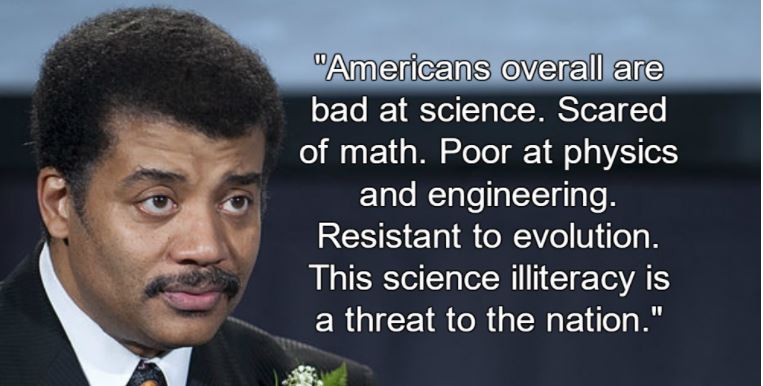
These are just a few of the articles and research I found on a lack of diversity in STEM. If you don't like these links, there are thousands of others.
 An experiment:

 An experiment:
Googling Scientist produced 40 identifiable people. 23 of them (58%) are white males.

Googling Engineer produced 46 identifiable people, 42 of them (91%) white males.


