Monday, 20 February 2023

The New Creativity

Picture Limitless Creativity at Your Fingertips
I recently did a talk with the awesome Heidi Siwak about how educators might understand and engage with emerging artificial intelligence technology rather than doing what education usually does and bury its head in the sand.

A few days later I'm reading WIRED and Kevin Kelly nails down not only a way to migrate into this disconcerting future full of AIs, but also how it works and why everyone shouldn't be terrified of it:

"Generative AI will alter how we design just about everything. Oh, and not a single human artist will lose their job because of this new technology."

That's a pretty daring prediction, but Kelly goes on to explain that most AI generated visual art isn't being used in traditional places. Instead it's a deeply personal form of visual expression hyper focused on the co-creator (the human working with the AI). As a result, much of the art produced by AI acts as a kind of art therapy. That hyper personal focus is something education systems (based on 19th Century factories) really struggle with, but it's the future if honouring equity and diversity matter in any real way.

What has me most excited about AI is precisely that it treats people more like individuals than people do. If a future education system has AI teaching assistants that radically individualize instruction, then I consider that a massive win for children and a huge step forward in terms of pedagogical best practice. The only resistance to this individualized, equitable technology enhanced future would be by the people managing the current status quo for their own benefit.

Instead of a teacher who barely remembers your child's name, let alone his reading level or his neurodiversities, an AI that responds to his needs precisely and when he needs it to sounds like the kind of future I want to live in. We're currently happy with loud attention seekers getting most of the attention in class while the quiet ones fall through the cracks, and by 'we' I mean the people running public education.

No humans may lose their jobs with visual arts AIs in circulation, but I suspect some teachers might. The ones making all the noise about banning AI are the very ones Clarke was talking about in his famous quote. A hybrid AI assisted classroom can offer the kind of individual attention that our schools have always struggled to provide, but not if education bans it and hides from this inevitable future for as long as it can.

In the article, Kelly goes on to talk about how AI democratizes visual arts. There is a follow up piece that talks about the 19th Century panic around the emergence of photography (painting is dead!). Each of these technology disruptions put visual mediums into more people's hands. There was a similar panic when smartphones made everyone a photographer in the early 21st Century. Just because you have a camera in your hands doesn't make you a photographer, any more than waving a paint brush makes you a painter. There is intentionality implicit in art that technical skill is only a part of. Machines that make it more accessible don't give the users those esoteric art skills needed to make art, but they do offer a 'lowercase' opportunity to visually express your ideas.


Knee jerk reactions to these technological disruptions give Kelly a chance to talk about the 'tech panic cycle'. This is another not very flattering mirror for education to peer into. This cycle of panic defines how education has stumbled when facing every emergent technology in the past 40 years.The latest AI panic is just another in a long line of poorly managed evolutionary opportunities. Education has always been more interested in maintaining a self-serving status quo rather than exploring enhancements to pedagogy. The digital skills crisis and flurry of successful cyberattacks we're in the middle of are the result of systemic failures to teach emerging digital media literacies that stretch back into the 1980s.

The AI in Your Classroom presentation Heidi and I put together gives examples of how two teachers focused on evolving pedagogical best practices have explored AI. In my case we got into it five years ago when a parent who happened to be on the IBM Watson team offered to get us going on coding AI powered chatbots. We found this so easy to do that it ended up being part of our grade 10 coding curriculum along with web development. At the same time my game development students were discovering that we needed to get a handle on enemy AI scripting in Unity or our games wouldn't play well (stupid enemies are boring). The introduction to AI had students learning about intents and thinking about coding in a collaborative rather than dictatorial way. This not only enriched our game development scripting, but it also led to seniors exploring adaptive algorithms in large data-sets and exploring GitHub's CoPilot. This approach has had us learning 'AI Whispering' years before it became an emergent media literacy...

"Behind this new magecraft is the art of prompting. Each artist or designer develops a way of persuading an AI to yield its best by evolving their prompts. Let’s call these new artists AI whisperers, or prompt artists, or promptors. The promptors work almost as directors, guiding the work of their alien collaborators toward a unified vision. The convoluted process required to tease a first-rate picture out of an AI is quickly emerging as a fine-art skill." - WIRED


 Heidi leapt into ChatGPT when it first arrived and has done the hard work of building this new media literacy of 'AI Whisper'. From there she early adopted Education CoPilot, which promises to be a time saver for teachers who want to spend more time individualizing their students' learning rather than making tedious, one-size-fits-all lesson plans. The majority of our presentation had Heidi walking teachers through how ChatGPT works and showing examples of how Education CoPilot can produce excellent highly-constrained materials (like lesson and unit plans).

Reading Kelly's article focused on AI visual design a week after doing that AI in the classroom presentation resonates. The one time I was allowed to teach visual arts in high school, I was given a grade 9 curriculum that was so prescriptive that the projects in it sounded like directions for an AI: 'Make an acrylic painting using the techniques practised in class in the style of the Group of Seven'. 'Using perspective drawing techniques, draw a picture of a room in your house'. I understand the need for these skills focused assessments, but the opportunity to create wasn't something grade 9s were being encouraged to do. The entire course was entirely focused on lowercase creativity making it very easy for an AI to do the work. Maybe the seniors got to explore uppercase creativity, but I never got a look in at any of those classes. This raises difficult questions around how we're going to develop skills when AI keeps stepping in to do work that students only see as busy work.

The other thing this visual arts department fixated on was photography, which they described as 'real' photography complete with dark room and chemicals. The follow up WIRED art history piece on the 19th Century photography panic casts a poor light on that thinking. Photography was considered the 'end of painting' when it first appeared, but nothing of the sort happened. What the new medium of photography did was create new influences that enriched both painting and the emerging medium. AI visual design will likely follow a similar path. What doesn't work is clinging to an old way of thinking rather than encouraging this enriching influence.

Dall-E AI generated future makerspace
I took photography as a unit in art college and it bankrupted me. I loved it and I was good at it, but 'real' photography seems to be a be-spoke, privileged medium that the idle rich always find their way to. The cost of it caused me to eventually drop out because I couldn't juggle 40+ hours of night shift work a week with full days in class. At the time I believed this was a great personal failure on my part, but with the benefit of hind-sight, I'm amazed at how much my immigrant socioeconomic status defined my access to and success in education, and especially in the arts.

I found my way back into photography when we lived in Japan after I graduated from university with massive student debts (another economically dictated decision). Digital cameras were just coming out in Japan in the late 90s and I got my hands on them early. This technology democratized photography and let me get back into it without bankrupting me. Hearing an arrogant gatekeeper-to-the-arts telling me that what I did wasn't real photography was difficult to take. This approach to the arts is quite common in high schools.

Dall-E AI Generated: future classroom
Kelly suggests that AI supported visual arts won't stop human made art because it serves a different need. In this way, like photography before it, AI visual co-creation will bring the ability to produce visual  representations of their thinking to more people - providing we start teaching this new media literacy of 'AI whispering'. AI art generation is a fascinating new combination of language skills, visual media and technology, and utilizing it will bring visual expression to more people. The only ones getting angry about it are those who are guarding the privileged gateway to it.

So much technology use is hobbled by the politics of education. Black and white politicizing means unions paint technology as teacher replacing evil, which gives politicians interested in pushing education into private hands exactly what they need to do that. When no one is focused on improving pedagogy, we all lose. What education should be focused on is using every means at out disposal (technological, social or otherwise) to individualize and amplify student learning. Sometimes that might mean technology supplants a teaching position, but more often it should mean we are reorganizing how we do things to produce better learning outcomes though intelligent use of emerging technologies.

AI will certainly shake the foundations of education. The dinosaurs fixated on taking us back to the good 'ol days of rote learning and mono-cultural absolutism where all students learn rigorously in the same way should be far behind us, but those are the days every anti-technology educator longs for - when things (like photography) were 'real' and inaccessible to the proles.

The thing I'm most looking forward to with AI in education? It so quickly makes what we're doing in our low resolution factory-designed classrooms look poor that it will turn over the apple cart and force public education to reboot into a more individually focused,  student-success driven model.  In those future schools students will experience mastery learning based on their own abilities and will be supported individually. Some students may graduate high school at 15 years old, others may need it until they are 20. Learning would be hyper personalized and teachers would be conducting an orchestra of supports and data rather than overseeing a low-resolution classroom where individuals matter less than their age. 
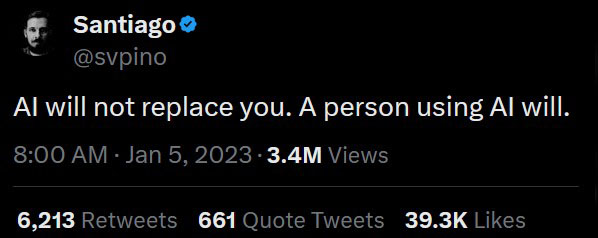
Education will focus on making this not true for as long as it possible can, but it shouldn't.


From an artist's point of view, Kelly doesn't explain the place of human made art in a future where 'lower case', 'rote' art, ie: what is evidently taught in most schools, will be machine created. This raises some interesting questions about how we teach complex skill sets (like photography or painting) in a world where the skills are expressed by machines rather than people. If machines are reading to you and writing for you, do we need to know how to do those things either? Chasing that goal would lead to dire consequences. There are real benefits to human beings learning complex, tangible skills, both psychologically and economically.

When I take my decade old SLR out and catch a moment in nature because its talking to me, I'm not chewing through processing resources so that a machine intelligence with no understanding of nature creates an inherently abstract representation of what I'm experiencing. I take photographs to catch the light and make a moment permanent, so you can float in it. Technology assists me in doing that by helping me collect and share the data from that moment, but that data has a realness to it that no AI abstraction, no matter how well generated, will manage - because the AI and the media it creates is implicitly not in the world experiencing it directly.

When I was out in the polar vortex, I discovered that the ice crystal structures forming were incredibly complex compared to what I usually see, so I started working the macro lens as though I were seeing Joan Miro paintings. Imperfections and unconscious details render a natural truth in the photograph. Technology assists, but doesn't replace the subject.


Dall-E understands macro photography and ice and creates a credible copy, but its always going to be inherently ethereal because it is an abstraction rather than a moment. Even well worded, maximum-AI outputs are going to lack an inherent realism until the AI itself is put into contact with nature directly - which too will eventually happen!

 I'm also not tied to the internet while I'm out in the world photographing. At its very best, an AI might be able to imitate getting close to nature, but it could never actually do it because of what it is. In the same way that a spectacular CGI effect in a film is almost too realistic, a good old-fashioned stunt with IRL effects offers nuance that makes it feel more genuine (because it is). No matter how good AI gets, it'll always be imitating that immediacy until it gets to experience it directly and then express its understanding of that experience.

Thanks to Ridley Scott we were imagining intelligent machines reflecting on their experiences back in 1982. AI may eventually replace human artists, but they would need to inhabit a physical body that lets them experience reality directly. "All those moments, lost in time..." Current AI cannot come close to that, but it can help democratize visual arts.
 

Is having machines do it all for you really good for you?
Kelly also doesn't mention what all of this accessibility to visual expression for everyone is costing us in terms of resources. AI will get better in terms of energy consumption, but it isn't a very efficient way to do simple things that people are too lazy to learn how to do themselves (like draw). If we're going to keep off-loading work people are more than capable of doing in a world where we have more and more people and fewer resources, does pouring billions into AI make any sense for anyone except billionaires looking for cheaper more compliant labour?

I (like WIRED) still fall on the side of exploring and integrating emerging technology if it means better learning outcomes for students. One of our greatest underused resources are all those humans we've got out there struggling to make ends meet. A dozen of them are the Einsteins we need to solve the global problems we face. If AI can help us realize more students' potential, then surely we should always be coming down on that side of things, even when it's scary and involves us changing old habits.

Monday, 13 February 2023

Why Canadian Education is so Reluctant to Move on Digital Literacy

 I had a talk the other evening with a Vancouver educator teaching cybersecurity curriculum at his local school board. Like me, Todd has been working alone, offering the local students he has access to the opportunity to learn cyber-skills that would benefit them in any field of study. And, like me, he has helped to launch a few students into careers in this radically underserved career pathway.

Despite being 3 time zones away, Todd is running into the same difficulties I am in Canada's regionally siloed education systems. When he reached out to other districts in British Columbia they didn't engage, and so his work remains isolated to his district. Cyber-attacks on education fill the news, yet the vast majority of students have no access to learning this emerging (and essential) digital media literacy.

In 2017/18 we got involved in CyberTitan, the Canadian centre of excellence for the international CyberPatriot competition (the world's largest student cybersecurity competition). From there we developed a thriving cybersecurity extracurricular program that has since influenced our in-class curriculum in timely and diverse ways., but when I asked a system 'lead' if we could help other schools to engage in the same competition I was told, "it's already running at your school." Leaving us in the same place that Todd finds himself.

With headlines like these (an extensive list of Canadian education hacks can be found at the bottom of the post) wouldn't cybersafety training in every school be a good idea?

Ontario school board trying to recover from cyber incident

Personal data of 70,000 students accessed in school board cyberattack

Cyber-education is just the most obvious part of a much bigger digital skills iceberg.

Yet we barely cover coding in public schools, let alone the rest - even though we depend on it in every subject. Digital technology has become integral to learning in 2023, yet no one has a dedicated curriculum to teach the cybersafety and the technical skills needed to use it safely and effectively. It's why remote learning during the pandemic became an abject failure.


Cyber-Education: an Educational Failure in Education

You have to ask yourself why schools aren't engaging in the cyber-education they should have started when eLearning and other online education technology placed student data and attention in potentially hackable online locations. The answer to this question has eluded me for years, but I'm starting to formulate a theory. It began with seeing yet another example of the rhetoric that public education likes to lean on:

"The lack of robust cybersecurity measures stems from underfunding within schools and #educational groups. Often, they don’t have enough resources or budget to invest in #cybersecurity or train staff and students to practice good cyber habits."

Why are Canadian schools so vulnerable to cyberattacks?


ICTC-CTIC has been offering free cyber-learning opportunities for years in addition to running CyberTitan since 2017 with the support of the Communication's Security Establishment (Canada's cryptography agency charged with securing government communications). It doesn't get more credible than that this, yet we struggle to engage individual teachers let alone school system 'leaders' with these FREE programs. The reticence isn't about cost, it's an unwillingness to make time and take responsibility for our rampant use of education technology. The vast majority of cyberattacks depend upon user digital illiteracy to succeed and we face a global digital skills crisis, yet education seems determined to do as little as possible to address any of it. The question is why.

No where did our failure to address
digital literacy appear more apparent than
during the remote learning emergency.
Perhaps picking up the baton now would highlight a failure that has been decades in the making. By doing nothing, public education remains the victim of cybercriminals and technology disruption, just like the rest of us.

We should have begun developing this technology media fluency the moment we placed student learning in hackable online spaces. It's not a flattering analysis, yet moving past this head-in-the-sand approach is essential if we're going to keep putting student (and staff) information where criminals can exploit it. Our collective ignorance is the cause of the current cybersecurity crisis and the global digital skills shortage; it's a failure of education... by education!


Our Failure to Systematically Teach Digital Literacy Even As It Becomes an Expectation in All Subjects

Poor user digital fluency is the result of our failure to teach it in any kind of systemic manner. The cunning plan so far has been to hope parents are doing it at home* (*this link shows that they might be, if they can afford it). Meanwhile parents are assuming a comprehensive digital skills curriculum is happening in schools, and by comprehensive I mean year on year skills development in dedicated subject time using curriculum that results in functional and safe technology users. We obviously don't have those.

The students I see arriving in grade 9 suggest that this is not systemically happening, and where it does happen it is because a single teacher is trying to bridge this gap themselves. The assumption many parents labour under is that teachers are digitally literate, but they are much like the general population. Worse actually, because the education itself has dragged its feet engaging with digital transformation resulting in the people in it being less digitally savvy than the general population.

If we taught digital skills like we taught other foundational skills that are required across all subject areas (literacy, numeracy, etc), we would have periods focused on developing those skills and integrated subject specific digital fluency across all disciplines, but we don't even cover digital literacy development as comprehensively as we do geography (mandatory k-8 dedicated subject time and a mandatory grade 9 course). There are no mandatory digital literacy courses in any Ontario high school and in K-8 curriculum, where it happens at all, it's usually fixated on coding which does little to teach cybersafety. The ongoing digital skills shortage and a rash of user ignorance driven cyber incidents suggest that the piecemeal approach we've grudgingly adopted isn't working.

I've been pointing to these embarrassing statistics and presenting on the importance of filling this foundational gap in our curriculum for years on Dusty World

2022 TMC7 Research Symposium: Table Talks and Future Skills

(2020) How to Pivot Ontario Education to Prepare for The Next Wave

(2017) The Digital Divide is Deep and Wide

(2012) The New Literacy

Perhaps now, in a maelstrom of bad press and the potential for real financial damage to staff and students (and their families), education will finally take on systemic transformation to address digital skills and especially cybersecurity awareness. The benefits would go far beyond reducing the number of successful cyber breaches. A more digitally literate society would be able to pivot to remote learning in an emergency and might also offer climate reduction possibilities by reducing the need for face to face schooling. It would even help create a less factory driven/age based system that relies on millions of gallons of diesel to deliver bodies to age appropriate facilities every day. The central problem is that the digitally delayed education system is the least likely place to find this future friendly vision.

We could have used the pandemic to finally
engage with digital literacy
- instead it became
another excuse to play victim to our own
lack of foresight.
Do you know how many times cybersecurity is mentioned in Ontario computer technology or computer science curriculums? Not once - not even in the two specialist subjects it should be covered in. We've driven students onto potentially insecure online learning environments for years now and even the compsci students don't learn how to secure it.

 Nowhere has this failure to address digital literacy been more apparent in emergency remote learning where many students were thrust into online mediums that they have very little understanding of with unsurprising results. Most students still equate technology with entertainment, which is why implementing it in classrooms has been fraught with problems. Most teachers have less digital fluency than anyone in a modern office setting.

One of the early myths used to justify this bury-it approach to digital literacy was that of the 'digital native' - the idea that students who grew up with digital technology were somehow magically imbued with the ability to understand it technically and use it safely and effectively. This is like saying that because I grew up in the 1970s and was familiar with cars, I already know how a car works and how to operate one. This absurd belief persists in many schools despite being summarily discounted by research.

Being familiar with digital technology means you don't have to overcome the fear that older people have in making a mistake with it, but I can assure you, students are not immune to making poor technical decisions based on digital ignorance. The rush by students in my school to use 'free' VPNs to bypass blocks on social media sites isn't digital native genius, it's profoundly ignorant. The criminals offering these services aren't offering them for free. This gives a fine example of how digitally illiterate school systems are. Blocking content and driving students to put their digital information at risk through questionable technology is about where we're at in education these days. Incredibly, many educators then point to this as an example of just how good the kids are with technology.

Research on the poor state of digital skills across entire populations shows an astonishing lack of capability, even as we increasingly depend on networked digital technologies to support every aspect of public education. When technology fails, the learning stops in 2023..

This isn't just a Canada problem, it's worldwide.
Addressing the digital skills gap for future education

A global measure of digital and ICT literacy skills (it isn't pretty)

"higher socioeconomic status was associated with higher proficiency both within & across countries - student experience of computer use & their frequency of computer use at home were positively associated with proficiency" - Because we off-load this essential literacy because we don't want to take responsibility for it.

The Distribution of Users’ Computer Skills: Worse Than You Think

Nearly 1 in 3 workers lack foundational digital skills

Canada struggles to prepare its workforce for changing digital economy

"81 per cent of Canadians say they don’t have the resources to learn the digital skills required by businesses today, and 86 per cent say they are not prepared to meet the digital skills requirements of the future."


Summary 

Cyber-education is the sharp end of this failure to teach digital literacy because of the fear that surrounds the subject and the dire consequences of not addressing it. Convincing educators to engage with cybersafety, cybersecurity and data privacy learning is virtually impossible, especially as most staff are no more digitally savvy than anyone else. You have to be trying exceptionally hard to not be using digital technology in 2023. Your lights are on because of it and your lessons are available to students because of it, yet no one wants to teach it, or learn it as a specific technology/media skill.

Beyond the sharp point of cyber, we have a population that spends an inordinate amount of their time, both professional and personal, in networked technology, yet almost no one knows how it works, what to do when it goes wrong or how to secure it. Younger people aren't afraid of it, but their bravado creates dangers of a different kind.

If we're going to use networked technology in every subject, we should have K-8 curriculum in place with mandatory time given to specifically learning digital skills well beyond coding, and also include digital literacy integration with all subjects. This should begin the moment we put students in online learning.  A systemic approach to this would start solving the educator digital skills crisis and eventually result in a dramatic drop in successful cyber-attacks as we begin to heal the ignorance that current attacks exploit. Many federal programs exist, but Canada's chaotic, siloed education landscape means that with no central authority, provincial ministries and local school boards are left with the responsibility to engage with a problem that operates well beyond their jurisdictions.

Digital skills gaps cost billions in lost jobs and opportunities and exacerbate existing inequalities. By resolving this failure of vision that public education has been central in creating, we might finally assume the role it should have played all along. It doesn't require lengthy apologies, but it does require some humility before a systemic failure we've all played a part in. I only hope the people leading education in Canada are more interested in doing the right thing for students, staff and their families instead of maintaining the expedient idea that digital literacy happens by magical birthright, or at home.


Yes, it's a tsunami of cyberattacks on canadian education:

Vancouver Film School hit by paralyzing cyberattack
Attackers say they have deleted data stolen from Ontario school board
School board confirms hack; attacker sent note through photocopiers
Ministry beefing up security after school board 'cyber incident'
Ottawa french public school board paid hackers ransom after data breach
Teachers and parents urge answers as investigation into school board hack continues
OSSTF confirms current and past members’ information compromised in cyberattack
Former members call out OSSTF for handling of personal information stolen in cyberattack
Maple Ridge-Pitt Meadows school district alerts families of potential data leak
“It’s pretty scary”: TRU students concerned after possible hacking of student aid websites
https://canadatoday.news/ca/vancouver-park-board-to-consider-new-revenue-streams-including-more-restaurants-223298/
https://www.therecord.com/news/waterloo-region/2022/09/15/at-least-three-former-wrdsb-employees-report-identity-theft-attempts-since-cyber-attack.html
https://cupe.ca/statement-crystal-krauter-maki-educational-assistant-and-cupe-4148-president-regarding-ransomware
A failure to educate staff

What our failure in education looks like to the people experiencing it:
"44% said that school only taught them very basic computing skills, 37% said that school education didn’t prepare them with the technology skills they needed for their careers. 40% consider learning new digital skills essential to future career options"

Saturday, 15 October 2022

Creating A Canadian Cybersecurity Ecosystem

Last week I attended my first conferences in a long time. Someone will have to explain to me why classroom teachers have no access to professional development like this. On Wednesday and Thursday morning I was at SecTor in Toronto, making many new contacts in industry and realizing that the vast majority of companies on the front lines of cyber-defence in Canada are eager to help both the public and public education get a handle on cybersafety and digital hygiene. On Thursday afternoon and Friday I was at the University of Waterloo for their Privacy & Cybersecurity Conference. These were two very different conferences with SecTor clearly focused on industry and sales and Waterloo's CPI on academic research and strategic thinking, but you'd be amazed how well the two fit together. I really wish they'd arrange things so people could do one and then the other instead of overlapping them, but that failure to look after each other symbiotically is emblematic of a larger problem in Canada.


I had a great chat with a colleague at ICTC a few weeks ago where he described his approach as 'serving the ecosystem', which I intend to emulate.  He sees ICTC's role as helping everyone working in Canada's digital skills development space to meet the council's mission, which is to strengthen Canada's digital advantage in an ever more connected and volatile global economy.  This sounds like a big ask but I believe in the goal, and that belief gives me the energy to take on this seemingly insurmountable task.

One of my favourite moments from the Waterloo CPI conference was when one of the audience, after listening to how five universities are connecting to each other, interrupted with a clear and present warning.  He guaranteed that in the next five years Canadians are going to be sitting in the dark after a cyber-attack from a well developed foreign aggressor.  When we're all sitting there in the cold and dark with no electricity, gas or communications, will we think we've done enough?  Intense, right?

Early in the talk that question came up in, the head of TMU's CyberSecure Catalyst was talking about how he headed to Israel to see how they created a world-class cybersecure ecosystem in the most challenging of circumstances.  His takeaway?  The Israeli system is predicated on familiarity, trust and connectivity.  After only a month and a bit observing Canada's approach, it seems we're doing the opposite.  I've stumbled across excellent resources in both government academia and industry, but each one is working from its own funding formula and entirely focused on meeting the targets in that formula.  Even our connectivity is fractured with numerous 'networks' forming independently of each other, all with the idea of uniting us.  It'd be funny if it weren't so absurd.  Here are a few of them:
They're all doing good work, but they're doing it in silos and in many cases repeating material found in other programs.  It's neither efficient nor is it anything like the Israeli approach of centralized trust, familiarity and cooperative development.  I'm not surprised that, after announcing yet another Canadian network that'll cure our cyber-skills shortage (which is so bad that the government says we need to bring in talent to fill the gap), that guy in the audience lost his patience.

"The siloed approach we know doesn't work anymore. We think it should change and this budget didn't give us the warm fuzzies."

Christyn is exactly right, Canada's initial approach of jumpstarting as many programs as it could to try and cover the cybersecurity shortfall doesn't scale well now that cybersafety is a part of everyone's lives from individuals and small businesses all the way along to multi-national corporations and federal governments.  COVID only accelerated our dependence on digital connectivity yet we continue to lag behind in terms of cyber capacity, especially in education.

At the conference, Ontario's Ministry of Economic Development representative kept describing Ontario's many cyber-focused companies and educational organizations as an ecosystem, but a lot of potted plants all sitting in the same area are not an ecosystem, which is exactly Canada's problem.

How Canada is approaching cybersecurity capacity development.

How Israel does it - with trust, interconnectivity and familiarity - no silos, and everyone looking after each other.

Canada needs to work together to create a national focus on cybersecurity skills development starting in elementary school with integrated digital hygiene and cybersafety learning that leads to middle school access to programs like CyberTitan that introduce students to hands on I.T. skills that demystify the subject and open up pathways.  In high school everyone should be learning essential digital skills (which are atrociously poor - more than 80% of successful cyber-attacks are the result of user ignorance) as a mandatory course. Students interested in pursuing cybersecurity should have early access to coop and STEM programs that will set them on the right track for post-secondary - no adult upskilling required.  This is also where we need to address how our high schools genderize pathways, knocking many girls out of these opportunities.

If we can demystify cyber in k-12 we will be able to graduate cyber-safe students who are able to operate in our interconnected digital economy in every pathway.  Digital fluency and access to cyber-opportunities is, of course, also an equity and inclusion issue; these opportunities aren't just for wealthy, urban boys, though they continue to dominate the industry.  Emerging digital careers tend to be more future proof and higher paying, and everyone deserves a crack at them.

Canada is the only major federation and one of few countries in the world without a national education standard, leaving our minors open to wildly differing political influences and support in our schools; there is no such thing as 'Canadian Education'.  Rather than start with central administration, I think Canada should start with a canadian student bill of rights to protect minors from these changeable winds, but I digress.  Canada's fractured approach to education (like its fractured approach to cyber) means that we need to reach a critical mass with government and industry partners in order to break into the siloed world of canadian public education.  But with no central authority to get onside, a win in Ontario does not mean a win in Quebec, or anywhere else in the country.

Canada's patchwork approach to governance along with its challenging geography means we're facing barriers that Israel and other world leaders in cyber have never had to contend with, which is precisely why we need to pool our resources, grow an interconnected ecosystem of pubic and private cyberskills supporters and then take on this seemingly insurmountable task.

Cybersecurity might sound like an esoteric reason for this big of a challenge, but cyber lives at the pointy end of a pyramid of digital infrastructure needs that Canada is still sorely in need of developing.  Focusing on cyber means we're also focusing on equity and inclusion by connecting everyone, including remote northern communities, new Canadians and people who can't afford Canada's monopolistic telecom infrastructure, to the digital economy.  To get to cyber we need to get through device accessibility, network connectivity and digital skills development, which is why it's a worthy strategic goal. 

The trick is going to be getting all these disparate interests to unite in order to tackle Canada's unique and challenging geography and history - otherwise we're all going to be sitting in the cold dark in a few years wondering why we didn't do more when we could have.

***

UPDATE:  News from the frontlines of 21st Century war, which includes cyber:  

"Collaborating, exchanging information, assisting one another — this is the best way to thwart cybercriminals."

"All told, cyber resiliency relies on collaborative efforts from the global community, he said. Addressing the corporate audience, he underscored the importance of investing in and building a cybersecurity system as a strategic method to improve the cyber resilience of the state."


The importance of collaboration in cybersecurity, including in education and user outreach, is more obvious than ever as the Ukraine conflict continues.  One day Canada will be in the crosshairs, will we be ready?  Or will we have dozens of competing interests all producing redundant content?

Thursday, 21 July 2022

Dancing in the Datasphere 2022 Edition: AI Refined User Interfaces!

This quote is 12 years old now, but it's more true than
ever, and our technology is about to take another leap
forward that will make our current passive information
/screen based approach to digital look
as outdated as a fax machine.
Way back in 2011 I made one of my first presentations for a provincial education conference (Dancing in the Datasphere).  Leveraging years in IT prior to teaching, I tried to edge teachers closer to an understanding of how the rest of the world had moved on in terms of their digital engagement.  Stepping out of IT in 2003 to become a teacher felt like time warping back 20 years, so out of date was the use of technology in education.  In 2019 I attended Cisco Live and discovered that the rest of the world has moved on again, leveraging cloud based systems in a way that no one in education is, so the anti-tech habits of education are still there.  The need for online/cloud based systems in education is apparent (especially since the pandemic began), but poor cybersecurity management is often used as an excuse to stay out of it.  We're still the only school in South Western Ontario doing CyberTitan and one of only five in the province with any kind of cyber-focus.

In the past decade education has staggered into the 21st Century, though Ontario has gone out of its way to fear and shun it until all the tech-haters suddenly desperately needed it during the pandemic.  The past two years have forced a recognition of the importance of digital fluency, though there are still no mandatory digital literacy courses in any Ontario high school.


On To The Future, Ready or Not...

With all that in mind, what's coming next offers some exciting possibilities, not that education will leverage them before I retire.  Machine learning and the artificial intelligence growing out of it is already offering students a silent AI partner for coding with Github's Copilot.  The GPT-3 OpenAI system Copilot runs on is already producing original text, and perhaps even some of the original essays that teachers think are written by students.

As systems become smarter information falls to hand more readily and old habits become irrelevant (like memorizing phone numbers).  With all that in mind, I've had grade 10s building IBM Watson AI powered chatbots for several years now, and this past semester several of my seniors used Copilot to make their culminating coding projects.  Being able to communicate effectively with ML & AI is going to become increasingly important in the next decade.

But what really excites me about intelligent machines is how they're able to simulate activities with human users in order to streamline and improve the human-machine interface.  Last week we were watching FITC's Spotlight UX, an online conference about the multidisciplinary field of User Experience (UX) based on digital design, ergonomics and user interfaces.  UX opens things up to consider all aspects of digital design from a user's point of view; it has a lot in common with student centered learning in education.  The opening speaker was formerly an ethnologist before getting into UX and her background allowed her to dismantle many of the assumptions that alienate users, especially in online systems that may be designed in one country and used many others.

At the same time I was reading Guy Huntington's piece on The Coming Classroom Revolution.  One of the things he covers is the concept of a virtual-self personal learning assistant.  Guy is looking at the AssistBot from a legal/privacy perspective in the article, but a complex digital model of a students' learning habits offers some interesting possibilities.  What if the virtual student could be run through simulations using various software?  User interface issues could be recognized even before a student picks up a new device or software for the first time.  Interfaces that have been refined by AI driven user simulations would feel intuitive in a way they never have been before because each user would be interacting with digital information on an interface that was custom designed for them based on thousands of hours of simulation prior to them ever picking it up for the first time.

The learning benefits should also be apparent if everyone is walking around with a digital doppelganger in tow.  A teacher might pitch a lesson into a simulation space and the virtual student-bots would be able to show where it does and doesn't work for them, and the lesson could then be customized for each student as needed prior to them ever seeing it for the first time.  Classrooms would become radically personalized after over a century of factory conformity and low resolution information sharing.

A buzzword flying about at the moment is 'metaverse', especially after Facebook rebranded itself Meta.  In the last post I talked about my long involvement with interactive and immersive virtual reality, and after years of development we are close to finally making it happen on a system-wide scale, but it's going to happen while the systems themselves are becoming intelligent and the web itself is attempting to evolve itself past the attention merchant economy that web2.0 became.


Back in April I watched FITC's big early conference and they had Jared Ficklin keynoting about how web3 (driven by blockchain encryption) might give us back control of our own data and change the paradigm we're stuck in online with multi-nationals selling our data as if they owned it.  It was a thrilling talk and I've since come across similar thinking in WIRED.

Web3's a bit of a dog's breakfast thanks to crypto and the mess it has made, but the possibility of individuals owning their online presence is a thrilling return to what the internet once was and might be again.

Combining all of these converging ideas into a viable technological future is ambitious, but it's something worth pursuing because if you don't push for the best outcome for the most people we end up with what we have now.

Could the internet provide us with secure interaction and storage without abusing our information?  Could we move past the low-resolution two dimensional windows that we all peer into the datasphere with now?  Could we leverage machine intelligence to treat each other in a more human way than our 'superior' one teacher to 30+ student brick-in-the-wall classrooms continue to do even now?


Imagine if you will a future where you are able to move in and out of digital information at will without it ever distracting you from the real world as it does now.  Peripheral user interface ergonomics will drastically improve as we get clear of the smartphone myopia we're currently stuck in.  When deep diving into digital data you'll be able to do it using complex multi-dimensional interfaces that make our current screen fixation look positively archaic.  Haptic IoT devices mean you'll interact with data with more than your fingers, allowing for much more nuanced control of your digital interactions.  Your awareness of that environment will also be dimensionally greater than peering through a 2d screen.  Moving three dimensionally in digital data offers you a much richer connection to your digital self.

A better interface with digital information is already here and will only improve, and though Web3 struggles to make sense at the best of times, the idea that we could bring our shared network back to a user-centric experience where our privacy and personal information is owned and controlled by users points to a possible future beyond the tyranny of the attention economy.  But what's most exciting to me is the idea that we can have virtual versions of our habits that we can run simulations on in order to produce software experiences unlike any we've had before.  The efficiency in that combined with all these other converging technologies points to a digital future much richer than the step we're stuck on now.

Imagine opening up a brand new app to discover that it intuitively makes sense to you because it was designed using thousands of simulated hours with your digital avatar.  This also offers some interesting security opportunities because no two interfaces would be the same since each would be tailored to its user.  Combined with a more privacy friendly web, multi-dimensional user interfaces and machine learning that enables us to refine the human-machine connection even before first use, the cybernaut of the future will be doing things in digital spaces that will challenge what we think is possible, which is vital because we will interacting with more and more complex artificial intelligences when digitally connected and if we don't refine and improve our ability to operate in digital spaces, we'll rapidly lose touch with what these automated intelligences are doing.

Rachel, one of our founding Terabytches who took care of Cisco networking during cybersecurity competitions has moved on to computer science at university.  Back when she was doing coop it she developed a simple machine intelligence to develop an understanding of what was going on in large datasets.  One of the biggest surprises for us both was how much work is involved in the Explore/Transform section of this hierarchy.  ML, AI and deep learning offer us a new way to understand large, complex data-sets, but they also need human oversight to make them work.  The automation possible in modern data science is another one of those 21st Century skills most classrooms don't consider.


Sunday, 29 November 2020

Psychology, Cybersecurity and Collaboration in Educational Technology

We were beta testing Field Effect's state of the art Cyber Range online cybersecurity training system this week in our grade 10 TEJ introduction to computer technology course.  Our skill levels in that open class range from two students who are top ten in Canada in the CyberTitan student cybersecurity competition in their respective disciplines, to students who have never owned a personal computer at home because their parents thought a series of gaming consoles would adequately prepare them for life in the Twenty-First Century.

The challenges of keeping students with such diverse skillsets engaged in a single classroom aside, I'd agreed to beta-test this software because it offers a way past one of the biggest blocks to schools entering the Cyberpatriot/CyberTitan competition.  To participate in the competition you need a desktop or powerful enough laptop computer being run by an operating system that can do more than just browse webpages through a single corporation's lensVirtual machines are whole computers that can be simulated in a single window, and they offer a valuable tool in examining cybersecurity issues without putting your school network or computers in peril (installing a virus to see what it does on a school computer would produce obvious headaches).  If things go wrong in a virtual machine you just shut the window.

The Field Effect remote software ran fantastically well on our DIY student built classroom desktops and would work equally well on something as simple as a Chromebook,though trying to do this through a single, tiny 1366 pixel wide monitor would be a headache.

Once we got everything up and running I reminded students that they were manipulating a remote, virtual computer stored on a server in Ottawa.  When you're aware of what's happening behind the screen, seeing what we can do on networks with enough bandwidth, like the one we now have at school, is mind blowing.

The cybersecurity gurus at Field Effect didn't muck about when they set up this virtual online image.  When you first boot up the compromised Windows 10 image you're met with a full screen warning with flashing lights and a locked screen telling you that you've been ransomwared.

Even though students had been repeatedly prepared for this and I'd explained what a virtual machine was and how whatever happens in it doesn't hurt anything, this threw half of them into a panic.  The responses ranged from randomly mashing buttons to giving up, sitting back and loudly commenting on how stupid everything was.  That's in an optional course full of students who have demonstrated an interest and willingness to learn computer technology.  The vast majority of students (and staff) in education don't get nearly that much training, yet they're all still increasingly depended on digital technology in every class they're in.

The psychology of the attack was interesting.  The flashing warnings and countdown timer did what it was supposed to do with anyone lacking in digital skills (which is a startlingly large number of people in Canada in 2020).  Cybercriminals depend on this technical illiteracy.  My CyberTitans and many of the other digitally savvy kids in the room right clicked on the flashing screen and exited 'full screen' mode, which brought them back to a desktop, which some then got lost in:


This 'geek prank' fake WindowsXP desktop was also on 'full screen' behind the ransomware fullscreen warning, but even when others showed students trapped by the ransomware screen the same F11/exit full screen way out of it, many had already succumbed to frustration and had given up (again).  Several spent long minutes in the fake XP desktop trying to do things even when it said 'fake XP simulator' right on the screen.  Being unresponsive to what a computer is telling you when things aren't working right is a common response in weak users.

The digitally skilled CyberTitans were past the two blocks in seconds and were figuring out how to secure this hacked Windows 10 laptop and restore control for the proper user on it.  More than 70% of the class were stuck in two hacks that were so easily resolved that I was left wondering how we could back things up and restore their mangled pride.  Many of them, only a few days before, had done "my-experience-with-technology" presentations where they'd described themselves as digitally savvy, on Thursday morning this was in tatters.

The actual work of a cybersecurity operator in a case like this is not just to return things to normal but also to diagnose and identify the attack vector.  In an administrative user account that shouldn't have been on the machine there were files and instructions for how to run the malware, and even some background in downloads and browser histories that explained why this other employee had done what they did, but many of the students - including the quick movers, quickly deleted the evidence instead of forensically examining it.

This brought up the opportunity to talk about how much of what information security professionals do in our very networked world is more like a detective than a traffic cop.  It isn't just a matter of making sure every user complies with expectations, it's also vital to understand how the system was compromised because this will guide future security defensive settings.  It's things like this that have me wondering why there are no cybersecurity courses running in any Ontario high school, or no mention of cybersecurity in Ontario computer technology curriculum.  Any mention of security in the curriculum is rooted in 20th Century ideas of passwords or at best wifi encryption, the world has moved on.  The cloud-based networked world we're all leveraging in every classroom in Ontario goes unmentioned.

Once we got past the opening chaos, many students got into the detail work of repairing settings deep inside Windows, restoring control to the correct user and locking down firewalls that the ransomware had opened up.  If this all sounds greek to you it shouldn't, you're using all those things right now to read this.  And you and your students are using them every time you have them login to a cloud based service.  We're all offering an 'attack surface' to cybercriminals whenever we go into the cloud, but pretty much everyone is blissfully unaware of it.  People (users) are part of that cyberattack surface.  Not addressing cyber-illiteracy means you've just opened up opportunities for bad actors.

The problem then became all the wounded male pride in the room.  The students who struggled and gave up were also the ones who adamantly refused to get up and collaborate with the other people in our mono-gendered morning cohort.  Fragile male pride means you can't be asking for help - or collaborating, especially in a subject where you've convinced yourself you're an expert.  The more gender balanced afternoon cohort was constantly communicating and hive-minded their way through the infected image so effectively that most of them actually finished it with a perfect score.

The opening hacks were a source of laughter rather than long faces in the afternoon group.  The lack of collaboration in the morning cohort and then the negativity that descended was something I'm thinking about as we proceed into our violently crushed quadmester.  I've encouraged collaboration in face to face computer tech classes as no one works alone in modern tech jobs, yet the boys seem at a distinct advantage when it comes to creating or engaging in collaborative work, though even a small population of girls changes this dynamic.

This is an even bigger problem in my conservative country school where girls are peer and system pressured out of taking technology courses.  I'm lucky to have 10% female participation in my junior computer technology courses.  In senior courses we're lucky to have a single girl in any of the classes of up to thirty-one students.  The is problematic beyond our classroom.  Women are least engaged in engineering and computer science where the most lucrative careers currently are.

At the end of the day many students got their first glimpse into cybersecurity and a number of them are curious, which is good because we need to open up this pathway to students.  My original intent in giving this a try was to give students an opportunity to demonstrate their technical skills, but a surprisingly large chunk of the class, including students I thought would dig through it more effectively, were startlingly quick to give up and get pwned by some pretty simple hacks.  This is making me wonder how Ontario students are doing in our half elearning face to face and fully remote learning courses during this pandemic.  I fear our level of technical fluency is so shallow that unless online teachers are all doing simplistic, repetitive tasks that require no actual digital fluency, they and their students are unable to effectively engage.  This goes a long way to explain poor online engagement.

From the latest attempt to encourage Ontario
Educators to integrate cybersecurity into their
practice, especially if they're putting children
on hackable online devices.
I realize that cybersecurity scares the daylights out of most people (I've spent the past 3 years trying to engage Ontario educators in it to poor effect), but if we're going to be putting more and more of our education system into digital spaces then we're all responsible for raising digital fluency to the point where everyone can demonstrate resiliency in the face of unexpected outcomes.  At the moment, throwing up your hands in the air and giving up seems to be the solution for too many people.  Hopefully things like ICTC's work with Field Effect will help spread a deeper and more resilient tool for improving cyber-fluency.  Everyone working in the cloud needs this.

Sunday, 22 July 2018

Neurodiversity is Useful But Not Worth Nurturing


A colleague shared this display on autism from the Canadian Museum of Nature. In it they take a positive neuro-diverse view of autism and its differing strengths.  Most people would describe autism as a form of mental retardation, such is the prejudice and demand for people all thinking in lockstep like the majority does.

I showed it to my son and asked him what he saw.  He started to say, "Hi", but then stopped himself and said "Es and Ns."  I suspect his indecision and then incorrect answer (answers are always based on neurotypical expectations, not on what's actually there) would have gotten him a failing mark if this was a test question.  If it was on the literacy test, my hyperlexic son would have been considered illiterate even though he's the furthest thing from it.  When I saw it I saw Es and Ns but knew the expected answer was 'HI', so that's what I said - I've learned how to (mostly) tell people what they want to hear rather than what I see (and what's actually there).


Neurodiversity, as presented by the Canadian Museum of Nature, emphasizes the benefits that the human race enjoys as a result of it.  Having people who are able to comprehend data from a variety of different perspectives has obvious advantages, but in most cases neurotypical people will go out of their way to isolate and alienate those who they find mentally different, whether it ultimately benefits them or not.  Compliance and conformity will always trump complexity and difference.

Neurotypical prejudice especially hammers ASD influenced thinkers for their lack of social nuance, but then NTs are happy to benefit from Newton and Einstein's ASD driven detailed analysis of physics, or Alan Turing's ASD detailed focus on computing, or Nicola Tesla's ASD focused electrical engineering (there are many other examples).  In those cases where ASD produces exceptional results, NTs are happy to benefit from it even as they isolate and punish the people doing the work.  This approach often results in neurotypical people taking social and financial advantage of this genius for their own benefit.  NTs are happy to make use of ASD driven breakthroughs, but this often has more to do with how they can harness it and profit from it than it does having any kind of compassion for the people themselves.

When I was putting myself through university I worked as an automotive technician.  As people gained experience, many would move toward the sales desk, hoping to get out of the dirty technical work and into the cleaner sales end of things where management lived, but I was the opposite.  I went out of my way to take the technical roles and tried to avoid the sales side of things whenever I could.  I excelled at the technical work, quickly becoming the service manager, but had no interest in the slippery psychological side of the business.  Most business is of that slippery, psychological nature, as is a tragic amount of education.  For the people who work better at developing relationships and working their way up (which is to say most people), this is great, but for a guy with ASD it just feels dishonest.  We're not there to develop relationships that benefit our career, we're there to do the job at hand.  If I were better at the slippery psych I'd be up in management somewhere, but technical expertise isn't what gets you ahead even when that's the job at hand.

Education is a great example of human relationship building getting in the way of an important technical skill (learning).  Being willing to say what a teacher wants to hear rather than the truth as I see it is difficult for me.  I managed to earn degrees and diplomas in spite of my lack of tact and every grade I've ever been given was done so grudgingly rather than with encouragement.  What a teacher wants to hear usually isn't what's there and it's usually something designed to retain that status quo power structure built around relationship building.  If you can ingratiate yourself to the system/teacher/administrator you can count on it to help you socially climb it.  I have a great deal of trouble interacting with many managers for this reason.  They seem less interested in teaching and learning and more focused on personal advantage through networking.  It takes a special kind of manager to recognize my focus and support me in it rather than attacking me for it.

If we spent less time trying to align things socially for our own benefit and spent more time on tackling the issues themselves, I'd be over the moon, but it'll never happen, it isn't human nature.  I'm tempted to tell my son to see all the Es and Ns he possibly can and screw the rest of it, but that won't help him find a place in our Teflon coated social apparatus.  But spending lots of time and energy on something that doesn't come naturally to him (the nonsense of human relationship maintenance) means he's not developing his special understanding of the world to the best of his unique abilities.

Can you imagine if we had a school system that encouraged neurodiversity and enhanced it rather than trying to find ways to accommodate it by mitigating it into the same socially driven expectations box everyone else is content to be thinking in?  Can you then imagine a world where those enhanced, neurodiverse kids could go out into the world empowered by their differences instead of being socially embarrassed, belittled and beleaguered by them?


Previous Posts on ASD: