Saturday, 7 May 2022

A Letter to Candidates: Is Anyone Interested In Refocusing Public Education On Student Pathways?

I've been assisting with the Ontario Literacy test this week at school.  Watching students have to put phones away in a system that allows full access all the time is like watching a long distance runner getting a foot amputated before having to run a marathon.  Students didn't understand the instructions and many ignored them and had to be individually assisted in unplugging themselves from their devices.  They then looked disorientated and confused, and then we hit 'em with a high stakes literacy test!

The threats and fear generated by the test are also part of this wonderful experience.  "You can't graduate without this" is the most common refrain.  I've been wondering why it's all stick and no carrot with the literacy test, and then I got one of those 'support education' emails that'll send the email an organization wrote in your name to your members of parliament.

We have a provincial election approaching and the stakes are high.  My problem is that no one has any vision for Ontario's public education system that would actually improve it or make it sustainable into an uncertain future.  Liberals are entirely invested in keeping things as they are (they're also the main reason why things are the way they are), and the conservatives aren't interested in improving it at all as they collect supporters intent on privatizing it.

Rather than send off someone else's words to my representatives, I sent a suggestion for a leaner, diversity-of-pathways honouring system that might also be greener, but no one in Ontario politics has a vision for public education beyond either keeping it as it is or selling it of to their donors.  Ontario students deserve better...

***

Dear Candidates,

I'm going to cut out the form letter and speak frankly.  After years of Liberal stewardship, the public education system in Ontario wasn't in the best shape and needed an overhaul.

As a teacher in the system, I believe the entrenched political entities (councils, unions, colleges etc) have become more fixated on their own continued status quo than they have in an education system focused on student needs.

I had hoped that the current government would go about the serious business of fixing it, but they seem entirely focused on dismantling it for private benefit, which isn't going to help anyone.

Ontario's education system was broken by the 2006 learning to 18 amendment to the education act.  There are many pathways and learning should be a lifelong commitment; schools do not own the concept of learning.  Forcing students to stay in public schools until 18 has done irreparable harm to students and the system itself, though none of the many groups with a vested interest in a bloated public system will want you to address this.

A lean and individually responsive education system (that is also more fiscally responsible) could be achieved if we shelved this legislation and opened up pathways by allowing students who have demonstrated sufficient literacy and numeracy skills to move on if they wish.  In this way our high-stakes and expensive OSSLT would offer an opportunity rather than being a purely punitive experience.  If students were able to graduate at the end of grade 10 with a basic Ontario diploma which would allow them to pursue pathways directly into the workplace or into alternate learning situations like apprenticeships, our senior classrooms would no long be daycare centres for students who don't want to be there.  The students in senior high school would be there with intent and the system would be able to align their limited resources to serve students who are learning with the intent to continue on into post-secondary.

This change would drastically reduce our overages on building maintenance by reducing the number of buildings needed.  It might also offer an opportunity where schools can amalgamate beyond the rigid elementary/secondary system we run now, offering hyper local schooling that drastically reduces busing costs.  In a world where fuel prices are skyrocketing and supply chains are stretched to breaking, this seems like an inevitability.  Moving towards a digitally enhanced, hyper-local future now would mean it doesn't come as a violent upheaval later.

With strong digital/remote skills and effective leverage of emerging technologies, we could create a leaner, greener and more individually responsive public school system in Ontario.  Academic teaching in classrooms works for students who understand that they need what's being taught in order to prepare for post-secondary, but for many Ontario students who aren't on that pathway, these final years are torture for them and for front line education staff trying to deal with them with ever shrinking resources.

No one will consider options like this because there are far too many organizations committed to the way things are for their own benefit.  Conservatives won't do it because their private school friends won't like them taking away customers.  The Liberals are so entwined with unions and other educational groups that they too won't touch this.  I hope someone can see the light here and make moves to create a more student responsive, less bloated and more environmentally responsible education system.  In such an Ontario, redundancies like education systems serving a single belief system would also end, but no political party will touch that either for fear of upsetting Ontario's status quo religious privilege. 

Our public education system wasn't in great shape before the last four years beat it to a pulp.  If Doug doesn't win again this June, whoever does will give us half of what was stripped away back and we'll be told by the various colleges/unions/councils they're aligned with that we should thank them for it.  I don't want things to go back to the way they were, I want them to respect the many pathways students choose and honour those choices by not forcing students to remain in classrooms that aren't aligned with their learning needs until they are eighteen.  Does anyone in Ontario politics have anything like this kind of vision?

Sincerely,

Tim King
Classroom Teacher
Elora, ON.

Saturday, 26 March 2022

You Didn't Prepare Me for Post-Secondary

Over the past several years I've been contacted by graduates or their parents with a similar complaint:  why didn't you prepare me/my child for post secondary math?

A few years ago it was a college bound student with learning challenges.  His mom was... outspoken (that's being very charitable) while he was in school, but I was able to work well with him and he eventually went into information technology at a local college.  He dropped out in his first semester with failing maths grades.  Mom emailed me in a rage blaming me for this.  I pointed out that I teach computer technology and asked how he was doing in those classes (he was getting 90s).  That ended that particular interaction, but it wasn't the first and it won't be the last.

I've also had students who I worked closely with both in class and on school teams, students who know me well enough to be straight up, get in touch while in post-secondary to say that they too are struggling with maths.  It's a familiar refrain; a student who got high 90s in high school maths suddenly finds themselves dysfunctional in post secondary.  A recent multi-award winning graduate put it well: "when we're given a problem, other students apply their maths skills like taking tools out of a toolbox.  They assess the problem and then apply the right mathematical approach to solve it.  I feel like we spent all our time learning mechanics on worksheets but spent no time contextualizing what we were doing."  This would be like trying to learn how to play hockey by drilling yourself independently on stick handling, skating and shooting, but never contextualizing those skills as a whole in a game.

When some of our most academically decorated students come back to me with this kind of feedback, I'm left wondering how to address it.  I don't think it's fair that the blame falls entirely on teachers.  Thanks to our community's everyone-can-go-to-university-if-they-want-to sense of privilege, many of our academic classes are populated by students without the background or interest in using what we're trying to teach them.  This means teachers have to simplify and compartmentalize their content to such a degree that the students who actually need it aren't getting it.  I frequently see students with weeks of absences who are still expected to earn a credit (you got auto-dropped at 10 absences when I was in high school).  When you've got students who barely attend, compartmentalizing the learning becomes a survival technique.  It also makes it nearly impossible to contextualize learning beyond single period lessons.

Last year my son was told, "don't worry, everyone fails that unit" in his grade eleven maths class.  If I had a unit that everyone failed, my first assumption would be that I'm teaching it wrong and I'd change my approach, but one of the ways we appear to drag students to the end of the Ontario maths curriculum is to just keep pushing through it, regardless of comprehension, context or mastery of previous concepts.  This isn't a new phenomenon, it happened to me in the 1980s too.

I'd quote statistics to you about how successful our graduates are once they leave the building, but no one in Ontario public education keeps those statistics.  Instead of quoting EQAO scores, what we should be doing is collecting data on the success rates of our graduates in post-secondary.  If we all claim to be about backward design, this kind of data would make that possible on a meta-level, but it's better to fly blind, then we don't have to take responsibility for those failures or change anything.

There is a lot of talk around destreaming as a cure-all to systemic prejudice, but the people framing it that way are usually the ones happy to see larger class sizes for everyone at a lower cost.  Streaming wasn't designed to denigrate anyone, it was instituted to let classes focus on learner needs with higher needs students having smaller classes and students aiming at advanced post-secondary programs working in a room where everyone is driving for the same goals.  The unfortunate truth is the destreaming has already occurred thanks in large part to parents and guidance ignoring it.  When I last taught university level classes I found that less than half the class was university bound and a number of those directionless students were put into university stream to 'keep their options open'.  In keeping their options open these students were knocking others out of contention.  In curriculums like English and mathematics, where skills development is vital in order for students to operate at the senior end of the program, this kind of watering down of intent hurts many of our graduates.

Even in my technology courses I see this.  My 'M' level courses are supposed to be for post-secondary bound students but I typically see 10-20% of the class coming out of credit poor essential and applied situations who have no intention of going into post-secondary.  I then spend an inordinate amount of my time catering to these high-needs children instead of helping the students who selected the right stream get to where they want to go.

I'm not sure why, with the pressure to reduce costs, we're not offering alternate pathways that allow the students who don't need senior classes to take alternate pathways.  An early graduation workplace/apprenticeship pathways option for students should be available for anyone who has passed the literacy and maths testing in grades 9 and 10.  If those students who would rather be out working were, we could refocus our classrooms on preparing the students in them for post-secondary success instead of watering everything down in order to babysit those who don't want to be there.  Instead we're all handcuffed by Ontario's learning until eighteen law.  If we're all really advocates for life-long learning, then it should be obvious that this doesn't just happen in schools.  There would be many benefits to stepping away from this mandatory restriction and refocusing our classrooms on developing rich, contextualized learning opportunities for students who show up and want to be there in order to go on and tackle post-secondary specialities.

This issue goes well beyond maths, but the structured development of skills over many years in mathematics exacerbates the problem in ways that make it much more visible.

Monday, 7 March 2022

Consumerist Edtech has us all living in Hotel California

If you work in education and leverage technology (so that'll be anyone in any classroom these days), give this a read and see if it doesn't make you a bit uncomfortable.

Perhaps you're thinking that your particular edtech provider isn't like that, but they're all coming at it from the same angle:

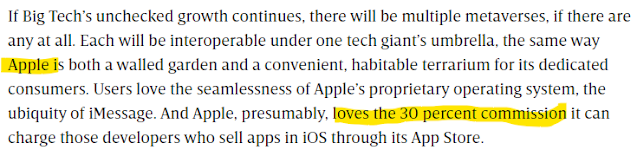
Apple is into it.

Google is into it.

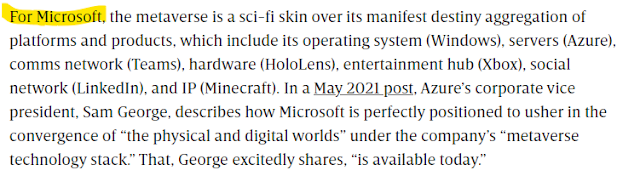
Microsoft is into it.

And what angle is that?  Marketing for the attention economy, of course.  Big tech's focus on a 'total service environment' is there to make sure you never leave:  whether it's #tech or #edtech, we're all living in Hotel California;  you can check out any time you like but you can never leave.

Platform agnosticism has been a recurring theme on Dusty World since it began.  I've been barking at the moon about this for years because we don't leverage educational technology to teach how technology works, we just let it insinuate itself into all our learning while being illiterate in terms of how it influences us through media and medium; we predicate technology use in education on media illiteracy.


Dreaming of 'free range' open source
technology access
in 2013.
If we taught digital fluency, anyone who became digitally skilled in our education system would be much better at identifying fake news and managing their digital presence.  If we taught platform agnostic digital literacy instead of depending on consumerism to do it for us, students would understand how digital mediums influence their thinking.  Instead we just turn out blinkered consumers primed for engagement with the technology provider their education system chose for them.

Imagine if our language and social studies teachers got certifications by certain book publishers and then only taught from that publisher's collection in the way that their particular publisher provided; that's what we've done in educational technology over the past two decades.

"In a social-science class last year, the students each grabbed a Google-powered laptop. They opened Google Classroom, an app where teachers make assignments. Then they clicked on Google Docs, a writing program, & began composing essays."

https://www.nytimes.com/2017/05/13/technology/google-education-chromebooks-schools.html

We use edtech to indoctrinate students in closed digital ecosystems designed to monetize their attention.  It doesn't matter which multinational edtech 'solution' your board uses, they're all the same, and they're all playing the #metaverse marketing game: "marketing spin on Big Tech’s increasing reach and power. It’ll be Big Tech—just as problem-riddled as now—but bigger."

Wouldn't it be something if we required and taught platform agnostic access to all technology in our classrooms instead of acting as a marketing arm for rich, tax dodging corporations?  These organizations are parasitic, our kids deserve better.

The 'drink from the firehose' approach to edtech doesn't end when we're told what we have to teach with.  Many teachers then brand their practice with corporate logos.

The point of that article is that a true metaverse (a shared, non-partisan online space) hasn't existed since the dawn of the internet.  Once the attention merchants got a hold of it they subverted democracies around the world and created a privacy and security nightmare, including in education.

Perhaps the saving grace in this might be that if any of them could get past their greed, educational technology would be the place to make this non-partisan metaverse happen.  Instead of demanding control of the technology narrative to generate users, wouldn't it be something if the technology giants and school systems around the world worked together to create an educational metaverse that was platform agnostic and open to all?

Even Hollywood can only envision a corporate owned future mind-space.  The solution at the end of RP1?  A CEO swap.


Sunday, 13 February 2022

Gasping For Breath: the lost art of pedagogy in Ontario schools

Written Feb, 2022:

Horses usually get put down when they break a leg.  They get euthanized because a three legged horse can't stand on its own and ends up developing consequent health problems.  Keeping a lame horse alive is simply extending its misery.  These days, Dusty World feels like a lame horse.  I started this blog in 2010 after having attended my first ECOO conference and found it a valuable way to share my own ABL (always be learning) approach to teaching and learning effectively while navigating an information revolution.

Dancing in the Datasphere: thoughts on digital pedagogy from way back in 2011.

I'm sitting here looking at a dozen posts I haven't published on Dusty World in the past year because I think there is no point.  It has been years since we focused on pedagogical best practices in Ontario education.  My reflections on this blog have always been focused on that slippery and often ignored concept.  Even at the best of times, getting our education system to focus on pedagogical best practices has proven problematic, and we're very far away from the best of times here in early 2022.

I've used pedagogical best practices to direct my teaching throughout my career, even when it made me unpopular with management, my union and even colleagues and students (many are happy to do less - learning is hard work).  In my mind, pedagogy means I'm focusing on maximizing student learning to the exclusion of all else.  The past two years have made so many educational workers (and students, and parents) disinterested in pedagogy to the point where I may be one of the only people left who gives it any thought.  Many weren't into it in the first place, others have bailed for their own survival, and some have even actively attacked the idea of learning as a focus in schools, usually for their own political ends.

Pedagogy in Ontario public education has been set back decades since 2018.  These days we're reduced to focussing on student wellness (usually while being driven to destroy our own) rather than teaching, but good pedagogy leads to student success which also brings with it meaningful (rather than proscriptive) wellness, though that is much more difficult to do than simply tossing learning out the window in favour of proscriptive wellness.  I didn't became a teacher to provide daycare or be an emotional councillor, I got into teaching to teach.  In an attempt to survive this ongoing disaster, Ontario education has given up on teaching and learning and has fallen back to wellness as a last raison d'être.

Pedagogical best practices have always struggled to survive in our educational bureaucracy.  I'd honestly hoped that a change in government in Ontario would create efficiencies and opportunities in a system too long under single party control, but the new guys are just as (if not more) duplicitous and manipulative as the old guys, and obviously not focused on pedagogy.  This loss of faith in our provincial education system is what had me daydreaming about a student bill of rights for all Canadian students.  Unfortunately, Canada's colonial history tends to systemically abuse disenfranchised people (like students under 18), leaving me worried for the safety and efficacy of learning for our children.

For me, the point of Dusty World is to allow me to transparently reflect on my teaching practice in order to improve it.  I have always done this publicly in the hopes that other people might find it useful, but the unpublished posts I'm looking at feel more like hopelessness than they do constructive reflective practice.  Every time I post something I get blowback from exhausted people who are trying to make nonsensical system-think work in practice.  The best thing I seem able to do as one of the few people left in the system actually interested in effective teaching and learning is to not publish reflections on it, which breaks my heart.  We seem to have lost the plot entirely.

***

Systemic Pedagogical Failures Continue...

Not posting doesn't mean there aren't still major problems in our system.  So far this year I've had graduates tell me they are in real trouble in post-secondary maths classes.  How an A+ high school student can suddenly find themselves failing in post secondary raises very concerning questions about how we are teaching and learning.  Other students are able to use their maths like a toolbox to solve problems, but our grads struggle with rote learning that renders them ineffective.  My son had a senior maths class last year where the entire class failed unit 5.  The teacher said it's ok, everyone fails unit 5.  If we were focusing on pedagogy we'd be trying to solve this.

This past year I had prominent STEM educators tell me that only academic/white collar courses matter.  When I suggested we create content for non-academic technology courses, I was told that they don't matter because barely any schools teach them.  This STEM is more just S & M thinking is ongoing and obviously inequitable.  This is one of those things I'd hoped a change in government might address, but blue collar subjects (and students) are still an afterthought in our degree fixated system.  Were we considering pedagogy on a systemic level, this kind of thing wouldn't come up in conversation.

I'm currently teaching over 70 students in grades 10-12 in computer technology and engineering, four of them are girls and there are no girls in my senior class.  Sexism and genderism is still a major problem in our system.  My partner had one of our local students in elearning last quadmester and she told the story of how when she expressed concern about her course selections she was told, "you're so pretty, you don't need to worry about that kind of thing."  I want to have trouble believing that this was said, but then I look at how genderized our course selections continue to be and wonder how this kind of systemic genderism can still be happening.

I'm one of the few that has tried to keep extracurriculars alive in our aimless wander through COVID and have had many difficult experiences and observations about how student performance is affected by long term trauma, but that too can't be publicly reflected on because it doesn't matter anymore, and doing so only seems to aggravate the situation.  Having an opportunity to reflect, share and talk to other professional educators about my practice has been a valuable 'breathing' process for my teaching, but like trying to teach through a mask every day, I'm left gasping for breath.

My current situation (massive classes while trying to teach hands-on engineering skills without the space needed to do it) has always been an issue where I teach, but nothing changes because I'm expected to hurt myself making it work every year, at least until there is an injury then it'll be my fault.  I recently had a student in my post-secondary bound senior computer engineering class (capped at 31, like an advanced calculus class) who is credit poor, essential level/DD and has a history of violence.  When I asked guidance why this student was directed into our class I was told that he had selected my course, which begs the question: who is being guided?  We have resources set aside for students like this, but when we don't guide them into those programs we reduce the efficacy of everyone else's learning.

Speaking as a parent as well as a teacher, I'd like our education system to focus on teaching and learning best practices, which should include gender unprejudiced and level appropriate guidance.  I suspect the dearth of maths skills in our grads is also a result of the 'pick-what-you-like' (unless you're female) approach.  It's hard to cover pathway appropriate curriculum when a significant portion of every class has neither the inclination nor background to engage with it.  If pedagogy mattered we'd be resolving these problems instead of ignoring them.

The world has many problems and I feel that pedagogically focused public education is the answer to many of them, but because of politics and circumstance, schools in Ontario aren't focused on being schools anymore.

Meanwhile, the digital information revolution is, if anything, accelerating, and we've thrown hundreds of thousands of staff and students into the digital divide in an attempt to weather the pandemic, all with no time or training to tackle any of it with pedagogy in mind.

I'm rejigging my entire curriculum again for the 3rd major change in scheduling in the past 18 months (with no time given).  It's like trying to build a plane while it's in the air... again, all while trying to find storage for nearly 100 technology students' hands-on work in one standard classroom.

2021/2 is just the same...

Inconsistencies have poked so many holes in the fiction that is our public education system that many people are now questioning it in ways they wouldn't have before.  The one-two punch of a vindictive, populist government and this never-ending pandemic has left our schools angry and confused.  That loss of faith is hard to recover from.  Trying to honestly reflect on pedagogical best practices in this void only seems to aggravate the situation.  It might be time to send Dusty World on sabbatical for a while and focus on something where I can give it 100% without other people constantly telling me to do less.  I didn't get into teaching to do it at low intensity, the kids deserve more, but that's where we're at.

Wednesday, 29 December 2021

The DIGITAL LENS: How Education Has Ignored A Third Foundational Fluency During The Information Revolution

I've been battling against digital illiteracy in Ontario's public education system for going on a decade now and I'm frustrated at the slow rate of change.  I've applied for multiple positions at the board and ministry levels and watched as future administrators get moved into these positions and fail to move the needle before they evaporate off into management.  Perhaps my mistake is that I want to take on a curriculum enhancement role not to escape the classroom but to actually improve system response to an ongoing crisis that everyone else seems to want to sweep under the rug.

Considering Ontario's current state of affairs, I'll probably have to wait until after June 2nd for us to get any traction with this.  When Ontario comes to its senses (if it doesn't, I think we're moving), I'd really like to see us address digital illiteracy, but not just for the societal benefits it would provide - my actual interest is in developing a cyber-awareness curriculum that improves Canada's ability to survive and thrive in a networked world while also clarifying this hidden cyber-pathway for students capable and interested in pursuing it.

Unfortunately, cyber and information security aren't foundational digital abilities, they are advanced, complex skillsets that are developed on top of more simple fluencies.  An academic comparison would be writing a complex essay of a challenging piece of writing in English class.  In order to tackle the dreaded Hamlet essay, a student would need advanced reading skills with the ability to tackle complex vocabulary and grammar that includes an understanding of both poetic syntax and the chronological difficulties inherent in reading something over four hundred years old.  This contextual challenge alone would stress most people's language skills.  On top of all that, the writing itself is a complex set of skills developed on top of simpler abilities.  Students would need to understand spelling and grammar, and sentence construction and paragraph construction and argumentative theme development across the entire paper - it's a staggeringly complex ask that we can only attempt in high school because we've placed literacy as a foundational skillset in our education system.

That was in 2010 - over a decade later Schmidt is still
trying to get people to understand the digital
revolution
that is happening around them.
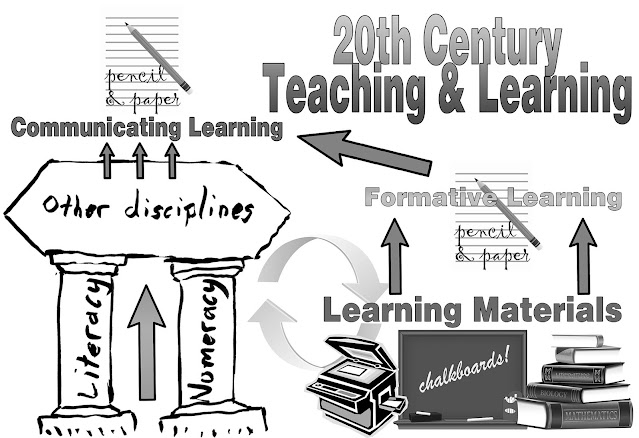
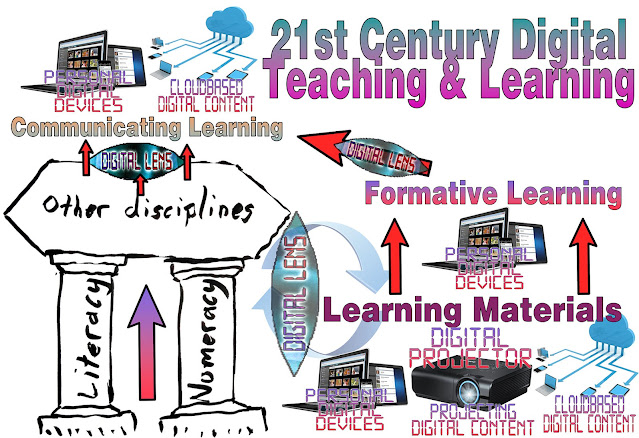
With that perspective in mind, I thought I'd try and take a run at infographicking how our analogue education system has digitized over the past twenty years.  This digitization of education has ramped up dramatically in the past decade - much of what I've written in Dusty World has orbited around this sea-change in digital teaching and learning.

The suddenness of this change has left many people behind.  There are administrators and 'curriculum experts' in our system who have never used the cloud-based learning systems we're now required to use in every lesson.  I'm up the pointy end of digitally fluent educators in the province.  I applied for a system IT support role last year and didn't get it - I suspect mainly because the system is incapable of understanding and appreciating digital fluency on anything but a puerile level; it's a case of illiterate people failing to value and understand what literacy looks like; I'd really like to change that.

If we consider the education system I grew up in 1980s Ontario, it was a very analogue place.  Teachers hand-wrote notes on a chalkboard which we copied by hand onto paper (which many students promptly lost, assuming they made the notes in the first place).  I can remember vindictive teachers doing a whole 76 minute period of note taking to 'ready us for university'.  Nothing prepares you for university like claw hand!  These 'lessons' weren't about how to take quality hand-written notes, they were about how to copy everything that was on the board as exactly and quickly as possible.  In retrospect, they did nothing to prepare me for university, but they were an example of the entrenched lessons we all experienced around creating analogue content; we never had a problem with teaching analogue skills because they hadn't changed for generations.  In the past two decades we've revolutionized information recording and access, but we've also all but ignored learning best practices in these new mediums for both teachers and students.

Analogue learning materials, analogue formative note taking leading to analogue communication of learning - and we drilled students on how to do each of these analogue exercises in order to create these skillsets.  We assume the same skills in digital spaces rather than teaching them.

My generation has been described as 'digital immigrants' as we arrived at the current state of affairs from a time that would seem completely alien to anyone currently under forty years old.  Along with the framing of us as digital immigrants comes the absurd framing of kids who have grown up in digital abundance as 'digital natives'.  If you've read Dusty World before you know what I think of this concept (it's absurd - just because I grew up in a time with cars didn't mean I magically knew how to drive!).  What this lazy observation did was absolve education of the responsibility for teaching digital communications as a foundational skill, even as it became the basis for how we teach and learn.  When I tried to replicate the 20th Century Teaching & Learning above with how 21st Century Teaching & Learning has become digitized, it quickly becomes apparent that digital skills aren't just needed to communicate your learning (it's even how we run the literacy test now!), the digital lens is also present in the learning materials you receive and the formative documentation of your learning.  Many parents struggle with the new digital means of communications from their schools (online reporting and such) because of their own digital illiteracy.  If you aren't digitally fluent you aren't capable of learning effectively in an Ontario classroom in 2022.  You aren't capable of teaching in one either, though that's the new expectation in our on again off again emergency remote and hybrid classrooms.


Learning materials are now almost entirely digital.  Even if a textbook is used it's often digitized first so that the information in it can be shared more fluidly in digital spaces.  Staff and students need to know how to research and find information online (including curating their own which many can't or don't do). Formative learning is documented (when it's documented at all) on digital notes taken in cloud based documents, though more often than not it doesn't happen at all because we've lost note taking as a skill during the digital devolution revolution.

Communicating learning is now also digital with most students incapable of writing by hand legibly (part of what has killed off formative note taking).  We've replaced all those lessons about analogue skills development with INFORMATION, because information is so readily available to us (though apparently only a minority can critically assess its value).


That digital lens is now between everything we do in education, including the traditional foundational skills of literacy and numeracy.  If you require digital fluency to teach and learn literacy and numeracy in a 2022 classroom, doesn't that make digital fluency itself a foundational skill?  Perhaps you're curious as to how many mandatory digital fluency programs Ontario teachers have to take?  None.  Know how many mandatory digital fluency classes there are in Ontario high schools?  None.  Know how many classes you need digital fluency in to best teach and learn?  All of them.

That is how messed up things are as 2021 ends in an ongoing pandemic that has pushed us into fully digital emergency remote learning for months at a time.  Fluency is but one part of this equation.  The digital divide also includes equity issues around bandwidth and device access at home, but we only talk about equity when it doesn't cost us anything.  Our ignoring of digital fluency has been a socio-economic/equity issue from the start (kids with access to tech and connectivity are obviously going to be more comfortable with it).  You might say that our lack of movement on digital fluency is simply a way to hide inequity behind something complex and difficult to deal with while still spouting about how equitable we have become.

I'm live in hope that our education system is put back on the rails and a we stop our oblivious approach to digital skills development in both teaching and learning.  If we're going to use networked digital tools like we are (ie: everywhere, including sharing private/personal data online), it is incumbent on every teacher to become fluent enough with it to teach best practices in order to protect both themselves and their students.  Our networked world is not a particularly safe place.  Our blind leading the blind approach isn't viable or safe and never should have happened in the first place.  Had we been working on this like we should have in the decade leading up to the pandemic, the desperate lunge into emergency remote learning could have been much more equitable and functional and would have gone a long way in reducing the strain on families being mulched by the pandemic.

When that hope is realized I want to go after the most challenging aspect of this in-the-land-of-the-blind skillset: cybersecurity.  CyberSec assumes advanced ICT (information & communication technology) hardware and software skills and then, like that Hamlet essay, goes after complex, esoteric skills far beyond where most people will operate.  I want Ontario to develop a cyber-awareness curriculum that brings all users of networked technology (that's pretty much everyone in the province) up to a point where their digital illiteracy is no longer a detriment to the province.  Illiterate users are still the biggest threat in cybersecurity, so I'd like to get everyone to the point where they aren't oblivious to how the networked world they're living in works.  If we can get to a level of digital literacy where the majority can teach and learn fluency online, we can also make Ontario education more hack-proof.

I'd also like to clear away the obstructions our digitally oblivious education system has placed in front of the most digitally adept students and create pathways into jobs in critical ICT infrastructure, most especially in cybersecurity.  If we don't take steps to secure our digital infrastructure, everything else fails (electricity, water & gas all depend on IT).

We should be producing graduates with the digital fluency needed to confidently make their way in our brave new world while also clarifying pathways for those students willing and able to protect everyone else from an increasingly threatening global, cyber-threatscape.

HOW TO ENGAGE EDUCATION WITH CYBERSECURITY

https://prezi.com/view/7pqMzlLdfOFltD78ILP6/

Over the past couple of years I've done a fair bit of writing for various provincial and national agencies around cyber-education.  In every case they seemed to be looking for an in-and-out, short duration of work online course they could post that teachers and students would magically flock to.  Having presented on cybersecurity education in the classroom both face to face pre-pandemic and online once it kicked off, I became aware of just how fearful most staff are in engaging with this subject that jumps up and down on their digital doubts while also threatening them with horrible outcomes that they don't understand.  Throwing up an online course isn't going to bridge this fear/ignorance gap.

Having worked with CyberTitan and Field Effect (an Ottawa based cybersecurity provider) on a joint federal government/private enterprise/public education presentation at the NICE K-12 Cybersecurity Education Conference this past December, we presented on how with industry expertise, federal vision and provincial public education community outreach we could make cyber-pathways available to all interested students while also offering immersive and meaningful cloud-based simulations that are equitably available to all.  Field Effect's cloud based immersive simulations are accessible and VERY engaging.

ICTC did an ICT Teacher Champion Day pre-COVID where they provided interested and engaged teachers with resources and support.  I think this approach is how you work through the fear and get staff and students to engage with scary-cyber on a basic fluency level.  It would also present competition opportunities that clarify pathways for the most cyber-interested.  By finding local champions who are willing/able to engage others in cyber-skills development, we could connect and walk people through some of that dormant online material and actually produce a change in how we're doing things.  This requires boots on the ground and a longer term commitment than throwing together an online course.

As digital fluency becomes a mandatory part of our public school experience and we begin producing more digitally fluent teachers and students, we can up our game in advanced digital skills like cybersecurity and emerging technologies like machine learning and 3d modelling and create digitally skilled graduates who aren't self-taught, potentially dangerous young adults who put our economy and communities at risk.

There is much to do.  I'm looking forward to being part of an Ontario that is ready to take on this challenging future even as it continues to hatch around us.

Sunday, 19 December 2021

I'm a Hacker!

Every year we get grades 9s who waft into our high school believing they are god's gift to computing.  In the vast majority of cases I discover that they've learned how to do one or two things, but the moment you move them out of their area of 'expertise' (which is usually so small you couldn't really call it an area so much as a corner), things fall apart.

We have such a genius in this year's grade 9 cohort.  When the class was given CyberPatriot's Unity OS security simulation to play, he didn't know how to open a zipped file and get the game running.  When I queried him about it, the conversation went something like this:

"You told me you're this great hacker, but you can't open a zipped archive?"

"Well, this isn't what I usually do."

"You told me you're this great hockey player who can score goals from anywhere on the ice, but when I ask you to show me how you skate, stick handle and shoot you can't do any of it, which makes me wonder what it is you think you're good at."

Taking a script that you found online and running it doesn't make you a hacker, it makes you an idiot.

The student in question has proudly boasted of swatting people, which I'd describe less as hacking and more as criminal harassment that wastes limited emergency services.  This clarifies the difference between a hacker and a criminal in simple terms anyone can understand.  One is focused on complex skills development, the other is focused on finding shortcuts.

hacker noun

hack·​er | \ ˈha-kÉ™r

1: one that hacks
2: a person who is inexperienced or unskilled at a particular activity; a tennis hacker
3: an expert at programming and solving problems with a computer
4: a person who illegally gains access to and sometimes tampers with information in a computer system

#2 comes very close to what this guy is in terms of being a hacker, though he'd be popular with actual criminals if he's thick enough to run scripts that he doesn't understand; he'd be the perfect trigger man.  If we're applying the term in computer studies, a hacker is generally someone who is expert at solving problems with a computer or getting into systems.  In either case this skillset has traditionally required years of complex skills development including a challenging apprenticeship of trial and error learning on the wilds of the internet.  Criminals seldom have the kind of patience and intelligence to develop these skills; it's part of what makes them criminals.

Malware is being sold as a service: the
'hackers' running it are plain old criminals
What has happened recently is that cybercriminal activity has become professionalized.  Many of the people doing the 'hacking' now have no idea what they're doing (like this grade 9).  They buy malware as a service software from professional criminal organizations (many of whom have ties to state cyber-warfare actors) and then run a dashboard that provides them with ready-made hacking tools that do the thinking for them.  Some of these MaaS systems even provide IT support!  No genuine hacker would ever want nor need IT support, they'd provide it themselves.

I'm currently re-reading Matt Crawford's The World Beyond Your Head in which he makes a strong philosophical argument for developing complex skills rooted in real world experience.  Crawford goes to great length to describe how these hard-earned skills often develop a corresponding moral character in the majority of practitioners; reality is a consistent and demanding teacher and it demands rigour and focus.

I have students who have developed deep, complex digital skillsets in the course of our four year program and I would proudly acknowledge that they are hackers in the correct sense of the word, but what most would-be hackers are is really script kiddies who run other people's code simply to perform malicious acts.


Script kiddies exist in the first place because we go out of our way not to teach digital literacy and cyberfluency in our schools.  In the absence of any direction, some of the blunter tools wander into this kind of self-identification.  Students have to take 8 years of geography and history in elementary and then have mandatory geography and history courses in high school too, but there are no mandatory digital fluency courses in any Ontario high school - even after we've forced everyone into a remote learning stance due to COVID.  Many of the problems that have arisen during emergency remote learning are a result of the terrible digital skills many educators and students possess.  Script kiddies are just another symptom of our digitally illiterate education system - a system that depends increasingly on digital tools and networked information to operate.

This grade 9 may well sort himself out and become a hacker in the real sense, though I find the most boastful ones tend not to have the wherewithal to develop complex skillsets such as those required by a genuine hacker.

At the CyberTitan nationals in 2018, one of our team members (then valedictorian then University of Waterloo Computer Science student), became intrigued with the idea of pentesting as a career.  Penetration testing is something that has evolved quickly as networked cybersecurity best practices have evolved.  The thinking is basically this:  if you want to understand how best to respond to the rapid evolution of cyberattacks, have a skilled pentester come in and probe your network for weaknesses and then assist your defensive team in sealing up any gaps in your system.  Now THAT is a hacker!

White hat hackers used to do this as a kindness, though most recently it has also become a bounty hunting situation, and now a lucrative profession.  Top pentesters are in high demand and make good money.  What they don't do is download and run scripts they don't understand and then not know how to perform even simple tasks on a computer - that would be a good way to lose any credibility with their employer.

I'm in the awkward position of seeing this happen in another class.  Were it me, I'd be leaning on this student hard to see what it is they actually think they know.  Being at arm's length in this scenario, my biggest worry is that this student will use our technology to hurt someone else (I fear this has already happened).  If we had a student come into the school who had been convicted of vehicular manslaughter, I doubt we'd put them in an automotive technology class, yet we don't think twice about taking a potentially digitally dangerous student and dropping them into computer technology?

This is a tricky situation to navigate.  I'm actually hoping this student has genuine potential and we can get him engaged with doing more than running scripts he has no understanding of.  In learning the rigours of operating in cyberspace, he will also most probably become less of a braggart as he aligns himself with the reality of the situation.