Showing posts sorted by date for query pandemic. Sort by relevance Show all posts

Sunday, 22 September 2024

The Global Forum for Cybersecurity Excellence (GFCE)

 I got an invite to speak on a panel at the Global Forum for Cybersecurity Excellence's Annual Meeting last week. It was my first time in DC since I went on a trip there with Air Cadets in the 1980s, so it was an exciting prospect. More so when I saw it was going to be taking place in the Organization of American States' building.

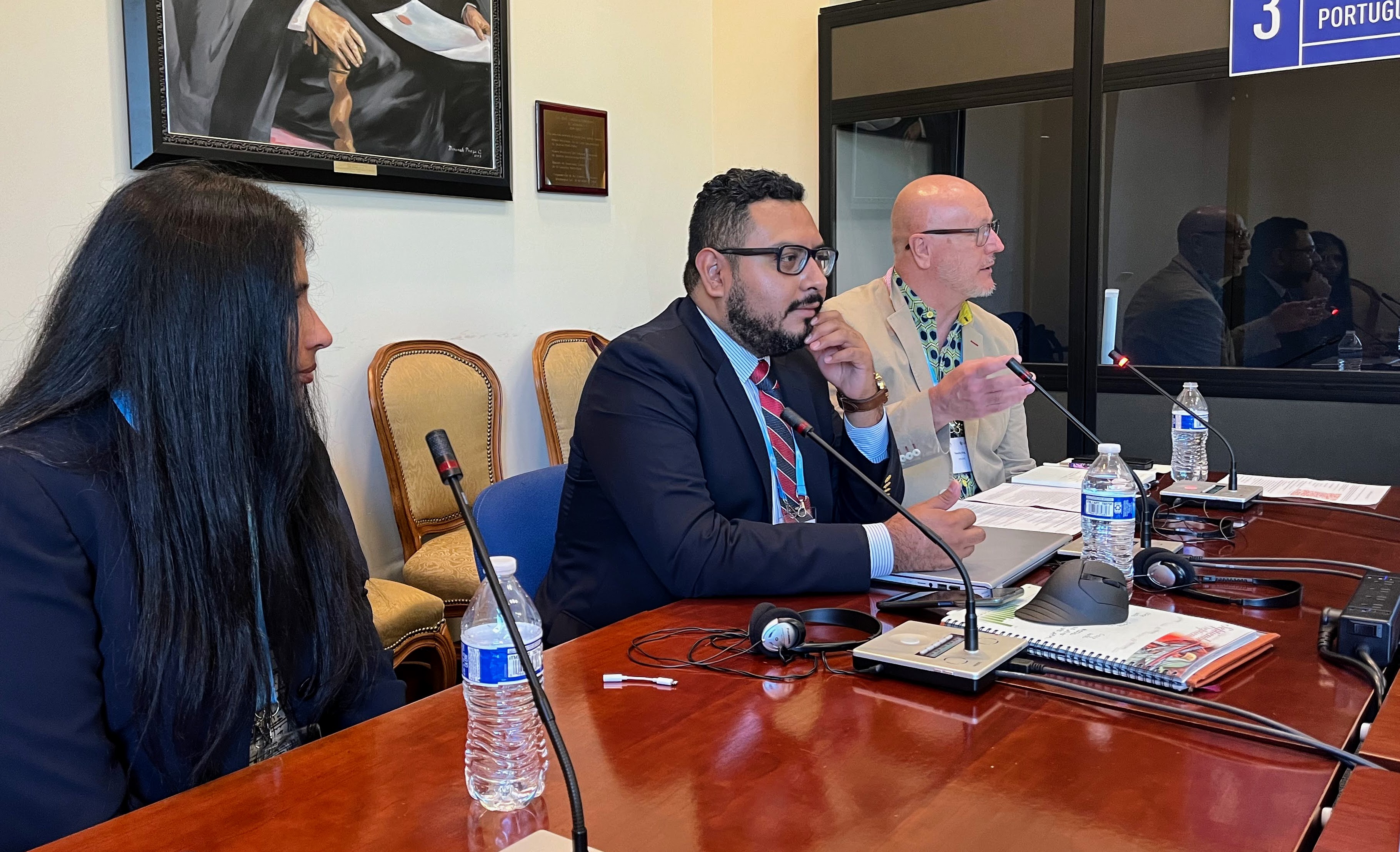
Attending these things is a high wire act for me as it looked like I was going to have to self fund my way there, but then the OAS's Cybersecurity directorate got in touch and asked if I'd sit on one of their emerging technology panels for the region of the Americas pre-GFCE meeting too, so I got hotel and flights covered.

I got in on Sunday and my hotel was in Georgetown, so I got out and about and soaked up some Washington area history - the place is thick with it! 

That night I met up with Dr Juan from Mexico who I did a presentation with in June and we enjoyed some Potomac wings at the local Irish pub (as you do) and caught up. The last time I'd seen him was as we passed through US customs on our way back from Ghana last year, so we had a good chat. The opportunity to solidify these connections was impressed upon me as an important consideration later in the week. Never underestimate the appreciation inherent in making an effort to see people live, especially post-pandemic.

Day 1

The next morning, after breakfast at the Fairmont (!), we walked to the Organization of American States building only to discover it was the wrong one. We ran into Alex from Ghana who was on the OAS panel with me later that morning and he knew where we needed to go, so we backtracked four blocks to where we should have been in the first place.

I got there sweaty (DC got up to about 30°C each day) but cooled off and our talk that morning about emerging technology impacting cybersecurity was wide ranging. Kerry-Ann, our moderator, surprised me with a question about how approaching cyber challenges as a technician gives me a different (and valuable thanks to how she framed the question) insight into the rapidly changing state of things.

Talking to engineers and the legal experts doing policy is one thing, but talking to the trades people who do the operational work of keeping the lights on does offer an interesting angle. I'd been expecting to talk about quantum technology emergence, but an opportunity to speak about the value of hands-on, applied skills in the field was appreciated and well received.


Many of the panels focused on the clear and present danger in cyber at the moment: artificial intelligence. From the automation of big data analysis that humans never excelled at on the defensive side to how criminals are leveraging GenAI to produce customized phishing material well beyond grammatically incorrect emails (stretching to include deepfake video, voice, photos and other digital media), these talks were designed to assist policy makers with understanding what has come out of Pandora's box of AI.

One theme that resonated with me was how people don't want deep technical explanations of these emerging technologies. What they want is an easy to grasp explanation of how these technologies will impact the digital spaces they work in. This remains a problem in cybersecurity and an even bigger one in the quantum world where I just finished my secondment. The urge for academics to obfuscate and complicate their explanations of these rapidly emerging technologies doesn't make them ideally suited for presenting on them, especially to the operations and policy people who are entirely focused on real world impacts and couldn't care less how the maths looks.

I've gotten a lot of static for how I've simplified deep technical details in quantum in order to get concepts across, but you honestly don't need to start neck deep in linear algebra any more than you need to have knowledge of the metallurgy involved in casting your car's engine in order to drive it. Guess what background is really helpful in bridging this information divide: 22+ years as a teacher! Early in my career I came across a quote that described teachers as, "public facing intellectuals" and took that to mean we're not about ivory towers and knowing more and more about less and less, but about the democratization of knowledge. Part of that comes with knowing what to keep out of the mix in order to help people get a handle on emerging technologies.

My age is also handy. Being a genuine digital immigrant who remembers a time before personal computers and the internet (I got my first PC, a Vic 20, in 1979 when I was 10), I have a big picture outlook that those who have always lived in this chaos find helpful. My other secret weapon is a university background focused on thinking and communications (philosophy & English).

After the OAS event we had an evening meet and greet at the Museum of the Americas right behind the main building, which had a permanent collection of powerful pieces looking at colonialism and culture. Upstairs they had a Spanish diaspora collection featuring the people who fled Spain during the Franco period; powerful stuff.

At the meet and greet I got to introduce Juan to Michelle and Nina from CyberLite, one of my favourite international cyber education organizations. We did an around the world webinar with them for Safer Internet Day in February, but it's always nice to see people in 3d rather than on a screen, and introductions like this are what GFCE is all about.

Another good example of this networking was running into Christina from Global Affairs Canada. From our talks I've come to understand the complexities and difficulties of international cyber policy. I'm also particularly aware of how important it is to shed better light on the work our federal government does internationally. Some of this needs to be kept on the down low for security reasons, but much of it (and especially on the diplomacy side) needs more media coverage so Canadians better understand the work that their representatives are doing on their behalf. Being purely insular and defensive doesn't work in sport and it won't work in cybersecurity either. If we can help other countries develop better cyber capacities, we all win, and that starts by doing the hard work and developing trust.


Day 2

The next day we were up early again and this time took an Uber to the right building (kind of, it still took us to the wrong one first), and began the Global Forum for Cybersecurity Expertise Annual Meeting.

Our panel came up quickly and Juan brought in a fantastic angle focusing on the Global South and the formation of a 'quantum divide' that will, like the digital one, further separate developed countries from everyone else. I've seen this happening with tightening restrictions on public facing quantum education resources. In some cases this may be under the auspices of national security, but the end result remains: countries that have the resources to develop quantum technologies will have capabilities that the others can only dream of.

There is also an academic ownership of quantum that favours those with the resources to spend most of their lives in post-secondary. Quantum mechanics is how the universe works, yet most schools stick to Newtonian physics because it's intuitive and easier to deliver, except that Newtonian truth is a fiction caused by our scale. If you look closer, it is (as Brian Cox says) quantum all the way. We need to demystify our best understanding of how the universe works so that everyone can grasp the technologies that are emerging out of this science.

Our panel couldn't have happened without a secure internet because our moderator was virtual in Europe and one of the panelists was in Central America. This highlights the importance of the awareness I've been doing in Canada and beyond around quantum encryption readiness in cybersecurity. In a few years that secure internet may be a thing of the past.. After we wrapped up our panel I showed Juan the William Gibson quote about the future already being here, but not evenly distributed.

The idea of a growing quantum divide is another indicator of the state of maturity of rapidly improving quantum computers. I'm motivated to continue my 'technology literacy for all' approach (which includes quantum and AI) because no one should make the technologies that have the best chance of helping us save ourselves from ourselves proprietary. I also have a nagging urge to help everyone reach their maximum potential regardless of how much they have in their bank accounts.

The end of day event on day two was both uplifting (it was a retirement party for founding GFCE president, Chris Painter), but also profoundly insightful. When someone with extensive, top draw international research resources tells me that they aren't worried about AI taking us down because climate collapse will get us first, I listen. Moments like this make me vividly aware of just how fragile the house of cards we're standing on is. If we don't come together to make it accessible, secure and safe, that house of cards is coming down.

This observation feels even more perilous because of the book a colleague suggested that I'm two-thirds through. Advocating for long term thinking in human societies that only reward short term gain is a challenge, but the most recent chapter is about how all civilizations collapse. Historically this happened regionally (Roman Empire, etc), but the global civilization we've built this time is going to crash harder, and when it collapses we're going to be wishing we had made some of Asimov's Foundations in order to recover more quickly (assuming we don't make our only habitable planet uninhabitable in the process). That's the thing about attending a GFCE event - it makes you reflect on the big things (kinda like Tamara's book recommendations).

Day 3

All of the delegates from dozens upon dozens of countries coming together in DC to make digital transformation secure and accessible.

Day three began with the women in cybersecurity breakfast. The moderator at our table told hair raising stories of her being in the first female engineering cohort in South Africa and the overt sexism they faced. I told them about Canada's tragic history with this kind of sexism, which the table found astonishing - Canada is considered forward thinking until we're a bit more forthcoming about the dark currents in our history. I also told the story of the quiet sexism that made founding the first all-female cybersecurity team in our school so difficult. It amazes me that half our population experiences these systemic prejudices and that equality isn't something we're likely to get to before the 22nd Century.

These GFCE events are thick with insights and opportunities that lift your head out of your personal context and prompt you to consider the big problems we face. I've tried to cover the main pieces here, but there are so many more that I'm still subconsciously noodling on.

The emerging tech panel on AI towards the end of the day was another of those eureka moments. The policy expert from France's advanced technologies department had a good response to my question about how we devise policy for near future AIs that will have the agency and resources to ignore them, not out of spite, but because even considering them isn't in their programming. She referenced the US Section 230 law that let social media run rampant and pointed out that if we recognized this cautionary tale we'd be able to better direct AI use now. A sharp response, but I think the AI horses are out of the barn and will shortly have the capabilities to do real damage to our digital infrastructure. I remain curious as to when AI policy to try and restrict development turns into defensive policies designed to mitigate the damage that self-directed AIs will do to our piecemeal global network.

I ended the event having lunch with Abdul, my swimming buddy from Accra, and Juan, my co-conspirator. What do you talk about at a Nigerian/Canadian/Mexican table? Abdul told me he is in 'legacy mode', which is a great way of framing your closing professional years. I enjoyed our talks in the pool at Accra City Hotel because Abdul always seems to see beyond the horizon. Taking a minute to soak up that wisdom is never wasted time. He was going to see his friend's grave and visit his cousin after the event. These seemingly technical meetings can be profoundly human, if you let them be.
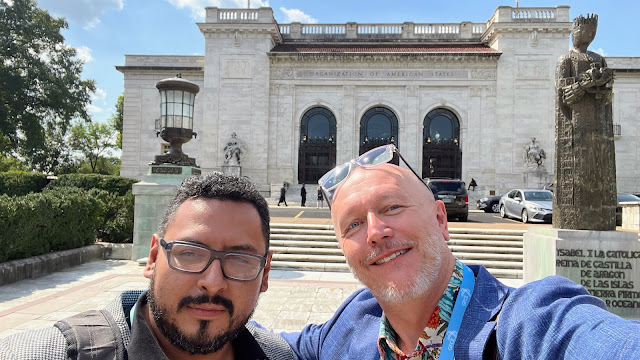

We wrapped up our time at the OAS HQ, but we weren't quite done yet. At the museum event Monday night we met a Spanish attaché and that prompted an invite to the embassy for a Wednesday evening networking event. It was a short walk from the hotel and I talked to a lot of people but really got into it with Jose Manuel who runs telecoms and startups in Spain including a new one that helps you park your boat in a marina you haven't visited before. Besides travel, work life balance and entrepreneurship, we also had a good chat about the innovative quantum key distribution research around mesh networking QKD into live networks that he is in the vicinity of. I'm hoping to follow up and develop some transatlantic connections that move us all forward.

***

I must have covered 20+ kms on foot over the week (in dress shoes!), but I have no regrets about the schlepping or having to self fund some of this. Hope is hard to find in 2024, but the GFCE exhales it like plants give off oxygen. Just as the GC3B in Ghana did last fall, my mind is left turning over the complex challenges and opportunities that this meeting highlighted. If you're looking for organizations that improve your practice, expand your context, and challenge (and enable!) you to take on the seemingly insurmountable global issues we face, meeting the OAS and experiencing my second live GFCE event has done just that.

DC looking like a postcard on the ascent out of Reagan Airport.

Just over 500kms as the crow flies from DC, I was back in The Six before I knew it!

Thursday, 24 August 2023

Stories of Innovation Are Never About One Person

I've been involved with Cisco's Networking Academy since we joined the CyberTitan national student cybersecurity competition in its inaugural year in 2018. It's the 25th anniversary of Netacad and this summer they asked alumni to tell them stories that arose from their association with the platform. I told the tale of the Terabytches and bringing the first all-female team to CyberTitan national finals along with my own journey of taking my first technical qualification in almost two decades. It was a story of perseverance in the face of prejudice and a love of life long learning.

To my surprise I made the finalists list out of hundreds of applications from across the globe (Netacademy runs in almost every country in dozens of languages - it's a truly global platform). When I read about some of the other finalists I was thrilled just to be included with them.

On August 15th I was driving through the countryside to the University of Waterloo, listening to the awards being announced on spotty cell phone coverage. It cut out just as the innovation architect award was announced and then came back for the next award, so I didn't hear I'd won when it happened.


At CEMC at UWaterloo I took a room full of computer studies teachers through cyber-range activities and while that was going on my wonderful wife and innovation touch-stone, Alanna, announced that I didn't just win the Innovation Architect Award, but also the Shooting Star grand prize which has me in NYC in mid-September for the Global Citizen Festival. 

As part of the prize Cisco gave me a communications package and asked for shoutouts, and there are many. Innovating can often feel like a lonely exercise where most of what you're doing seems to aggravate management, but it's really a collaborative exercise, otherwise you're by yourself in a room doing cool things that no one else knows about. The idea of a lone inventor hidden away working on their own is a fiction.

I could never have built the program I developed without getting my school board onside. There are two people in particular who became supporters and advocates for the unique work we were attempting. Charles Benyair was our SHSM lead and he provided the resources that my school would not to get us in motion, and Sandro Buffone in our IT department made a point of attending my cybersecurity sessions at ECOO so he could understanding what I was trying to do. He then was instrumental in clearing away the technical bureaucracy to let it happen.

Convincing students to take on an international competition in a subject we'd never studied before was a challenge, but Cam, Cal, Nick and Justin were seniors in 2017 and bravely jumped into cybersecurity with me. We learned new concepts and got a handle on things to such a degree that we discovered we were going to the first Canadian national cybersecurity finals in Fredericton. Three of those students had never left the province or been on a plane so you can imagine the impact.

As the teams gathered for a photo I happened to be standing next to Sandra Saric, the vice-president in charge of CyberTitan at the Information & Communication Technology Council (ICTC). As the photo got taken she said under her breath, "where are all the girls?" Out of seventy odd students only a handful were girls. That observation put me on a mission. 

Sandra went back and established a program for encouraging all-female teams to sign up and I went back to my junior computer technology classes (the exacting gender expectations of our rural high school made sure that there were no girls in senior computer tech classes) and cajoled six girls to give it a try. That next year we had three full teams instead of two-thirds of one. I encouraged them to find a name that speaks to their experience and the girls came up with the Terabytches (terabyte with a twist).


Those six pioneers faced derision from our school and when they went to nationals a member of one of the other all-male teams said to one of them, "you're lucky you're pretty, because you suck at this." That year emphasized for me how important it is to give girls their own space away from the often corrosive male culture that forms around technology.

In a radio interview in Ottawa at those finals Rachel said something that stuck with me. "We used this name so that it couldn't be used against us." 2019 was an incredible year for getting my head around diversifying access to technology learning, particularly in the hyper-male dominated field of cybersecurity. But it was also a year of finding allies. Joanne Harris at the school board enabled us to attend nationals by coming along as our female chaperone and I got to meet Diana Barbosa, Sheena Bolton and Hayley Heaslip who ran the competition.

That summer Philippe Landry from Cisco Canada got in touch and asked if I'd be interested in working toward my CCNA Cyber Operations Instructor qualification. My last I.T. certification was CompTIA's Network+ way back in 2002, so this would be my first run at a technical certification in seventeen years, and in a subject I'd only been looking for eighteen months. Claude Roy at FTI in Quebec was my instructor and he was patient and very giving of his time. Over the summer I became familiar with Wireshark and all sorts of other cyber-tools and in September I wrote the exam and became the first K12 teacher in Canada qualified to teach cyber operations - I think I am still the only one five years later. Yes, innovating can sometimes feel a bit lonely.

Attending Cisco Live in the fall of 2019 I was again reminded of just how cloud based (and cybersecurity dependent) things have become. I also attended my first University of Waterloo Cybersecurity & Privacy Institute conference (bringing a bus load of students with me) which opened my eyes to the current state of networked technology where we're barely hanging on. To underline that I had my local OPP detachment asking if I could forensically analyze digital evidence for them because they weren't resourced to do it themselves.

We ground through the pandemic but CyberTitan was one of the few events that never cancelled on us. The diverifying of our teams in 2019 led to a richer and more effective co-ed senior team. Some of the girls wanted to join the best of the boys and that mix of skillsets led to a string of top five finishes including a top defender award. The girls team also continued, missing nationals in 2020 but earning top wildcard spots in the '21 and '22 finals.

In 2022 I discovered that I had been seconded to ICTC for the year to advocate for and support cybersecurity education nationally. In this role I've been in classrooms from Newfoundland to British Columbia and many points in between. I've supported two new provinces in joining the competition and continue to bang my drum for recognition of essential Twenty-First Century digital skills that are so often ignored in our school systems, like cybersecurity.

This spring I joined Katina Papulkas' Dell K-12 Education Innovation Accelerator, Part of that program was an opportunity to mentor with someone in the edtech space and I was lucky enough to be placed with Julie Foss, who helped me re-contextualize myself in my first role out of the classroom in two decades.The experience empowered me to apply for the Cisco award. Had I remained lost at sea in terms of understanding how to do what matters in my new role, I would never have done it.

Innovation is often lonely work. It can antagonize status quo types who are intent on maintaining a system that put them in charge, but innovation is also thrilling and can empower those not privileged by that status quo. If you're serious about diversity, equity and inclusion, innovators aren't people you want to be labelling as troublemakers, they're simply committed to finding a better way.

The other nice things about innovation is that you meet the most interesting people. From Ella in UBC to Kyle at Inspiretech, Louise at QAI and Eric George at the CPI, I've had the opportunity to meet some fascinating people who don't status quo anything.

Cisco, both as a company and as individual employees, have been wonderful enablers of innovation, providing me with resources in a subject that everyone uses all day every day in every classroom, but almost no one teaches. Being acknowledged as an innovator by such a forward thinking organization makes me think that I'm on the right track, even if it annoys some of the powers that be.

We face an ongoing shortage in cybersecurity skills and society faces a global digital skills crisis that is grinding on into its second decade. Women remain underrepresented in high paying STEM fields and especially in cybersecurity. Status quo thinking got us here, it's time to innovate our way out of it. Thanks to Cisco for supporting that by acknowledging our work.


Thursday, 25 May 2023

Why #edtech has failed to improve learning: 2023 edition

 Back in 2014 I had one of those strange moments when I suddenly found myself freed from the day to day necessities of the classroom and thrust into a space where I had time to think about pedagogy. I once had an administrator tell me, "what does pedagogy even mean anyway? It's one of those words that doesn't mean anything." I've never felt that way but perhaps that's because I've focused my career on teaching rather than getting out of the classroom at the earliest opportunity. Throughout that career I've clung to moments of pedagogical best-practice in a sea of compromises.

The main purpose of schools is to run a schedule that has students in set places at set times to the benefit of adults. You can call it daycare if you want to, many people treat it like one. Order and regularity are the primary functions of school organization, not learning; hence that astonishing observation from someone who is focused on managing it. Being a teacher committed to teaching has often put me at odds with this reality.

I hesitated to get into education for a long time because I found it a dehumanizing experience as a student.


This is the expectation people have around technology integration - it's
supposed to improve learning! But scores continue declining.
Over the Easter long weekend in 2014 I was invited down to the ASU/GSV Summit in Phoenix. Stepping out of the moribund but relatively well funded Canadian education system into the 'breaking bad' of America where teachers live just above the poverty line and everyone is fixated on common curriculum success dictated by standardized testing (you don't get to be the 25th best education system in the world by chasing pedagogy!), I wasn't sure what to expect, but there were a lot critical thinkers at this summit.

One that really rocked me was Brandon Busteed who stated (to the astonishment of everyone present)  that, "“Educational technology has failed to move the needle on either cost effectiveness or student success in the past ten years.” He then showed statistically significant drops in literacy and numeracy even as the buzz around educational technology as an answer to everything was at a fever pitch.

You'd think we'd have come around to a sensible integration of digital technology in learning nearly a decade later, but post pandemic things are even worse.


PISA Results from that time show statistically significant drops in learning. Things haven't improved even with
accelerated technology use. On top of that, COVID proved that we were unable to leverage ICT even during an emergency to preserve essential learning.

Post COVID we're in a recovery situation because we couldn't leverage technology to work through pandemic lockdowns. We had the tools but most people in education (children and adults) have no idea how to use technology to actually improve (or even provide basic) learning opportunities. On the back of forced rapid technology integration due to the pandemic, our learning outcomes have gotten even worse. Our information revolution has made data so much easier to access and manipulate, but not in education where we used digital to imitate the paper based systems we clung to long after the rest of the world had moved on.

***

Looking back over a teaching career spent in the middle of an 'education technology revolution', I've been frustrated at how technology has been applied in the classroom. Coming out of information technology into education in 2004, I found that classrooms were a decade or more behind the businesses I'd just been supporting. I was even more surprised to see schools going out of their way not to engage with digital learning opportunities - banning them for the longest time before reluctantly adopting them with no training or education (for staff or students) around their use. This delay resulted in educators being LESS digitally literate than the students they serve. As a result, digitally delayed teachers weren't thinking about how edtech could enhance pedagogy because they were some of the least capable of doing so. Delaying digital integration has damaged both staff and students.

We've fumbled one of the greatest opportunities to improve education in the past century and have integrated technology so poorly that it actually reduces student success rather than amplifying it. We turned generic, paper handouts into generic, online documents, ignoring opportunities for collaboration and individualization that fluid digital information systems offer. 

That rush to imitate paper based education on screen resulted in a drop in photocopying budgets which thrilled administration, but what we lost in printing costs we more than made up for in having to buy screens for everyone (something we still struggle with). Neither way is particularly environmental, but the screen route produces more waste and uses far more energy while reducing learning outcomes in digitally illiterate classrooms where students taught on home entertainment systems can only see digital devices as toys. This shell game of showing small cost reductions moving away from paper while ignoring the massive costs of edtech has further diminished our ability to focus on pedagogical best practices. Less money in the system is less money in the system.

We're facing a generational digital skills shortage that highlights our failure to engage with digital literacy in a meaningful way. Teachers are less digitally literate than the general public because they've been working in this moribund system determined to ignore the benefits of digitally enhanced pedagogy. We have digitally oblivious teachers depending on students who have been told that they are digital natives and don't need to learn how technology works because they can turn on an X-Box. You don't need to look hard to understand why education makes such a juicy target for cyber-criminals. When I reach out in my current capacity as a cyber-focused educator I'm told by ministries of education across the country that online safety is covered in health class. Yes, you heard that right, phys-ed teachers are covering cybersecurity training for our students (or more likely skipping it).

You're seeing this reflex again now with the panic around artificial intelligence inspired by ChatGPT. Students are using it to demonstrate the learning they didn't do and teachers are using it to auto-generate the tedious and generic necessities required to keep the education system doing what it has always done. If we play our cards right no one (students or teachers) will actually be involved in education by 2030.

What we're heading towards if we continue to ignore digital pedagogy! This was made with the Dall-E 2 AI image generator using this prompt: DALL·E 2023-05-23 09.15.26 - artificial intelligence replacing human students and doing their learning for them in pixel art

***

How would this educational technology revolution that never happened have gone down in a better world? We would have started integrating digital technologies as they emerged and we would have taught cross curricular digital media literacy as soon as we began using the technology in classrooms. Rather than offloading digital fluency to home life and creating a skills gap that widens inequity, we would have taken responsibility for the technology as we adopted it in a timely fashion.

As digital media literacy improved, teachers wouldn't be behind the rest of society in terms of technical fluency and would have worked towards developing digitally empowered pedagogy that uses the benefits of easily accessible and malleable information to create a radically individualized approach to learning that produced truly equitable learning outcomes for all. This targeted approach to digitally enhanced learning then streamlined our industrially inspired education system into a more efficient and agile format.

As cloud based technology emerged, these digitally fluent teachers engage data science to produce deep understandings of each student's learning journey. These personalized data clouds are leveraged to produce bespoke learning outcomes. Instead of using digital technology to imitate class based, low-resolution lessons from the age of paper, we leverage our ICT revolution to take advantage of the fluidity of digital information and engage each learner where they are at in their journey. As we move away from the old, low resolution model we start to see astonishing efficiencies in student learning.

Our schools have evolved in the past two decades from age-based 19th Century storage units to smaller, agile, digitally empowered community education centres where students work towards their own learning mastery. This individualized learning environment empowers students to take control of their own educational journey. School is no longer something being done to them but something that empowers them to better understand themselves. This system also burns a fraction of the millions of gallons of diesel the old system did shuffling students around based on their physical age.

This digitally integrated education system resiliently leverages technology empowered pedagogy to individualize and engage students across all interests and subjects. During the pandemic this education system leveraged its digital expertise to connect students, reduce social anxiety and keep learning alive by using our networked world effectively. The thought of using our digital illiteracy as an excuse to quit never crossed anyone's mind. Our resilient, digitally enhanced education systems were key to keeping students healthy and mentally well during the pandemic.

Rather than being an easy target for cybercriminals, education is fortress of cyber-fluency where staff and students demonstrate exemplary digital awareness and integration. Instead of being the most likely to click on a phishing email, teachers are the least likely to infect their own networks. Schools are community centres of excellence that support their community families and local businesses in terms of cybersecurity.

This digitally transformed education system is agile and responsive, offering learning opportunities and variations in support for every student based on a detailed understanding of their needs. As a result, resources are applied in targeted, financially effective ways  Low resolution reporting processes like report cards are a quaint memory. Learning reaches demonstrated thresholds of understanding leading students to graduate through curriculums at their own pace. Parents can access this data in real time and are partners in their child's learning rather than arms-length critics. Some students graduate in their early teens, others later, but everyone would graduate with mastery knowledge of the fundamentals, especially including the digital fluency needed to succeed in the world beyond school. Instead of lamenting a digital skills crisis, Canada grows its own digitally expertise instead of emigrating digital talent in to keep up.


***

To summarize:

  • Education delayed engaging with digital technology for as long as it possibly could, putting it and everyone in it at a distinct disadvantage in the modern world. This frustrates parents and anyone else outside of education systems to no end.
  • The delay in digital engagement has resulted in entire generations of teachers and students who are less digitally literate than the general population.
  • When digital adoption finally took hold, education used it to replicate the same lack of individualization that characterized the paper based learning that proceeded it.
  • Technology integration in the classroom depends on digital familiarity at home because many teachers are less digitally familiar than the general population and most schools still struggle to provide equitable access to hardware.
  • The digital divide has grown because of this 'leave it to the parents' approach because some simply can't provide this essential media literacy.
  • Classroom management headaches due to students misunderstanding that digital technology is a tool and not a toy are the direct result of this approach.

I was listening to CBC's The House a few weekends ago. In it Scott Brison described the federal service as "offering BlockBuster service to a Netflix clientele". We've been Dancing in the Datasphere in an ongoing information revolution for over two decades. Education has missed opportunity after opportunity to meaningfully engage with technology itself and the digitally enhanced pedagogy that should have grown from it. As it falls behind, our schools feel less and less relevant to the society they claim to serve.  As Brison suggested on Day Six, education isn't the only government service struggling to integrate technology in a manner that citizens have come to expect. It's particularly impactful in education because we're hurting the people who need digital fluency the most: students facing a future immersed in it.

Instead of developing coherent digitally enhanced pedagogies and designing our schools around them, we use technology to stuff as many students as possible into an eLearning class that most of them don't have the digital fluency to navigate. The eLearning course will likely be created using paper based, classrooms lessons converted to a digital format. If technology is engaged with at all it's usually as a way to save money, but never to rethink how we might produce better learning outcomes.

There are a small number of subject specialists and educators who have worked hard to engage in a meaningful adoption of technology to improve learning, but these people and their organizations are underfunded and vanishingly rare in the educational landscape. In fact, because of the privatization of education technology engagement in schools (when you're digitally illiterate it's easier to hire a for profit company to come in and do it for you), many of these subject specialist organizations are evaporating.

It's never too late to start developing digital mastery in a coherent, curriculum wide context. It'll be an uphill struggle swinging one of the most backwards institutions around to catch the digital wind and sail into the future, but it could still be done...

Thursday, 13 April 2023

How To DIY Your Way To Digital Fluency

 "We've all become used to thinking of Gen Z as the first truly “digital native” generation. They were born when the internet was available to everyone and don’t remember a time when it wasn’t normal to carry a smartphone wherever they go and document their lives on TikTok and Instagram. Unfortunately, it turns out that this form of digital native might not translate to being able to work with the tools and technologies that are expected to shape the 21st century."

- Is Our Digital Future At Risk Because Of The Gen Z Skills Gap?

The digital skills gap is an ongoing concern, but in building a successful digital skilling program over the past two decades I've trial and errored my way to an efficient process for getting students from thinking they have digital fluency to actually having it. Here's how:


Step 1: Start Where People Are Most Familiar (I.T.!)

Information Technology (or I.T.) is where most people have regular contact with digital technology, though many people don't know what I.T. stands for. The devices we live our lives on in 2023 all depend on digital infrastructure and incredible engineering to do what they do. To unpack all that and make people aware of how this technology works, you build it!

RCT Ontario is the local branch of the Computers For Schools national program that takes off-lease technology and gives it to schools and others in need. They are all you need to get hands on with digital technology. I've found that building a desktop computer from scratch is a great way to get past the bluster of self-professed computer experts (aka: students who have been told they are digital natives) and let them show what they actually know.

All digital technology follows the same basic foundation of hardware, firmware, operating system, software. The desktop is a modular, relatively easy to assemble example of this architecture, but everything from laptops to smartphones to ATMs to Teslas uses the same stuff in the same way.

By building their own PCs from scratch, students who have some experience fill in gaps and students with no tech background find that they have a clear understanding based on hands-on familiarity. This also does a lot to clear away misconceptions and myths around digital tech (like that digital native one).

Another good resource is PC Part Picker that lets students theorize their perfect PC. Once they have an understanding of the hardware and how it goes together, suddenly customization becomes a possibility and the generic tech that most people live with isn't enough. Many of my grade 9s have built their own PC at home by the time I see them again in grade 10.

Cisco's I.T. Essentials course is available for free on Netacademy and offers media rich, current online learning support for this hands on I.T. exploration. It also makes students aware of the world of industry certifications out there in information technology. Students starting in I.T. Essentials can work towards their CompTIA A+ computer technician certification which is the first step towards moving in many directions in the industry.

Once everyone has their hardware worked out, it's time to get into operating systems. Like I.T. hardware, people have experience with OSes but seldom get under the hood. A good way to expand familiarity and get students interested in OS options is to have them build a multi-boot system on their DIYed PCs.

Our record OS stacks in grade 9 had many operating systems ranging from various versions of Windows (XP, 7, 8, 10, server, etc) along with multiple Linux distributions (an OS most students haven't touched but one that runs behind a lot of the tech we use) all bootable off one desktop. Familiarity with many different operating systems is a powerful step forward from the 'we just use Chromebooks' approach many schools have adopted (Chrome OS is actually a version of Linux).

We can usually do the PC builds and OS stacks in a week of classes (about 6 hours of instructional time). In an intensive course you could get everyone hands-on and familiar with the architecture of computers and operating systems in a day (6-7 hours).


Step 2: Use Your DIY Tech To Scale Down and Explore Electronics & Coding With Arduino


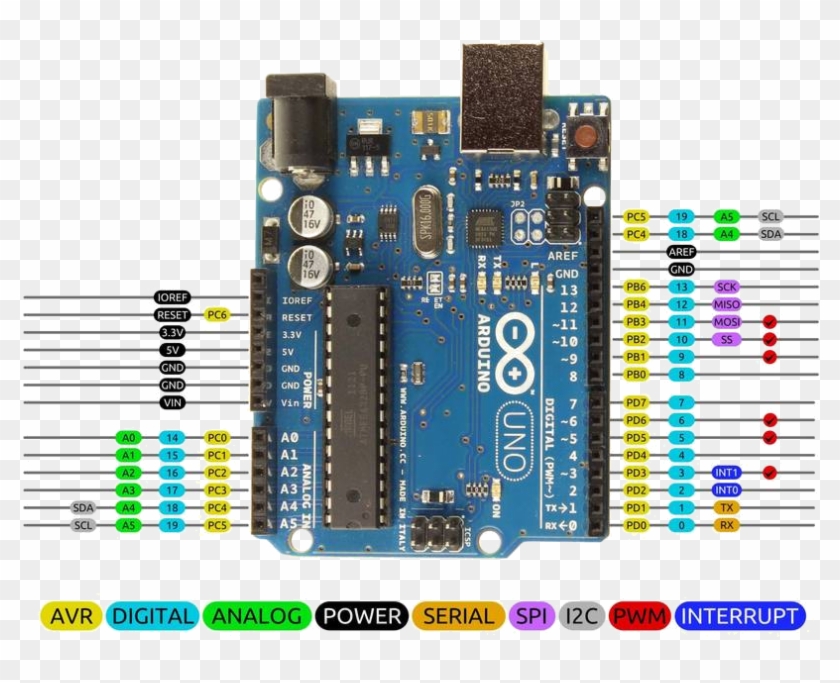
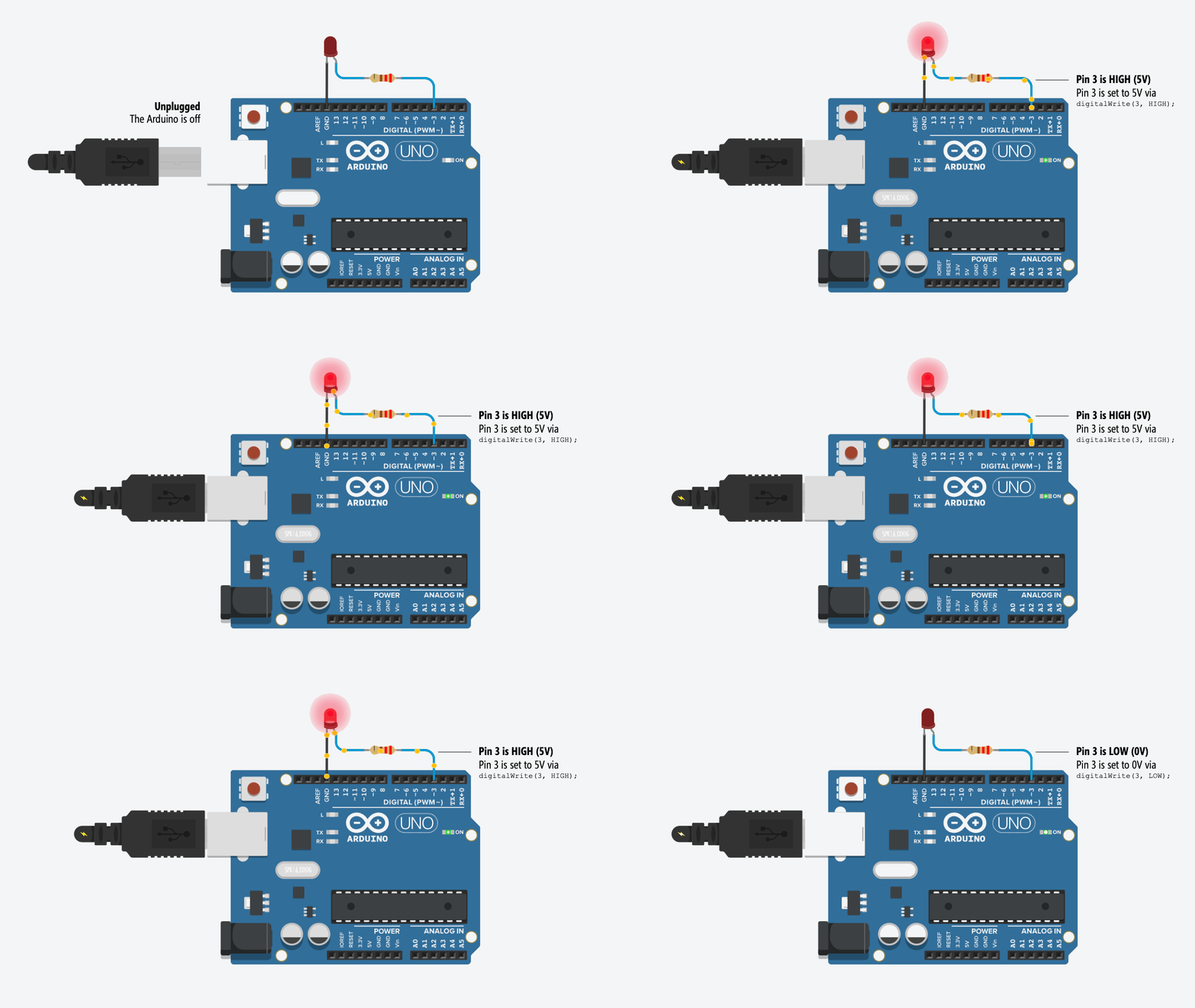
The Arduino micro-controller is a simple digital device that does a great job of showing the basics of how computer code performs with hardware. It also introduces students to circuits and the electronics fundamentals that drive all digital technology.

Arduino is open-source (like Linux) and doesn't usually come in a pre-fabricated activity/kit from your friendly neighborhood edtech for-profit with pre-set lessons and learning outcomes (a sure way to fail at developing real digital fluency).

With relatively small outlay you can collect together Arduino microcontrollers and basic electronics like LEDs and resistors and facilitate a hands-on understanding of the electronics that make the modern world work. Kits with many parts cost less than $80 and if you're crafty, far less). We always used Abra Electronics in Montreal to keep it Canadian.

There are piles of Arduino projects that students can try, but we always worked through the ARDX Arduino circuits to get everyone familiar with how breadboards and circuits work first. The Arduino plugs into the student-built desktops with a USB cable and then runs software that lets students explore both coding and circuit building in a very real way.

This is another area where the bluster gets cleared away by demonstrated mastery. If a student tells me they already know all about electronics, I tell them that they only have to do circuit number five and then can go right into designing their own project. A few can show what they claim to know, but many struggle and then I gently redirect them to doing the circuits as a 'refresher'. By the end of the Arduino unit everyone has tactile knowledge of the basics in circuit building and coding.

Introducing Arduino and running through the basic circuits typically takes about a week of high school classes, so it would be another day (6-7 hours) if students were in focused training to quickly develop these real digital fluencies.

Step 3: Use Your DIY Tech to Scale Up And Explore Connectivity & Networking

To get students the Arduino software and access to circuits on their desktops, you would have to connect them to the internet. After Arduino, students are more comfortable with their PCs and how they work, so it's time to go upstream and tackle networking!

This is another intimate aspect of people's lives that is often misunderstood. By having students build local networks with each other's machines and pass data across, they again benefit from direct, tactile, experiential learning.

We then connect these local networks together into a class-wide network and watch data travel across it in real time, but the favourite part is stress testing the network to see how much data it can handle. Tools like LOIC (low orbit ion canon!) can be used to DDOS machines off the network by overloading them with data. At this point complex, multi-disciplinary specialities in digital technologies (like cybersecurity) start to glimmer in the distance. Anyone trying to teach cyber with none of these foundational understandings in place is going to have trouble.

Another good stress test is to set up an older LAN based game which requires inputting IP addresses and other details. It's not often students have playing a multi-player game as a classroom learning target. You can guess how popular that is.

Tools wise, Cisco offers their Packet Tracer network simulator for free (you can become a Cisco Network Academy at no cost, which makes dozens of introductory ICT, networking and coding courses available). Packet Tracer lets students build complex theoretical networks and then push data through them to see if and how they work.

The networking unit typically takes another week of high school classes, so could be managed in a single 6-7 hour day. By the end of it students are experimenting with their DIY desktops on their DIY networks. The learning doesn't get any more genuine than this and the result is students who are tangibly developing real digital fluency.


Step 4: Use Your DIY Tech to Explore Data Management and Programming 

In the high school junior grades we focus on Javascript and HTML (both common web-focused coding languages). HTML works well as it allows students to quickly understand how the webpages they spend so much time on are displayed. Javascript is helpful because it allows webpages to run executable scripts and hints at the complexity modern webpages are capable of. LIke the other steps, the point here is to get behind the curtain and begin to make students aware of how the technology they are codependent on works.

Students can create and share simple HTML webpages on their network giving them a hands-on introduction to internet architecture. W3 Schools does a great intro to HTML and Javascript (and CSS and HTML5). The point isn't to create a web developer in a day, but to (once again) develop tactile familiarity with digital technologies that have always been hidden.

Coding takes time to develop, but an introduction to web design typically takes about a week to get students to the point where they know enough syntax to build a simple webpage. What's nice about HTML is that it's a tight feedback loop; you put in a command and immediately see the result.

With webpages rattling around your DIY network, you can talk about ports and how they work, and even get into online databases which tears the cover off one of the biggest problems we face: cloud based personal data. Each layer of this learning builds on the previous ones creating a rich ecosystem of interrelated technologies. Getting newly digitally fluent students to actually understand how the online world we all spend our time in works is where you want people if they want to take a run at cybersecurity with anything like the necessary context.


When you've got digital fluency you can chase down
NASA complex projects! Here CyberTitans Vlad &
Wyatt (also a 2x Skills Ontario medalist in IT &
Networking) are building a Beowulf supercomputer
...out of ewaste!
Step 5: PLAY!

I'd run this in adult up-skilling as an intensive week of digital fluency training. The final day would be a student directed mini-project. For those who dug PC building, they can build something to a specific purpose. For those who dug the Arduino and electronics, opportunities to build original circuits and code await, and for those intrepid few who enjoyed networking and data management and programming, they can chase down more complex connectivity or web development.

When I did my A+ training way back during Y2K it was an intensive week which gave me enough context to chase down my certification in a few months of practice and study. I've had a few students manage to get A+ certified as a computer technician while still in high school, but it's a challenge due to the breadth of material. I.T. techs need to be familiar with older tech and emerging tech as well as what's current. That experience takes time, which is why my seniors do in-school I.T. support. Being dropped into real world technology complications helps them hone the skills they need to be effective technicians. The purpose of this as an upskilling course would be to create contextual understandings that are simply missing for the vast majority when it comes to 'tech'.


Why Do this?


This level of hands-on technical familiarity would revolutionize elearning and make it a viable education tool. Digitally fluent staff and students would make us lock-down resilient and capable of keeping learning alive in difficult circumstances instead of giving up and leaving students behind, and it would only take 35-40 instructional hours. Many adults use digital technology habitually and in profound ignorance. An intensive week of hands on learning would end that approach and give everyone the context they need to move with purpose in our digitized society.

When I see Ontario dedicating time to mandatory historical curriculum I shake my head. This kind of digital fluency would enable pretty much every career pathway and give students essential 21st Century life skills (you don't want digitally illiterate people participating in a technology enabled democracy). Instead we cling to mandatory curriculum designed in the age before our digital revolution. We could be producing digitally competent students that close the digital skills gap, and it's not like it's expensive or time consuming. All that it takes to solve this problem is to solve this problem.

For those tackling adult re-skilling, I see a lot of cybersecurity 'bootcamps' that assume much of this digital fluency in their candidates (like K-12 does) and then wonder why their dropout rates are so high. Cybersecurity is a multi-disciplinary specialization within ICT and you can't get to it directly any more than you can expect an illiterate adult to tackle Shakespeare. You need foundational skills and contextual understandings before you take on that kind of complexity. It isn't an impossible ask, but it is one that needs to start from where people are at, which is further back than we think they are.

How to Build Digital Fluency Before Tackling Cybersecurity


Follow Up Links

The Digital Divide is Deep and Wide (2017): https://temkblog.blogspot.com/2017/12/the-digital-divide-is-deep-and-wide.html

How to Pivot Ontario Education to Prepare for The Next Wave (we didn't): https://temkblog.blogspot.com/2020/05/how-to-pivot-ontario-education-to.html

Exceptional Times: Using a Pandemic to Close the Digital Divide (any day now): https://temkblog.blogspot.com/2020/03/exceptional-times.html

Why Canadian Education is so Reluctant to Move on Digital Literacy (hard to teach it when you don't have it either): https://temkblog.blogspot.com/2023/02/why-canadian-education-is-so-reluctant.html