Showing posts with label neurology. Show all posts

Friday, 24 April 2015

Neurology: Is it the car, or the car and driver?

We had board PD today (a 3 hour lecture).  It was a presentation on neurology in learning and layered curriculum by Kathie Nunley.  I'm generally a fan of a nuanced scientific approach to human activity (as opposed to a simplistic approach to things that usually support buying something).  Dr. Nunley's neurological approach to education offered a number of insights to what we're doing wrong.  If we don't consider biological imperatives in learning we will never be as efficient as we might be.


There was a moment where I came to the end of neurological approach and the 'ol philosophy degree kicked in.  Nunley had a slide stressing the importance of the appearance of choice in learning.  She stressed how engaging it is for students when they feel like they can choose their learning.

My knee jerk response was that this was manipulation, which led me down a metaphysical rabbit hole.

Neuroscience, because it's looking at the brain, comes dangerously close to itemizing our sentience.  It also tends to reduce multi-dimensional complexity into simplistic linearity.  This idea that the appearance of choice would prompt more efficient learning would encourage any right minded teacher to manipulate their students into thinking they have learning choice in order to harness better retention.  No right minded teacher should be manipulating anyone into anything.

An analogy immediately came to mind.  Is neuroscience the car or the car and driver?  On a neuroscientific level our minds are very complex mechanical devices.  Our actions are driven by a brain developed from millennia of evolution.  There is no free-will, only complex autonomous reaction.  If that is what we are, you should have no trouble manipulating these processes to get a desired result, especially if it's a good end.  School systems should treat the people in them like cogs in a machine, because that's all they are.

If neurology is the study of the car then we can make immediate and scientifically informed choices that will improve its maintenance and operation.  As Nunley suggested in her presentation, dietary and developmental principles can be applied to maximize the functionality of our brains.  If neurology is the study of the car and driver then there is nothing else to consider.  In addition to the spiritual considerations that a number of people would find difficult to swallow, concepts like ethics or metaphysical ideals beyond the immediately knowable world of science (like honesty) may be ignored.  Neurology is the rational tool that justifies treating people like machines because that is all they are.

One of the reasons I like teaching technology is because students don't get to work in imaginary value structures.  Those would be places where the science of neurology reigns supreme, where the teacher should manipulate students to lead them to success.  It's where a 60% means you've done enough.  In the world of hands-on experience 60% is as useful as a zero.  If you don't believe me have 60% of your next brake job done and see how that goes.
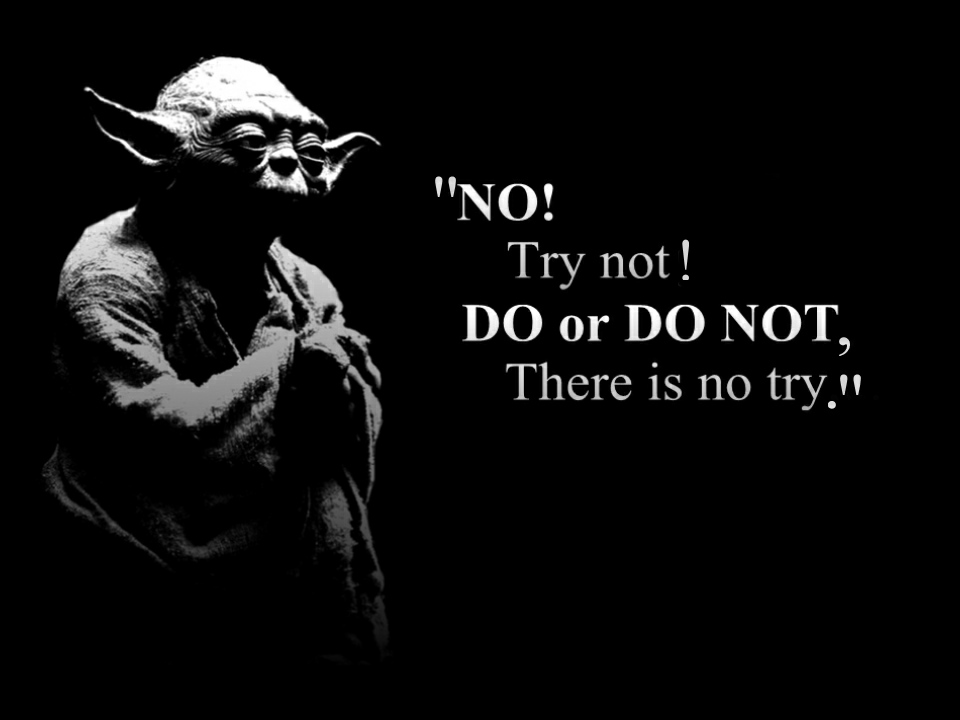

Teaching technology means I get to take students inured to reality after years of 'learning' in a school system and put them in close proximity to what is rather than what we wish.  Their discomfort is obvious.  They respond with comments like, "it didn't work, but I tried real hard.  Do I get an A?"  No, you don't, and reality is unimpressed with your intellectual resilience and general work ethic.  Thank goodness human value structures don't decide everything. 

Fortunately, and despite our best efforts, we don't live in a reality based on human value structures.  The large, unknowable universe that surrounds us makes itself felt constantly.   The tiny portion of reality we feel like we have a grip on because of science is only a gross approximation; mathematics and human ideas that roughly simulate reality enough to make crude use of it.  Science thinks in terms or breakthroughs and mastery, but neither actually happens.  Neuroscience offers us some useful insight into how brains function, but it is still far from understanding our minds; the driver is still safely out of their hands.

I tend toward moral absolutism.  One of the reasons I find science so agreeable is because it attempts to tell no lies, but in the case of neuroscience it seems to make some assumptions on how much it thinks it knows about being human.  Brains aren't all we are, even though we use them as a lens to make sense of the world.

I'm going to take many of the suggestions around how to best maintain and maximize brain efficiency from this PD, but I'm not surrendering morality in the process.  If I'm going to give a student a choice it's going to be a genuine choice because I believe those are superior to the appearance of choice.  In ways not immediately measurable I know that treating students and the subject I teach honestly creates the kind of fecundity that science is still having trouble quantifying.

Thursday, 9 May 2013

Wired Thinking on Neurodiversity

Wired at 20 years old
My favorite magazine is WIRED, and I'm a magazine guy.  No other magazine dares me to think as widely and as daringly about the times we live in (if you've never picked up a copy, give it a go!).  Wired will go after interests of mine (internet culture, technology, etc) but it will also introduce me to the leading edge of fields I have only a passing experience in, and make me care about them.

This month they turn 20 years old.  They've been daringly guessing what will happen next for two decades now, and while they don't always get it right, they always make you realize what changes are upon us.

As  I read a new edition I usually want to link and share the ideas they stir up.  This edition is full of them as Wired goes over an alphabet of ideas considered in the last two decades.

Neurodiversity is a topic that hits close to home.  With a son diagnosed, I've come to recognize how I've dealt with ASD myself.  One of the reasons I love reading Douglas Coupland or William Gibson is because many of their characters are neuro-atypical, and it's nice to read about people like yourself; I find much of mainstream media quite alienating.

I've struggled with my inability to care about social distinction forever, and I feel for my son while he does.  I also think that difference is wonderful.  When we heard the diagnosis I said, "excellent! Who would want to be normal!?"  I guess the normal people do.

WIRED's take on all this? Neurodiversity is like biological diversity; it develops resiliency.  The neurodiverse might not all be geniuses, but the ones that are (and geniuses by definition are neurodiverse) may very well save the human race.  Diversity allows a species to survive in extreme conditions, conditions that we're making for ourselves.  As long as we're hammering round pegs into square holes, we're not allowing human beings to be as neurally diverse as we naturally are... and we're hurting ourselves in the process.  Normal people really need to get off their high horses.

I wish I could convince the school system of this as it focuses exclusively on short comings in hopes of making the exceptional ceptional..  If they could improve my son's image pattern recognition (which is astonishing), his special skills would be enhanced, instead they rush to make him fit a mould.  The system presses him to be as widely and flatly skilled as 'normal' people in hopes of making him what, normal?  Upcoming standardized tests won't examine his superhuman abilities, they will focus on what 'normal' people are expected to do (they have charts).  When he fails a literacy test because he's unable to verbalize what he knows in a manner that suits the testers, we're left with the pieces.

Some might suggest that alternative school systems might offer a response to this, but I doubt it.  Adding money to remove expectations isn't what is needed here.

Like eating factory produced meat, driving SUVs or buying sweatshop made products, how we treat the neurodiverse is going to be one of the things that points to our backward (hypocritical) thinking in the early twenty first century.  Like the eighteenth century person who thought slavery was perfectly acceptable, this social ignorance makes us look like fools to history.

Fortunately, I don't really care what most people think about it.