Showing posts with label genuine learning. Show all posts

Friday, 24 April 2015

Neurology: Is it the car, or the car and driver?

We had board PD today (a 3 hour lecture).  It was a presentation on neurology in learning and layered curriculum by Kathie Nunley.  I'm generally a fan of a nuanced scientific approach to human activity (as opposed to a simplistic approach to things that usually support buying something).  Dr. Nunley's neurological approach to education offered a number of insights to what we're doing wrong.  If we don't consider biological imperatives in learning we will never be as efficient as we might be.


There was a moment where I came to the end of neurological approach and the 'ol philosophy degree kicked in.  Nunley had a slide stressing the importance of the appearance of choice in learning.  She stressed how engaging it is for students when they feel like they can choose their learning.

My knee jerk response was that this was manipulation, which led me down a metaphysical rabbit hole.

Neuroscience, because it's looking at the brain, comes dangerously close to itemizing our sentience.  It also tends to reduce multi-dimensional complexity into simplistic linearity.  This idea that the appearance of choice would prompt more efficient learning would encourage any right minded teacher to manipulate their students into thinking they have learning choice in order to harness better retention.  No right minded teacher should be manipulating anyone into anything.

An analogy immediately came to mind.  Is neuroscience the car or the car and driver?  On a neuroscientific level our minds are very complex mechanical devices.  Our actions are driven by a brain developed from millennia of evolution.  There is no free-will, only complex autonomous reaction.  If that is what we are, you should have no trouble manipulating these processes to get a desired result, especially if it's a good end.  School systems should treat the people in them like cogs in a machine, because that's all they are.

If neurology is the study of the car then we can make immediate and scientifically informed choices that will improve its maintenance and operation.  As Nunley suggested in her presentation, dietary and developmental principles can be applied to maximize the functionality of our brains.  If neurology is the study of the car and driver then there is nothing else to consider.  In addition to the spiritual considerations that a number of people would find difficult to swallow, concepts like ethics or metaphysical ideals beyond the immediately knowable world of science (like honesty) may be ignored.  Neurology is the rational tool that justifies treating people like machines because that is all they are.

One of the reasons I like teaching technology is because students don't get to work in imaginary value structures.  Those would be places where the science of neurology reigns supreme, where the teacher should manipulate students to lead them to success.  It's where a 60% means you've done enough.  In the world of hands-on experience 60% is as useful as a zero.  If you don't believe me have 60% of your next brake job done and see how that goes.
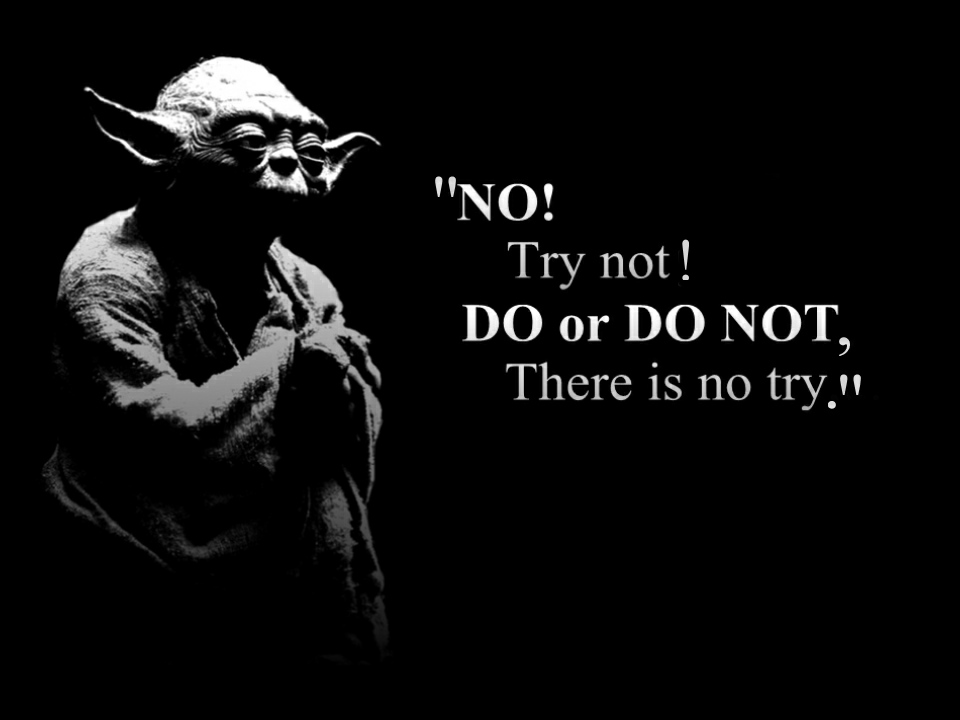

Teaching technology means I get to take students inured to reality after years of 'learning' in a school system and put them in close proximity to what is rather than what we wish.  Their discomfort is obvious.  They respond with comments like, "it didn't work, but I tried real hard.  Do I get an A?"  No, you don't, and reality is unimpressed with your intellectual resilience and general work ethic.  Thank goodness human value structures don't decide everything. 

Fortunately, and despite our best efforts, we don't live in a reality based on human value structures.  The large, unknowable universe that surrounds us makes itself felt constantly.   The tiny portion of reality we feel like we have a grip on because of science is only a gross approximation; mathematics and human ideas that roughly simulate reality enough to make crude use of it.  Science thinks in terms or breakthroughs and mastery, but neither actually happens.  Neuroscience offers us some useful insight into how brains function, but it is still far from understanding our minds; the driver is still safely out of their hands.

I tend toward moral absolutism.  One of the reasons I find science so agreeable is because it attempts to tell no lies, but in the case of neuroscience it seems to make some assumptions on how much it thinks it knows about being human.  Brains aren't all we are, even though we use them as a lens to make sense of the world.

I'm going to take many of the suggestions around how to best maintain and maximize brain efficiency from this PD, but I'm not surrendering morality in the process.  If I'm going to give a student a choice it's going to be a genuine choice because I believe those are superior to the appearance of choice.  In ways not immediately measurable I know that treating students and the subject I teach honestly creates the kind of fecundity that science is still having trouble quantifying.

Tuesday, 10 February 2015

Cookie Cutter 'Formal' Exams

We were recently told that our board is moving to a formal exam for every course model. We're told that this needs to happen because if we don't use formal exam days for formal exams, we'll lose the days.  Perhaps we should lose the days.  Formal exams are an echo from the past.  Desperately trying to 'keep' them by forcing them on everyone isn't the best approach to learning, it never was.  Clinging to status quo thinking seldom produces outstanding results in anything.

This conundrum once again has me feeling the friction between academic and technology classrooms.  To the majority of subjects in our school, an exam for every class simply means setting up more desks and running off more photocopies.

One of our auto-shop teachers tried running a 'formal' exam this semester.  He had tinkered with a car and then had students diagnose it.  Since he doesn't have a 24 bay garage, he has to have students approach the car one at a time in order to diagnose it.  Because he is expected to have all students in the room at the same time (exams are blocked into two hour scheduled time periods, one per day), he had students come up one at a time to diagnose and resolve the problems while the rest wrote written tests that  did not reflect how students had learned in his class during the semester.


Cookie cutter exam schedules for cookie cutter learners.

The formal exam structure didn't work at all in the shop.  The first kid up shouted out, "do you want me to change out this fuse?" and suddenly everyone in the room knew an answer.  It then kept happening.  When you've been teaching students to collaborate on diagnostics all semester, why would you suddenly have a summative that demands they don't?  Even if that's what a 'formal' exam is?

All that effort to create a genuine assessment within a standardized exam structure was wasted, but that doesn't stop us from being expected to bring meaningful assessment to all our technology students in this cookie cutter final exam format.  How meaningful can this two hour window be when our courses are tactile, stochastic and experiential?  In a class where there is a linear progression from question to answer, and were the skills are assessed on paper this works a treat, but not in tech.

Coop avoids the exam problem by creating individual summatives (each student has an interview).  Of course this means that each teacher is handling 25+ hours of assessment for each class they teach.  I'm surprised that they can stuff all that meaningful assessment into a single exam week.  While this resolves the problem of trying to fit individualized exams into cookie cutter academic schedules, it doesn't address the complexity of creating an entire class set of experiential problems of equal complexity (you couldn't have the same problem because the first student out would happily tell the rest what they are about to face).  Creating individualized, immersive simulation for each student might be the ultimate in summatives, but a factory styled school system isn't remotely designed to produce that kind of individualized learning opportunity.
Is this what an exam for every course looks like?  Kinda like
the floor of a very serious factory, or a university...

Would I like to create a 'formal' exam that offers my computer students real-world, immersive, experiential computer technology problem solving?  You bet, but expecting me to do that in a two hour window for dozens of students at a time suggests that the actual goal here isn't meaningful and genuine so much as generic and formulaic, like most 'formal' exams.

'Formal' exam is code for a university-styled, written, academic assessment.  It typically involves lots of photocopying and students sitting in rows writing answers to the same questions.  The teacher then spends a lot of time trying to assign value to this dimensionless form of assessment.  Like many other aspects of high school, formal exams are high school teachers imitating the university professors they wished they could be.


For hundreds of thousands of dollars with corporate sponsorship
 and post-secondary support, Skills Ontario championships
create meaningful, experiential tech-assessment.
If you're looking for an example of an immersive, complex, skills based assessment, we have a fantastic home-grown example.  Skills Canada does a great job of creating experiential assessment of technology knowledge and tactile abilities, but with million dollar budgets and support from all levels of government, private business and post secondary education, they exist in a different world from my classroom.  They're also catering to the top 1% of 1% of technology students.  I have to cater to the other 99.9% with nothing like that kind of budget.

I've been mulling over how I'm supposed to create meaningful assessment for my technology students in that two hour time slot and I'm stumped.  No budget is forthcoming to purchase equipment and tools so that I can have every student doing the same thing at the same time - I don't even have enough screwdrivers for all students to be building computers at the same time, let alone the computer parts needed to build them.  Those would be computer parts that some students would not ground themselves properly when installing.  Funding wouldn't just need to be there for tools, it would also have to be there to replace breakage due to incompetence.

Technology teachers already struggle trying to explain technology costs to academics with only a vague understanding and little experience in apprenticeship and the trades.  When students are heavy handed or absent minded it costs us money to replace what they break, yet we struggle to get funded on par with academic courses that do most of their work on paper.

Now we face the prospect of being forced to reduce our tactile, experiential, immersive learning into cookie cutter summatives that jive with the pre-existing academic scheduling.  Just when you think we might be evolving beyond the 20th Century factory model of education it rears its ugly head and demands reductionist assessment for all.  Wouldn't it be nice if we were looking to diversify summatives instead of cramming them all into the same schedule that existed fifty years ago?