Four social circumstances that have millennials struggling: 1) Failed parenting strategies include children being told they are special and can do whatever they want just because they want it. They have won awards their entire lives for simply showing up. This award inflation devalues excellence and embarrasses the failures these children experience. They've learned not to strive for excellence because it doesn't matter. 2) Technology:Millennials are surrounded by filtered social media where everyone appears to have it figured out and puts on a good face. On top of that they have the same relationship with social media as a gambling addict has with a casino, except this addiction is only ever a touch away. 3) Impatience: They want to reach the summit and have a 'big impact' but are unaware that the summit lies at the top of a mountain. Is this related to number one? 4) Environment: Companies (and schools?) should be rebuilding the confidence and resilience of this generation by reconnecting them to personal relationships and long term goals. This means stepping up to combat number 1, something that most school administration really isn't willing to do.
Now imagine standing in front of thirty one of them.
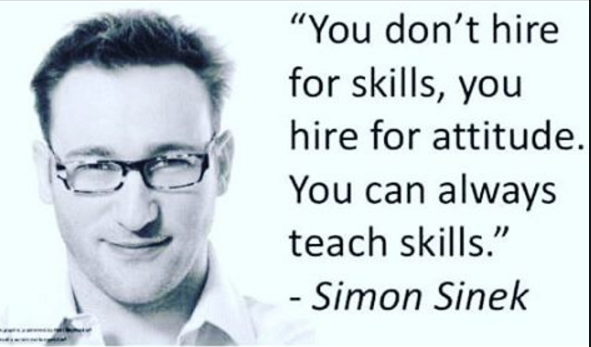
I've struggled with the vagaries of the millennial mindset in the classroom many times over the past few years. From the grade inflation of risk averse learners and five-ohs to the complaints of industry, I'm familiar with the millennial challenges Sinek refers to in his interview above. Battling these frankly bewildering and fictionally driven parenting strategies seems to be a lost cause for most educators. Since banks and multi-nationals decided to burn the economy down and cause years of austerity, education (and governments in general) have taken on business-think in an unprecedented manner (some kind of Stockholm syndrome?). The modern approach seems to be 'the customer is always right even if they have no idea what they're doing'. Rather than expecting competence on the part of the student I often find myself defending a failing grade from a student who has never completed any work at grade level and has missed weeks and weeks of class. Parents don't want to hear that their child is incapable and they certainly don't want to accept responsibility for that incompetence. Their only goal seems to be finding ways to blame anything else.
We're not doing a lot of either these days.
Technology is another place where education has thrown in the towel. Students can do whatever they want with their devices. Any attempt to redirect a student away from inappropriate technology use is wasted as these devices are now considered to be a constitutional right. It isn't uncommon for me to ask a student to focus on what we're doing and have them tell me they are in the middle of a text conversation with their parents which is obviously much more important than whatever's happening in class. They're probably planning a two week absence from school for a holiday - another exciting new millennial parenting tactic that would have been foreign to my parent's way of thinking. Sinek's no smartphones in a meeting rule wouldn't fly in a modern classroom. You can't helicopter parent without the tether.
How education is becoming less able to manage these dangers we face.
Patience isn't lost in all students but even the most capable are dwindling in attention duration. At the beginning of our last unit I showed exemplars of previous projects done over the past few years. The top student in my class asked, "are people getting dumber and dumber?" Good question. They certainly seem to be less and less capable of developing skills complex enough to tackle curriculum level theory and practice. Perhaps if they weren't taking weeks of unexplained absences and holidays during the semester things would be better. Perhaps if they were expected to attempt all course work to the best of their abilities skill-sets wouldn't be deteriorating. In modern high schools students take the courses they want, not the ones they are capable of. Students who fail advanced courses get a variety of options to regain the credit and are seen at the same level next year regardless of how little they've proven they can do. Parents demand access to advanced classes for students who barely find time to attend school and are unwilling to actually do anything. If I fail anyone I have to justify the failure, not so the absent, incompetent student. Even trying to offer a range of courses doesn't work because everyone is an academic all-star who should be getting the most advanced credits.
The complaint from people in post secondary education and the work place is that we're producing graduates incapable of working effectively in the 'real world'. Sinek's comments go straight to this. Any absence or student failure isn't an administrative issue; the system won't even address it. There used to be a limit on unexplained absences and then a student was kicked out of a course, that doesn't happen any more. There used to be criteria for failing late work, that doesn't happen any more. There used to be requirements for staying within an academic stream, now it's do whatever you want. When a student is absent or obtuse teachers are told to contact the parents who caused the situation in the first place and work it out. In Ontario this approach has been institutionalized using laws like school until eighteen no-matter-what. By keeping students in school at all costs we've effectively removed anywhere to drop out to. With no bottom to fall through, graduation rates are on the rise! We've effectively institutionalized failed parenting strategy number one: everyone is a winner!
The internet is full of memes that suggest the approach we're taking isn't helping.
I was asked the other day what virtual reality could do beyond the obvious entertainment it provides. A bit of online research shows VR moving in a number of directions beneficial to education. Below is a list that covers everything from currently available software to academic research and emerging uses. It isn't even remotely complete. ***
When I worked in Japan I did a lot of work with a local doctor who was researching therapeutic muscle stimulation in patients recovering from paralysis. A lot of that physiotherapy was very hard work for both the patients and the people working with them. VR would offer a way to produce more natural, targeted and full range interaction without the tedium and limitation of repetitive exercise.
The CBC piece above is talking about how amputees with phantom limb syndrome use VR to reconnect the neural pathways that used to operate the missing part. Body confusion over the missing part appears to be the cause of phantom pains in missing limbs. The immersive nature of VR allows patients to exercise those neurons and reduce instances of false pain responses.
Physical Therapy VR Research http://www.northeastern.edu/regamevrlab/ If you've ever immersed yourself in VR you quickly become aware of how elsewhere you feel. I've felt vertigo while standing on a cliff in Google Earth. As a tool for balance and movement it has obvious immediate applications. A Home-made VR Motion Sensor and Data Collection Tool
Currently, my senior computer engineering students are designing an Arduino based virtual reality movement sensor that will collect data on a user's movements while immersed. They are programming a Java based back end in computer science to collect the data streaming from the ultrasonic sensor in order to create data-sets of movement while immersed. This data could be used to measure the depth of immersion the user is experiencing. More immersed people tend to physically interact more with the virtual environment - that physical interaction can be used to collect data.
Analysis of the data means they might be able to produce accurate information on how well a user is playing a game, how effectively an athlete is following a VR training regimen or perhaps if a patient recovering from an injury is making the right motions in physio. It should be able to isolate and describe the physical limitations of a user in VR. Unlike previous digital experiences through the window of a monitor, VR offers immediate physical feedback that we're going to record.
Digital interaction is going to be much less sedentary in the future.
Autism Speaks is a science focused advocacy group that is encouraging a seed change in how society views the spectrum of atypical autism related thinking. In this article they are funding research into a VR based social cognition training in order for autistic people to function more effectively with others. The complexities of autism means they need to proceed carefully with data collection. VR's unique sense of immersion means they can simulate social situations (and the anxiety that arises from them) more accurately and produce responses that reflect it. The data collected from this specifically targeted research is vital to creating tools to help people with autism practice social skills more effectively. Having kids who are already comfortable with VR means that when this therapy is ready they won't have to get familiar with the technology before they benefit from the therapeutic value of the program. Sensitivity Training for Neurotypicals http://www.autism.org.uk/VR We're currently using a 360 camera to create a VR based tour of our school. In it students get to move around the building looking where they want in order to begin to get a sense of where everything is. Editing 4k 360° video is a challenge - I have to use the best VR PC we have to do it (when it isn't running VR), but we'll get there. In the meantime, I came across this immersive video made by the UK's National Autistic Society. Designed in collaboration with autistic people, it gives you some idea of how overwhelming the world can be when an autistic child has a panic attack. It's overwhelming watching it on the screen. Watching it in VR I was in tears...
If you're not in VR and haven't done 360° video before, you can move the point of view around with your mouse as you watch. As a way of trying to explain to others how it feels to have a panic attack when you're autistic, it's a powerful tool. Using VR to Teach Autistic Teens How to Drive https://news.vanderbilt.edu/2016/07/21/using-virtual-reality-to-help-teenagers-with-autism-learn-how-to-drive/ Another ready-now application for VR is in vehicle operation. High performance operators such as racers use it to learn tracks. Heavy equipment operators are using it to train people on expensive industrial machines before they ever get into the cab for the first time. Pilots have to log flight time in a simulator as part of becoming qualified on a new plane. As a way to get people familiar with a complex machine it's cheap and effective. In this case VR is being used to ease the anxiety of learning to drive in teens with autism. Every high school in our board has driving instruction starting in their parking lots. They should all be adopting this first step in order to ease anxiety before putting any kid behind the wheel for the first time.
General education links
The Virtual Reality Society http://www.vrs.org.uk/virtual-reality-education/ Based out of the UK, this group offers a great resource site to get your feet wet in VR. They are also very interested in how VR can be used in teaching and learning and a lot of their links will take you emerging uses of this technology.
There's this guy in Canada who jumped into this early and has his students building VR kits for other schools. He's out and about often demonstrating the technology in his school, his board and his province to anyone who will listen. He and his students have put hundreds of people through their first experience with VR.
His interest is in the engineering that creates the immersive VR experience. It takes astonishing amounts of computing power to produce 3d immersive simulations. Astonishing amounts of computing power are what got his attention in the first place.
Education isn't usually responsive to emerging technologies but this guy's MO is to explore new technologies, and this one is going take immersive simulation (something he's always been interested in) to unforeseen levels. VR and Mathematics http://eric.ed.gov/?id=EJ456186 Experiential algebra in VR. The benefits of visualizing mathematics in 3d are obvious. This is one of many academic papers on the subject.
VR and Chemistry https://devpost.com/software/chemistry-lab-vr Chemistry is one of those hands on teaching environments that have a lot of safety oversight. Using VR to familiarize students with the safety needs of the lab could drastically reduce damage costs. The safety training applications school-wide in technology and science are obvious.
These guys used Unity just like my software engineering course does - this is something that capable high school students could render. Perhaps we will next semester.
A trip through the body. You can observe infections happening at a microscopic level. It has my twelve year old talking about viral nucleocapsids - I have no idea what he's talking about.
There has been a lot of talk about gender in schools this year. The immersive nature of VR means empathy can go from difficult to access to something approaching a lived experience. Having a red neck experience the looks of distrust aimed at a black man or a misogynist spend an hour as a woman would go a long way toward addressing inequity. It's hard to hate or belittle someone when you've spent some time in their shoes. Foundry10 Virtual Reality Research
Foundry10 has been a fantastic resource in our exploration of virtual reality. They are a Seattle based research group focused on how VR might be used in education.
***
Does VR have any value beyond entertainment? It's an explosive new area of technological growth and we've barely begun to explore what it can do. Even so, there are already hundreds of immediately useful educationally focused VR apps, and more come on line every day. NOTES VR as a tool for pain management
The PISA results for 2015 have been published and Canada is once again top ten (6th) in the world. I imagine this means I'll once again attend a bunch of Canadian educational conferences with American (30th best in the world) speakers who want to tell us how we need to completely re-imagine our (their) failed system. I tend to take statistics as less of a truth and more of a vague indicator of what's happening. They don't explain complex systems like human education very well but they do take the temperature. Since Ontario is the largest single education system in Canada we lend a lot of weight to the country's successes and failures in these UN tests. If Ontario is performing well it tends to push the country's scores in that direction, so we must be doing a pretty good job if we're sixth in the world. There are a variety of statistics pulled out of the OECD PISA data that are interesting to consider. To begin with, the top Asian countries only pitch their most gifted students at PISA while Canada, Finland and Estonia are representative of their entire populations. From that perspective all Canadian students were only beaten by the highest streamed students in Hong Kong, Japan and Singapore. If this were an apples to apples comparison we'd have done even better.
Another interesting statistic is truancy (on the left). There are a number of countries, Finland among them, that have seen a surprising jump in truancy. Unsurprisingly, the countries that are only putting their strongest students in also don't tolerate truancy. Canada, as in every aspect of the results I've seen so far, exceeds the OECD average and performs well in this area, even when we include all socio-economic and geographic areas of the country.
The other argument I'd be expecting from the neo-con right is that we pour tons of money into education so of course we get good results, except we don't. When compared to OECD countries world-wide, Canada is mid-pack in percent of GDP spent on education. Australia spends slightly more than us and the US only slightly less to get significantly worse results. Finland spends significantly more of their GDP on education than Canada does and finished behind us this time around. It's a quiet time in Ontario education right now but I'm sure the Ontario Liberal party is already concocting stories in order to villify Ontario educators in the next round of bargaining. While that's going on I guess we'll just keep producing world class results at a reasonable cost.
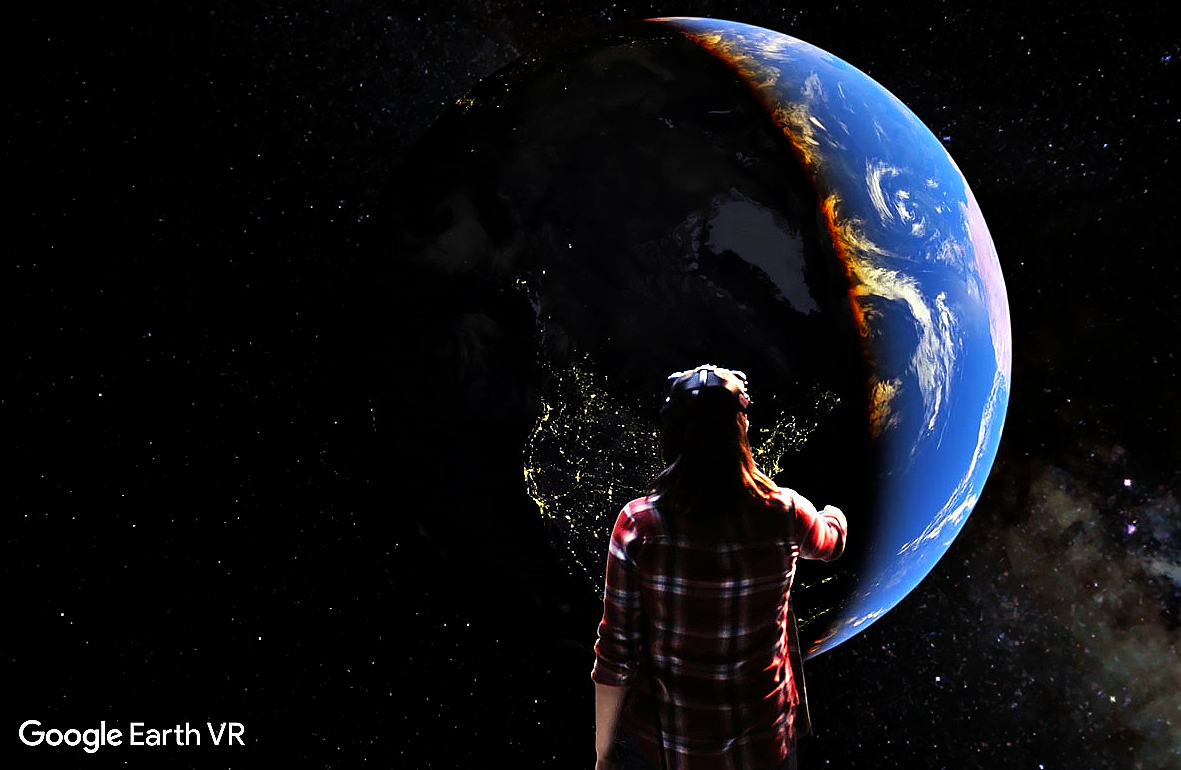
I spent Saturday morning in the next town over demonstrating virtual reality systems at our board's Digital Saturday. We had a line up the whole time and put dozens of kids through their first VR experience. You get to see their first moments when they realize just how immersive this technology is, and then you get the follow up when they start thinking through the implications of what they just tried. The next ten years aren't going to be like the last ten years. Our choice for first VR experience has always been Google's Tilt Brush. Users get used to the 3d experience in virtual space by sculpting with light. This time I launched the Vive using Google Earth VR, which just came out last week. If you're looking for shock and awe Google Earth in VR will do it for you.
There was a moment last week when I was looking for Machu Picchu in Google Earth VR. I was hovering over the Andes about ten miles up looking at various peaks, trying to isolate the ruins. I looked up to my right and could see across the curve of the Earth into the Amazon basin. To my left the Pacific receded into the distance. Looking up I could see the Andes like a bumpy spine up the back of South America. I was in this huge space looking to distant horizons in all directions. People often talk about how intimate it feels being inside a headset but in this case I felt more like an ISS astronaut. This kind of visualization is thought provoking. It changes how you conceive and manage complex data. It changes how you interact with digital information. The first thing many people do when they first enter Google's virtual Earth is to go somewhere they long for. One of our business teachers went to her Grandmother's house in northern Italy. I went home to the north Norfolk shore. We both got quite emotional about getting to go home even if it's only virtually. Our sense of place is really just immersion in the literal sense. Virtual reality mimics that feeling remarkably well. Don't underestimate VR's ability to provoke an emotional response with immersion. How we manage that emotionally powerful response is important, especially if it's being used for educational purposes. While at the recent ECOO conference I gave the Microsoft Hololens a try and was surprised at how effective it was for an engineering sample. It isn't a full virtual device like the Vive or the Oculus, instead it inserts digital information into the world in front of you as augmented reality. Only the user could see a ballerina dancing on the conference floor or digital information like distance and size overlaid on real objects. The resolution is surprisingly good and the fact that it's wireless (battery powered and wifi) is totally next level. This experience suggests that fully immersive virtual reality and augmented reality might start to move off in separate directions in the future. The Hololens doesn't send you elsewhere like the Vive and Oculus do. What's next for VR? I'm not sure, but software is constantly probing the limits of what this new display technology can do. Having data all around you in resolutions you haven't seen outside of a 4k display means we're going to be forging new relationships with the digital world. The days of accessing digital information through a window (screen) are numbered. You can find more on virtual reality here.
The perils of presenting last; you've got other things on your mind instead of what you planned to present, but it helped!
By the time I got to my presentation in the last slot on Friday I was brain full, exhausted and not entirely sure I would be coherent. After a rambling review of what got me to the DIY lab concept I finally got rolling on the building and operation of your own classroom computer lab. I hadn't intended to, but a moment from my time as a high school dropout was on my mind as I began the presentation. Vocalizing the story helped connect several ideas that explained where the DIY technology idea came from. Being handy I ended up working at a Canadian Tire for a couple of months as the tire change guy before I started apprenticing as a millwright. One day early on I was watching one of the mechanics diagnosing a Renault Fuego. As he moved around under this unfamiliar car he burned his arm on the exhaust pipe. In a fit of rage he threw his spanner across the shop and then stormed off, shouting that he was going to make the customer buy a new exhaust system (the car was in with carburetor issues). The customer, having no idea what happens under the hood of her car, reluctantly accepted the 'fact' that she needed a very expensive exhaust system replacement. This moment stayed with me because it not only taught me what ignorance can cost you, but also made me question the veracity of 'professionals'.
My father is an industrial heavy machinery mechanic and told me, even as my technology got increasingly complicated (bicycle to car, Meccano to early computers), that if something was built by people he could figure out how it worked. I'd internalized that idea from an early age. My second bicycle was home made, after buying early software I started writing my own. We spent cold hours on the driveway replacing head gaskets and tuning carburetors. I came to the point where I'd never shrug off the complexity of technology and trust it to someone else.
This doesn't mean I'm an expert at everything, but I always have a look under the hood and grasp the basics before I use a technology, whether it's smartphones, the internet or a motorcycle. Since cars became dependable enough the vast majority of the public have lost any interest in their inner workings, but that wasn't always the case. Early adopters of automobiles were their own mechanics. The maker movement is a step back towards that kind of technical familiarity, but it takes a special breed to maintain that level of curiosity and ownership of technology. The difference between digital technology and automotive technology is that the digital stuff insinuates itself into your relationships and becomes a 24/7 part of your life. It affects your thinking rather than your muscles. Not knowing how a car works might occasionally inconvenience you and cost some money, but not understanding digital technology when you spend hours a day socializing through it or (worse) teaching with it, is a disaster waiting to happen. It isn't a disaster for tech driven multinationals who live off your data though. They will happily convert you and your students' ignorance into profit. This growing ignorance is what prompted the do-it-yourself classroom computer lab. Handing students turnkey digital tools like Chromebooks might suit Google's market penetration strategy, but it doesn't teach students about the tools they are using. Some teachers have said that they are teaching their curriculum and not technology but if you're going to use it you should, as a teacher, understand it, otherwise it will make decisions for you. That is neither professional nor desirable. If you can't be bothered to understand it, don't use it - but you risk quickly becoming irrelevant. I'm in the strange situation of teaching the technology that the vast majority of Canadians use but no one wants to understand. A general understanding of how digital technology works is vital if you're going to have it participating in your life all day every day, and especially if you're going to teach and learn with it. You don't need to be an expert, but you do need to have some conception of how this potentially invasive thing works.
ICTC posts Canadian statistics in digital technology jobs each month. Yet Geography is a mandatory course while computer technology is an afterthought.
I look at Ontario curriculum and fail to understand how digital technological literacy isn't a fundamental requirement. The vast majority of Canada's population uses personal, digital technology and in many cases that use is almost continuous, yet very few people understand how it works. We're graduating students into a millennial unemployment rate of over 14%, but it drops to 6% if they are information-communication technology focused. Even if they aren't specializing in technology, every graduate we produce is going to use ICT/computers in their job in some capacity or another. Our graduates don't have the option to ignore digital technology as so many educators have.
The DIY lab I presented might be a bridge too far for many teachers, but for digital technology teachers or anyone whose curriculum depends implicitly on digital technologies (business tech, media arts) I think it should be a requirement. The teachers presenting this technology to their students owe it to them to develop a deeper understanding of the tools they are using. For everyone else (teachers and students), an understanding of what's under the hood should be an essential requirement, otherwise they are teaching and learning in ignorance, which isn't helping anyone. It turns out that walking in to the presentation unfocused allowed me to laterally connect a lot of the foundational ideas around this do-it-yourself philosophy of educational technology use.
The maker movement isn't a fad to engage students. The people who believe in it live it.
Back from the 2016 ECOO Conference, I've let things mull over for a couple of days before reflecting: On maker spaces... Last year's conference was very excited about Maker Spaces, and that focus seems to have died down. To develop meaningful maker spaces means believing in and adopting the thinking behind it. The people behind the maker movement believe in it passionately, they live it. Education's ADD means that making was never going to go that far in the classroom. The moment I heard teachers complaining about the extra work makerspaces created I knew it was doomed. Most teachers aren't curious about how things work and don't want to play with reality, they're concerned about delivering curriculum. I suspect many maker spaces in classrooms have become either dusty corners or play areas. It was nice to see the monolithic educational system flirt with something as energetic and anarchistic as the maker movement though, even if it was only for a short while.
On Iteration... This came up a several times in the conference. A couple of years ago Jaime Cassup gave an impassioned keynote on the value of iteration. His argument, based on the software industry's approach to building code, was to fail early and fail often. This time around Jesse Brown brought it up again, citing Edison's, I didn't fail a thousand times, I found a thousand ways that didn't work quote. He then (strangely) went on to compare his being let go as a radio broadcaster and lucking in to a tech startup as an example of iteration, which it isn't. Doing one thing and then stumbling into something completely unrelated when it ends isn't iteration. In education this misunderstanding is rampant. Good students learn to do what they're told as efficiently as possible in order to succeed in the classroom ('lower level' students are much more willing to take risks - they're not as invested in the system). A misunderstanding of iteration is what we use to justify and even encourage failure. It has become another way to let digital natives' video-game driven process of learning have its way, but it isn't very efficient.
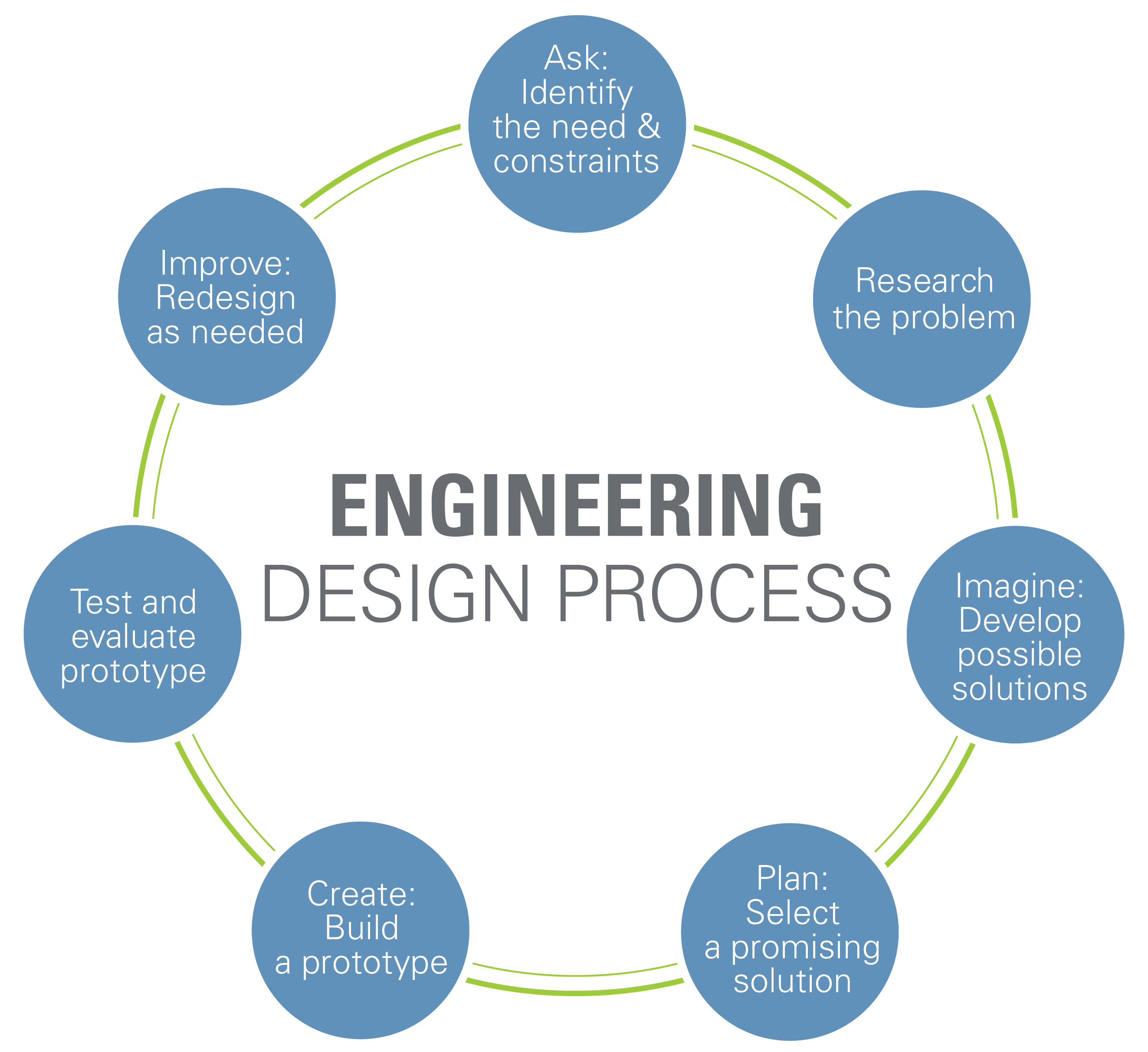
There is iteration in the engineering process, but it's never a fail early, fail often approach. If you don't know why you failed then you shouldn't be rushing off to fail again.
The other week I gave my grade 12 computer engineers detailed explanations of how to build a network cable, a video showing it being done and then posted wiring diagrams showing the proper order. The most capable students followed engineering process (a directed iterative process, rather than a random one) and produced working network cables more and more quickly. The end result was no real cost for me (all my ends and wires were made into functional cables). The majority of the students, perhaps because they live in our brave new Google world of fail often and fail early, or because people keep misquoting Edison at them, didn't read the instructions (who does any more, right?) and just started throwing ends on cables, crimping them badly and producing failure after failure. This is great though because they're engaged, right? When I got angry at them they were belligerent in return. How dare I stifle their creativity! Unfortunately, I'm not assessing their creativity. They are trying and that's all I should be asking for! I'm not grading them on engagement either. I have been brandishing the engineering process throughout their careers in computer technology, but these video-game driven iterators think their die early, die often approach in games is perfectly transferable to the real world. Bafflelingly, many educators are gee-whizzing themselves into this mindset as well. You'll quickly find that you run out of budget if you do.