Monday, 20 February 2023

The New Creativity

Picture Limitless Creativity at Your Fingertips
I recently did a talk with the awesome Heidi Siwak about how educators might understand and engage with emerging artificial intelligence technology rather than doing what education usually does and bury its head in the sand.

A few days later I'm reading WIRED and Kevin Kelly nails down not only a way to migrate into this disconcerting future full of AIs, but also how it works and why everyone shouldn't be terrified of it:

"Generative AI will alter how we design just about everything. Oh, and not a single human artist will lose their job because of this new technology."

That's a pretty daring prediction, but Kelly goes on to explain that most AI generated visual art isn't being used in traditional places. Instead it's a deeply personal form of visual expression hyper focused on the co-creator (the human working with the AI). As a result, much of the art produced by AI acts as a kind of art therapy. That hyper personal focus is something education systems (based on 19th Century factories) really struggle with, but it's the future if honouring equity and diversity matter in any real way.

What has me most excited about AI is precisely that it treats people more like individuals than people do. If a future education system has AI teaching assistants that radically individualize instruction, then I consider that a massive win for children and a huge step forward in terms of pedagogical best practice. The only resistance to this individualized, equitable technology enhanced future would be by the people managing the current status quo for their own benefit.

Instead of a teacher who barely remembers your child's name, let alone his reading level or his neurodiversities, an AI that responds to his needs precisely and when he needs it to sounds like the kind of future I want to live in. We're currently happy with loud attention seekers getting most of the attention in class while the quiet ones fall through the cracks, and by 'we' I mean the people running public education.

No humans may lose their jobs with visual arts AIs in circulation, but I suspect some teachers might. The ones making all the noise about banning AI are the very ones Clarke was talking about in his famous quote. A hybrid AI assisted classroom can offer the kind of individual attention that our schools have always struggled to provide, but not if education bans it and hides from this inevitable future for as long as it can.

In the article, Kelly goes on to talk about how AI democratizes visual arts. There is a follow up piece that talks about the 19th Century panic around the emergence of photography (painting is dead!). Each of these technology disruptions put visual mediums into more people's hands. There was a similar panic when smartphones made everyone a photographer in the early 21st Century. Just because you have a camera in your hands doesn't make you a photographer, any more than waving a paint brush makes you a painter. There is intentionality implicit in art that technical skill is only a part of. Machines that make it more accessible don't give the users those esoteric art skills needed to make art, but they do offer a 'lowercase' opportunity to visually express your ideas.


Knee jerk reactions to these technological disruptions give Kelly a chance to talk about the 'tech panic cycle'. This is another not very flattering mirror for education to peer into. This cycle of panic defines how education has stumbled when facing every emergent technology in the past 40 years.The latest AI panic is just another in a long line of poorly managed evolutionary opportunities. Education has always been more interested in maintaining a self-serving status quo rather than exploring enhancements to pedagogy. The digital skills crisis and flurry of successful cyberattacks we're in the middle of are the result of systemic failures to teach emerging digital media literacies that stretch back into the 1980s.

The AI in Your Classroom presentation Heidi and I put together gives examples of how two teachers focused on evolving pedagogical best practices have explored AI. In my case we got into it five years ago when a parent who happened to be on the IBM Watson team offered to get us going on coding AI powered chatbots. We found this so easy to do that it ended up being part of our grade 10 coding curriculum along with web development. At the same time my game development students were discovering that we needed to get a handle on enemy AI scripting in Unity or our games wouldn't play well (stupid enemies are boring). The introduction to AI had students learning about intents and thinking about coding in a collaborative rather than dictatorial way. This not only enriched our game development scripting, but it also led to seniors exploring adaptive algorithms in large data-sets and exploring GitHub's CoPilot. This approach has had us learning 'AI Whispering' years before it became an emergent media literacy...

"Behind this new magecraft is the art of prompting. Each artist or designer develops a way of persuading an AI to yield its best by evolving their prompts. Let’s call these new artists AI whisperers, or prompt artists, or promptors. The promptors work almost as directors, guiding the work of their alien collaborators toward a unified vision. The convoluted process required to tease a first-rate picture out of an AI is quickly emerging as a fine-art skill." - WIRED


 Heidi leapt into ChatGPT when it first arrived and has done the hard work of building this new media literacy of 'AI Whisper'. From there she early adopted Education CoPilot, which promises to be a time saver for teachers who want to spend more time individualizing their students' learning rather than making tedious, one-size-fits-all lesson plans. The majority of our presentation had Heidi walking teachers through how ChatGPT works and showing examples of how Education CoPilot can produce excellent highly-constrained materials (like lesson and unit plans).

Reading Kelly's article focused on AI visual design a week after doing that AI in the classroom presentation resonates. The one time I was allowed to teach visual arts in high school, I was given a grade 9 curriculum that was so prescriptive that the projects in it sounded like directions for an AI: 'Make an acrylic painting using the techniques practised in class in the style of the Group of Seven'. 'Using perspective drawing techniques, draw a picture of a room in your house'. I understand the need for these skills focused assessments, but the opportunity to create wasn't something grade 9s were being encouraged to do. The entire course was entirely focused on lowercase creativity making it very easy for an AI to do the work. Maybe the seniors got to explore uppercase creativity, but I never got a look in at any of those classes. This raises difficult questions around how we're going to develop skills when AI keeps stepping in to do work that students only see as busy work.

The other thing this visual arts department fixated on was photography, which they described as 'real' photography complete with dark room and chemicals. The follow up WIRED art history piece on the 19th Century photography panic casts a poor light on that thinking. Photography was considered the 'end of painting' when it first appeared, but nothing of the sort happened. What the new medium of photography did was create new influences that enriched both painting and the emerging medium. AI visual design will likely follow a similar path. What doesn't work is clinging to an old way of thinking rather than encouraging this enriching influence.

Dall-E AI generated future makerspace
I took photography as a unit in art college and it bankrupted me. I loved it and I was good at it, but 'real' photography seems to be a be-spoke, privileged medium that the idle rich always find their way to. The cost of it caused me to eventually drop out because I couldn't juggle 40+ hours of night shift work a week with full days in class. At the time I believed this was a great personal failure on my part, but with the benefit of hind-sight, I'm amazed at how much my immigrant socioeconomic status defined my access to and success in education, and especially in the arts.

I found my way back into photography when we lived in Japan after I graduated from university with massive student debts (another economically dictated decision). Digital cameras were just coming out in Japan in the late 90s and I got my hands on them early. This technology democratized photography and let me get back into it without bankrupting me. Hearing an arrogant gatekeeper-to-the-arts telling me that what I did wasn't real photography was difficult to take. This approach to the arts is quite common in high schools.

Dall-E AI Generated: future classroom
Kelly suggests that AI supported visual arts won't stop human made art because it serves a different need. In this way, like photography before it, AI visual co-creation will bring the ability to produce visual  representations of their thinking to more people - providing we start teaching this new media literacy of 'AI whispering'. AI art generation is a fascinating new combination of language skills, visual media and technology, and utilizing it will bring visual expression to more people. The only ones getting angry about it are those who are guarding the privileged gateway to it.

So much technology use is hobbled by the politics of education. Black and white politicizing means unions paint technology as teacher replacing evil, which gives politicians interested in pushing education into private hands exactly what they need to do that. When no one is focused on improving pedagogy, we all lose. What education should be focused on is using every means at out disposal (technological, social or otherwise) to individualize and amplify student learning. Sometimes that might mean technology supplants a teaching position, but more often it should mean we are reorganizing how we do things to produce better learning outcomes though intelligent use of emerging technologies.

AI will certainly shake the foundations of education. The dinosaurs fixated on taking us back to the good 'ol days of rote learning and mono-cultural absolutism where all students learn rigorously in the same way should be far behind us, but those are the days every anti-technology educator longs for - when things (like photography) were 'real' and inaccessible to the proles.

The thing I'm most looking forward to with AI in education? It so quickly makes what we're doing in our low resolution factory-designed classrooms look poor that it will turn over the apple cart and force public education to reboot into a more individually focused,  student-success driven model.  In those future schools students will experience mastery learning based on their own abilities and will be supported individually. Some students may graduate high school at 15 years old, others may need it until they are 20. Learning would be hyper personalized and teachers would be conducting an orchestra of supports and data rather than overseeing a low-resolution classroom where individuals matter less than their age. 
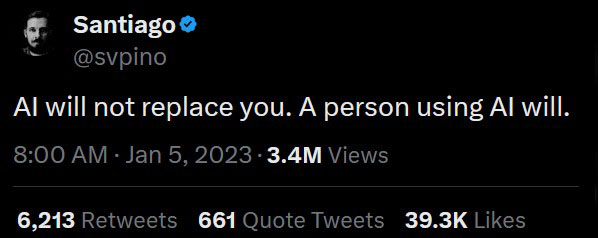
Education will focus on making this not true for as long as it possible can, but it shouldn't.


From an artist's point of view, Kelly doesn't explain the place of human made art in a future where 'lower case', 'rote' art, ie: what is evidently taught in most schools, will be machine created. This raises some interesting questions about how we teach complex skill sets (like photography or painting) in a world where the skills are expressed by machines rather than people. If machines are reading to you and writing for you, do we need to know how to do those things either? Chasing that goal would lead to dire consequences. There are real benefits to human beings learning complex, tangible skills, both psychologically and economically.

When I take my decade old SLR out and catch a moment in nature because its talking to me, I'm not chewing through processing resources so that a machine intelligence with no understanding of nature creates an inherently abstract representation of what I'm experiencing. I take photographs to catch the light and make a moment permanent, so you can float in it. Technology assists me in doing that by helping me collect and share the data from that moment, but that data has a realness to it that no AI abstraction, no matter how well generated, will manage - because the AI and the media it creates is implicitly not in the world experiencing it directly.

When I was out in the polar vortex, I discovered that the ice crystal structures forming were incredibly complex compared to what I usually see, so I started working the macro lens as though I were seeing Joan Miro paintings. Imperfections and unconscious details render a natural truth in the photograph. Technology assists, but doesn't replace the subject.


Dall-E understands macro photography and ice and creates a credible copy, but its always going to be inherently ethereal because it is an abstraction rather than a moment. Even well worded, maximum-AI outputs are going to lack an inherent realism until the AI itself is put into contact with nature directly - which too will eventually happen!

 I'm also not tied to the internet while I'm out in the world photographing. At its very best, an AI might be able to imitate getting close to nature, but it could never actually do it because of what it is. In the same way that a spectacular CGI effect in a film is almost too realistic, a good old-fashioned stunt with IRL effects offers nuance that makes it feel more genuine (because it is). No matter how good AI gets, it'll always be imitating that immediacy until it gets to experience it directly and then express its understanding of that experience.

Thanks to Ridley Scott we were imagining intelligent machines reflecting on their experiences back in 1982. AI may eventually replace human artists, but they would need to inhabit a physical body that lets them experience reality directly. "All those moments, lost in time..." Current AI cannot come close to that, but it can help democratize visual arts.
 

Is having machines do it all for you really good for you?
Kelly also doesn't mention what all of this accessibility to visual expression for everyone is costing us in terms of resources. AI will get better in terms of energy consumption, but it isn't a very efficient way to do simple things that people are too lazy to learn how to do themselves (like draw). If we're going to keep off-loading work people are more than capable of doing in a world where we have more and more people and fewer resources, does pouring billions into AI make any sense for anyone except billionaires looking for cheaper more compliant labour?

I (like WIRED) still fall on the side of exploring and integrating emerging technology if it means better learning outcomes for students. One of our greatest underused resources are all those humans we've got out there struggling to make ends meet. A dozen of them are the Einsteins we need to solve the global problems we face. If AI can help us realize more students' potential, then surely we should always be coming down on that side of things, even when it's scary and involves us changing old habits.

Monday, 13 February 2023

Why Canadian Education is so Reluctant to Move on Digital Literacy

 I had a talk the other evening with a Vancouver educator teaching cybersecurity curriculum at his local school board. Like me, Todd has been working alone, offering the local students he has access to the opportunity to learn cyber-skills that would benefit them in any field of study. And, like me, he has helped to launch a few students into careers in this radically underserved career pathway.

Despite being 3 time zones away, Todd is running into the same difficulties I am in Canada's regionally siloed education systems. When he reached out to other districts in British Columbia they didn't engage, and so his work remains isolated to his district. Cyber-attacks on education fill the news, yet the vast majority of students have no access to learning this emerging (and essential) digital media literacy.

In 2017/18 we got involved in CyberTitan, the Canadian centre of excellence for the international CyberPatriot competition (the world's largest student cybersecurity competition). From there we developed a thriving cybersecurity extracurricular program that has since influenced our in-class curriculum in timely and diverse ways., but when I asked a system 'lead' if we could help other schools to engage in the same competition I was told, "it's already running at your school." Leaving us in the same place that Todd finds himself.

With headlines like these (an extensive list of Canadian education hacks can be found at the bottom of the post) wouldn't cybersafety training in every school be a good idea?

Ontario school board trying to recover from cyber incident

Personal data of 70,000 students accessed in school board cyberattack

Cyber-education is just the most obvious part of a much bigger digital skills iceberg.

Yet we barely cover coding in public schools, let alone the rest - even though we depend on it in every subject. Digital technology has become integral to learning in 2023, yet no one has a dedicated curriculum to teach the cybersafety and the technical skills needed to use it safely and effectively. It's why remote learning during the pandemic became an abject failure.


Cyber-Education: an Educational Failure in Education

You have to ask yourself why schools aren't engaging in the cyber-education they should have started when eLearning and other online education technology placed student data and attention in potentially hackable online locations. The answer to this question has eluded me for years, but I'm starting to formulate a theory. It began with seeing yet another example of the rhetoric that public education likes to lean on:

"The lack of robust cybersecurity measures stems from underfunding within schools and #educational groups. Often, they don’t have enough resources or budget to invest in #cybersecurity or train staff and students to practice good cyber habits."

Why are Canadian schools so vulnerable to cyberattacks?


ICTC-CTIC has been offering free cyber-learning opportunities for years in addition to running CyberTitan since 2017 with the support of the Communication's Security Establishment (Canada's cryptography agency charged with securing government communications). It doesn't get more credible than that this, yet we struggle to engage individual teachers let alone school system 'leaders' with these FREE programs. The reticence isn't about cost, it's an unwillingness to make time and take responsibility for our rampant use of education technology. The vast majority of cyberattacks depend upon user digital illiteracy to succeed and we face a global digital skills crisis, yet education seems determined to do as little as possible to address any of it. The question is why.

No where did our failure to address
digital literacy appear more apparent than
during the remote learning emergency.
Perhaps picking up the baton now would highlight a failure that has been decades in the making. By doing nothing, public education remains the victim of cybercriminals and technology disruption, just like the rest of us.

We should have begun developing this technology media fluency the moment we placed student learning in hackable online spaces. It's not a flattering analysis, yet moving past this head-in-the-sand approach is essential if we're going to keep putting student (and staff) information where criminals can exploit it. Our collective ignorance is the cause of the current cybersecurity crisis and the global digital skills shortage; it's a failure of education... by education!


Our Failure to Systematically Teach Digital Literacy Even As It Becomes an Expectation in All Subjects

Poor user digital fluency is the result of our failure to teach it in any kind of systemic manner. The cunning plan so far has been to hope parents are doing it at home* (*this link shows that they might be, if they can afford it). Meanwhile parents are assuming a comprehensive digital skills curriculum is happening in schools, and by comprehensive I mean year on year skills development in dedicated subject time using curriculum that results in functional and safe technology users. We obviously don't have those.

The students I see arriving in grade 9 suggest that this is not systemically happening, and where it does happen it is because a single teacher is trying to bridge this gap themselves. The assumption many parents labour under is that teachers are digitally literate, but they are much like the general population. Worse actually, because the education itself has dragged its feet engaging with digital transformation resulting in the people in it being less digitally savvy than the general population.

If we taught digital skills like we taught other foundational skills that are required across all subject areas (literacy, numeracy, etc), we would have periods focused on developing those skills and integrated subject specific digital fluency across all disciplines, but we don't even cover digital literacy development as comprehensively as we do geography (mandatory k-8 dedicated subject time and a mandatory grade 9 course). There are no mandatory digital literacy courses in any Ontario high school and in K-8 curriculum, where it happens at all, it's usually fixated on coding which does little to teach cybersafety. The ongoing digital skills shortage and a rash of user ignorance driven cyber incidents suggest that the piecemeal approach we've grudgingly adopted isn't working.

I've been pointing to these embarrassing statistics and presenting on the importance of filling this foundational gap in our curriculum for years on Dusty World: 

2022 TMC7 Research Symposium: Table Talks and Future Skills

(2020) How to Pivot Ontario Education to Prepare for The Next Wave

(2017) The Digital Divide is Deep and Wide

(2012) The New Literacy

Perhaps now, in a maelstrom of bad press and the potential for real financial damage to staff and students (and their families), education will finally take on systemic transformation to address digital skills and especially cybersecurity awareness. The benefits would go far beyond reducing the number of successful cyber breaches. A more digitally literate society would be able to pivot to remote learning in an emergency and might also offer climate reduction possibilities by reducing the need for face to face schooling. It would even help create a less factory driven/age based system that relies on millions of gallons of diesel to deliver bodies to age appropriate facilities every day. The central problem is that the digitally delayed education system is the least likely place to find this future friendly vision.

We could have used the pandemic to finally
engage with digital literacy
- instead it became
another excuse to play victim to our own
lack of foresight.
Do you know how many times cybersecurity is mentioned in Ontario computer technology or computer science curriculums? Not once - not even in the two specialist subjects it should be covered in. We've driven students onto potentially insecure online learning environments for years now and even the compsci students don't learn how to secure it.

 Nowhere has this failure to address digital literacy been more apparent in emergency remote learning where many students were thrust into online mediums that they have very little understanding of with unsurprising results. Most students still equate technology with entertainment, which is why implementing it in classrooms has been fraught with problems. Most teachers have less digital fluency than anyone in a modern office setting.

One of the early myths used to justify this bury-it approach to digital literacy was that of the 'digital native' - the idea that students who grew up with digital technology were somehow magically imbued with the ability to understand it technically and use it safely and effectively. This is like saying that because I grew up in the 1970s and was familiar with cars, I already know how a car works and how to operate one. This absurd belief persists in many schools despite being summarily discounted by research.

Being familiar with digital technology means you don't have to overcome the fear that older people have in making a mistake with it, but I can assure you, students are not immune to making poor technical decisions based on digital ignorance. The rush by students in my school to use 'free' VPNs to bypass blocks on social media sites isn't digital native genius, it's profoundly ignorant. The criminals offering these services aren't offering them for free. This gives a fine example of how digitally illiterate school systems are. Blocking content and driving students to put their digital information at risk through questionable technology is about where we're at in education these days. Incredibly, many educators then point to this as an example of just how good the kids are with technology.

Research on the poor state of digital skills across entire populations shows an astonishing lack of capability, even as we increasingly depend on networked digital technologies to support every aspect of public education. When technology fails, the learning stops in 2023..

This isn't just a Canada problem, it's worldwide.
Addressing the digital skills gap for future education

A global measure of digital and ICT literacy skills (it isn't pretty)

"higher socioeconomic status was associated with higher proficiency both within & across countries - student experience of computer use & their frequency of computer use at home were positively associated with proficiency" - Because we off-load this essential literacy because we don't want to take responsibility for it.

The Distribution of Users’ Computer Skills: Worse Than You Think

Nearly 1 in 3 workers lack foundational digital skills

Canada struggles to prepare its workforce for changing digital economy

"81 per cent of Canadians say they don’t have the resources to learn the digital skills required by businesses today, and 86 per cent say they are not prepared to meet the digital skills requirements of the future."


Summary 

Cyber-education is the sharp end of this failure to teach digital literacy because of the fear that surrounds the subject and the dire consequences of not addressing it. Convincing educators to engage with cybersafety, cybersecurity and data privacy learning is virtually impossible, especially as most staff are no more digitally savvy than anyone else. You have to be trying exceptionally hard to not be using digital technology in 2023. Your lights are on because of it and your lessons are available to students because of it, yet no one wants to teach it, or learn it as a specific technology/media skill.

Beyond the sharp point of cyber, we have a population that spends an inordinate amount of their time, both professional and personal, in networked technology, yet almost no one knows how it works, what to do when it goes wrong or how to secure it. Younger people aren't afraid of it, but their bravado creates dangers of a different kind.

If we're going to use networked technology in every subject, we should have K-8 curriculum in place with mandatory time given to specifically learning digital skills well beyond coding, and also include digital literacy integration with all subjects. This should begin the moment we put students in online learning.  A systemic approach to this would start solving the educator digital skills crisis and eventually result in a dramatic drop in successful cyber-attacks as we begin to heal the ignorance that current attacks exploit. Many federal programs exist, but Canada's chaotic, siloed education landscape means that with no central authority, provincial ministries and local school boards are left with the responsibility to engage with a problem that operates well beyond their jurisdictions.

Digital skills gaps cost billions in lost jobs and opportunities and exacerbate existing inequalities. By resolving this failure of vision that public education has been central in creating, we might finally assume the role it should have played all along. It doesn't require lengthy apologies, but it does require some humility before a systemic failure we've all played a part in. I only hope the people leading education in Canada are more interested in doing the right thing for students, staff and their families instead of maintaining the expedient idea that digital literacy happens by magical birthright, or at home.


Yes, it's a tsunami of cyberattacks on canadian education:

Vancouver Film School hit by paralyzing cyberattack
Attackers say they have deleted data stolen from Ontario school board
School board confirms hack; attacker sent note through photocopiers
Ministry beefing up security after school board 'cyber incident'
Ottawa french public school board paid hackers ransom after data breach
Teachers and parents urge answers as investigation into school board hack continues
OSSTF confirms current and past members’ information compromised in cyberattack
Former members call out OSSTF for handling of personal information stolen in cyberattack
Maple Ridge-Pitt Meadows school district alerts families of potential data leak
“It’s pretty scary”: TRU students concerned after possible hacking of student aid websites
https://canadatoday.news/ca/vancouver-park-board-to-consider-new-revenue-streams-including-more-restaurants-223298/
https://www.therecord.com/news/waterloo-region/2022/09/15/at-least-three-former-wrdsb-employees-report-identity-theft-attempts-since-cyber-attack.html
https://cupe.ca/statement-crystal-krauter-maki-educational-assistant-and-cupe-4148-president-regarding-ransomware
A failure to educate staff

What our failure in education looks like to the people experiencing it:
"44% said that school only taught them very basic computing skills, 37% said that school education didn’t prepare them with the technology skills they needed for their careers. 40% consider learning new digital skills essential to future career options"

Friday, 10 February 2023

The Ontario Library Association Super Conference

I've watched my brilliant partner attend and then volunteer at the O.L.A. Super Conference for about a decade now. I've long had a crush on libraries (and librarians), but have never attended. In my new role I bring federally funded cybersecurity and digital skills opportunities into classrooms, so attending the OLA Super Conference offered an opportunity to connect and explore with library digital early adopters, of which there are many.

The first time I laid hands on a computer in the early 80s was when my middle school library got Commodore PETs, so in my mind libraries are the spaces where we make first contact with new information mediums and media. When I started teaching it was my school's librarian who asked me about this new fangled 'wi-fi' thing. I helped him set up a router in our library, making us (I believe), the first school in Ontario that offered wifi to those few students with new-fangled Blackberrys and PDAs. Librarians are always looking at emerging information tools that give their patrons/students access to the information they seek.

My team offers fully funded and vetted federal programs that support cybersecurity and digital literacy  that are so desperately needed. We continue to live a time where technology and the media that it delivers gets away from us. Answers exist, but convincing people running public services to engage with them is an uphill struggle, perhaps because they don't want to take on responsibility for our appalling and on-going digital literacy crisis (research from 2016, still poor in 2021, and still a worry at Treasure Mountain in 2022). It'll take a full court press by everyone in education to resolve this digital crisis, but I believe librarians are ideally placed to be the first into the breach.

That's why I was there, but the OLA Superconference became about much more than my work as it asks complex questions about the topics that tie society in knots. Librarians are the ones asked these difficult questions and libraries are one of few remaining safe spaces where people can go to get unbiased information without being treated like a consumer or a political target. Just like the BCTLA/Treasure Mountain national conference last year, the speakers and subjects at #OLASC were designed to challenge assumptions and offer librarians support in changeable times.

Mom at work... a message to our son who was at home doing full time shift work.

Vivek Shraya's opening keynote about how your 'self' is always in flux offered some much needed insight on how to be gentle with yourself in difficult times, but immediately after I attended Cory Doctorow's talk about his latest book, Chokepoint Capitalism, which I'd been reading when I attended the BCTLA/Treasure Mountain conference last fall. Cory stuffed 2 hours worth of thinking into his hour long talk, riffing on the attention economy trap we've fallen into and talking about how individual action to systemic failures aren't an effective use of your time. He gave the example that if you spent hours trying to find locally sourced markers to make a poster for an anti-Amazon protest, but missed the protest because you spent all your time trying to not use Amazon, you aren't putting your energy where it might produce a systemic response to a systemic failure.

As a public school teacher who has watched the past five years of education in freefall, this rang a lot of bells, but my problem is that I don't trust the people or organizations that are supposed to be representing my interests (because they aren't good at what they claim to be experts in). This too came up in both Cory's talk and in Elamin Abdelmahmoud's closing keynote; the idea that expertise doesn't matter anymore in a world where everyone is on a mic spouting their opinions.

Staring into the abyss of the many problems we face is something librarians have to do every day when patrons comes in with these difficult questions. Yet relevance and support for programming was a constant theme at the conference. Feather Miracle accepted the OLA's President's award for keeping up the fight even as libraries in indigenous communities closed at record rates. As I mentioned online, I missed the part in Truth & Reconciliation that focused on closing community supports like libraries in first nations.

These big problems thematically swirled around this conference in a way that you don't see in education or technology events. Librarians need to collaborate on these issues because we're all facing them and library learning commons are where they come up, but the conference also offered me 'technology stream' opportunities specific to my current job.

On Thursday I listened to the Guelph/Wellington Public Libraries (my local) talking about how they worked on the front lines closing the digital divide during lockdown. I was told that our school board was providing connectivity for students in need, but it looks like they just tapped into the hard work that the public library was doing. The room was absolutely packed, suggesting that crossing the digital divide during a pandemic is another one of those systemic problems we're all trying to solve individually. System failures surround us but individuals keep trying to make it right.

Friday morning started bright and early with Jonelle and Christina's "Evolution of the LLC: Building a Future Ready Space" which emphasized how important patron input is in designing diverse learning spaces. Throughout the presentation they offered DIY solutions that save money (whiteboard painted tables!) and suggestions for relevancy and engagement that wouldn't sound out of place in an entrepreneurship seminar. If you think libraries are where old teachers go for an easy final years before retirement, you're doing it wrong. A constant focus on streamlining and redesigning your learning spaces to make them engaging and relevant to students is something every TL in Canada should be focused on.

The London Public Library and Crouch Neighbourhood Centres did a talk about how to cross the connectivity in gap by offering connectivity to those unable participate in Canada's digital economy. The digital divide is deep and wide, but targeted programs like this work. LPL did the initial delivery of connective cellular technology and discovered that most of their devices were being used in cottage country by people who didn't want to pay their own way in data (at their cottage), but by partnering with Crouch (LPL run a branch out of Crouch), the devices found their way into the hands of people who needed them. Talks like these showed me that there are solutions to these seemingly insurmountable social inequities, but no one to scale them systemically. Systemic failures surround us but individuals keep struggling to try and make it right. If only we had some kind of representative 'democracy' that governed in the peoples' interest, but then maybe most Canadians aren't bothered with helping those in need.

The closing keynote by Elamin Abdelmahmoud offered an unblinking look at many of the problems that face Canadian society in a decentralized social-media driven culture. Just before he came on a posthumous lifetime award was given to Caroline Freibauer's family for her work in Ontario libraries. This really changed the emotional temperature in the room, but rather than roll with what he had prepared, Elamin listened and responded by going off piste and picking everyone up from where they were feeling that loss; it was a wonderfully empathic way to finish the conference.

After attending the OLA Superconference I'm more focused on connecting with public libraries as they also reach children in need, but beyond our struggling public school systems. Every student (home schooled, public schooled, private schooled) students make use of their public libraries, so working with them to help close that digital divide is a new angle I'm keen to develop. It's nice to know libraries are still working hard to help people manage the information tsunami we're all trying to swim in - there are lots of opportunities to work emerging digital media literacies in there too.

I watched a number of author talks and book signings while at the OLASC. It'd be really cool to return next year for work, do a presentation on digital skills and cybersafety and then take a timeout to go do an author talk. Bring it on, OLASC 2024!


A World War 2 historical fiction novel coming soon to a library near you!
Under Dark Skies.

Saturday, 3 December 2022

How Cybersecurity Might Become More Diverse, Equitable and Inclusive

One of the benefits of working in the same home office as one of the top teacher librarians in the country is that we're able to bounce ideas off each other. Making cybersafety awareness a part of every educator's professional standard of practice isn't a nice idea in 2022, it's a necessity, but the industry continues to have trouble attracting talent and many teachers have little or no training in it.  Alanna has listened to me lamenting the lack of diversity and engagement in the field for many years but this week she offered a solution by linking the DEI research she has been doing to develop an inclusive information management system with the lack of diversity and engagement in cyber.

You might not think that creating a digital media cataloguing system would require much in the way of equity awareness, but it does. How we categorize and deliver data requires a working awareness of DEI or it quickly becomes another means of systemic discrimination. Having used it, Alanna suggested Building Movement Project's  Social Change Ecosystem Map as a tool for challenging some of the masculine cultural cues that usually define cybersecurity as a discipline.

Considering diverse talents and motivations could work as a way to bring more diversity into the field of cybersecurity.

Characteristics of the Roles

Weavers: I see the through-lines of connectivity between people, places, organizations, ideas, and movements.
Experimenters: I innovate, pioneer, and invent. I take risks and course-correct as needed.
Frontline Responders: I address community crises by marshaling and organizing resources, networks, and messages.
Visionaries: I imagine and generate our boldest possibilities, hopes and dreams, and remind us of our direction.
Builders: I develop, organize, and implement ideas, practices, people, and resources in service of a collective vision.
Caregivers: I nurture and nourish the people around me by creating and sustaining a community of care, joy, and connection.
Disruptors: I take uncomfortable and risky actions to shake up the status quo, to raise awareness, and to build power.
Healers: I recognize and tend to the generational and current traumas caused by oppressive
systems, institutions, policies, and practices.
Storytellers: I craft and share our community stories, cultures, experiences, histories, and
possibilities through art, music, media, and movement.
Guides: I teach, counsel, and advise, using my gifts of well-earned discernment and wisdom.

Cybersecurity had strong ties to the military early in its development, which attracted the 'frontline responders' already working there. Military roles are traditionally male dominated and so cyber began as a predominantly male field, but applying these other roles would open cybersecurity to a more diverse range of interests, skills and motivations, but it requires a significant rethink of the assumptions that surround the subject. If you consider cybersecurity as a combination of security and computer science, both fields have a history of male dominance, though in the case of computer science the patriarchy was a recent event (it happened just as computer science was becoming profitable because that's how glass ceilings work).

The problem with clinging to this cultural predisposition in cybersecurity is that it continues to create a male focus in hiring. Women may struggle to see how they fit in a field that presents itself with such a masculine bias. Getting away from the military/first responder mindset might be a way to recast cybersecurity in a different light.

Looking at the less represented roles in the social change ecosystem, weavers would bring connectivity and communications to the field - something it currently lacks. Visionaries would bring the perspective and scope needed to move cybersecurity out of its often reactive stance, though that would also mean giving up the unquestioned control that accompanies emergency response; that may be the hardest ask of all.

Recasting cybersecurity in terms of caregiving and healing was where Alanna saw the most gains. Cybersafety is a foundational skill in an increasingly connected world, yet its treated (if it's acted on at all) as an emergency response after the fact, becoming a self fulfilling prophecy for the first-responder mindset. By finding a place for caregivers and healers on cybersecurity teams, the approach to user training and even post-breach response would be significantly different. Can you imagine cyber support that isn't emergency response defined? Neither can many of the people in the industry because they can only conceive of it through their own motivational approach which also happens to align with cyber-culture.

Digital skills remain poor and continue to represent
the most successful opportunity for cyberattackers.
Other atypical motivators also have a role in cybersecurity. Storytellers and guides are motivated by sharing narratives and teaching complexity and empathy rather than fixating on problem solving. The vast majority of cyber-incidents are the result of user ignorance and error. Most malware ends up on a network because a user mistakenly put it there, not because a 'super hacker' got in. If we hope to address this primary form of ingress (atrocious user digital literacy), we need to bring in people who can create meaningful narratives and engage with learning because it's their primary motivation.

Of course these roles aren't absolute, no one is just one of them, but by applying the social change ecosystem we identify biases implicit in cybersecurity culture that disclude anyone but those interested in heroic intervention or technical response. By valuing alternate motivations and the specialized skillsets that accompany them, hiring practices in cybersecurity would become more inclusive and the workforce more diverse. That inclusivity does more than check a DEI box. A diverse workforce offers a richer range of approaches to problem solving and prevents blind spots based on a privileged monocultural beliefs. This diversity would make the critically important discipline of cybersecurity more resilient, accessible and effective.


Resources


We're currently working on CYBERBYTES at ICTC & Knowledgeflow CyberSafety Foundation: www.cyberbytes.ca  We are creating easy to complete micro-credentials that provide educators with a working understanding of the technology that makes our networked world work, the key elements of CyberSafety and online privacy and how you can bring these important skills and understandings to your students so that they and their families can safely and effectively use the networked technology that surrounds us in 2022.

The Building Movement: https://buildingmovement.org/ supports and pushes the nonprofit sector to tackle the most significant social issues of our times by developing research, creating tools and training materials, providing guidance, and facilitating networks for social change.

THE SOCIAL CHANGE ECOSYSTEM MAP (2020): https://buildingmovement.org/wp-content/uploads/2022/04/Ecosystem-Guide-April-2022.pdf

A History of Cybersecurity: https://cyber-security.degree/resources/history-of-cyber-security/

Empowering women can help fix the cybersecurity staff shortage: https://www.weforum.org/agenda/2022/09/cybersecurity-women-stem/

Occupational digitalization trends in Canada, 2006-2021: https://fsc-ccf.ca/research/race-alongside-the-machines/

Global Digital Skills Index, 2022: https://public.tableau.com/app/profile/salesforceresearch/viz/shared/NNRKYDH37

Future Skills: https://temkblog.blogspot.com/2022/10/2022-tmc7-research-symposium-table.html

If we would redefine digital skills through a media literacy lens, we would also open up these pathways to a wider variety of learners. Defining digital skills as 'coding' is reductive, unhelpful and excludes a number of alternate learning motivations.