Sunday, 1 November 2015

Proliferation of Fifties

Originally published on 01/11/2015 14:31

Our school is the only local high school in the area.  If students want Catholic or special education, they get on a school bus for over an hour a day of commuting down to Guelph.  I'm a big fan of choice so, while I think it mad, I don't have much to say about a student who wants to spend over 194 hours a year (that's over 8 full days of riding 24 hours a day) on a bus to Guelph and back for specialized education, as long as it's a choice they've made.


Ontario's high school streams seem pretty straightforward,
they are anything but in practice.
Our public board think it wise to ship our essential level students down to Guelph for special education.  This isn't a choice, it's a system driven process.  The Guelph school for this doesn't fill up with locals so the surrounding community schools are expected to ship their most at-need students out of their home communities every day.  This is an ongoing pressure in our community.

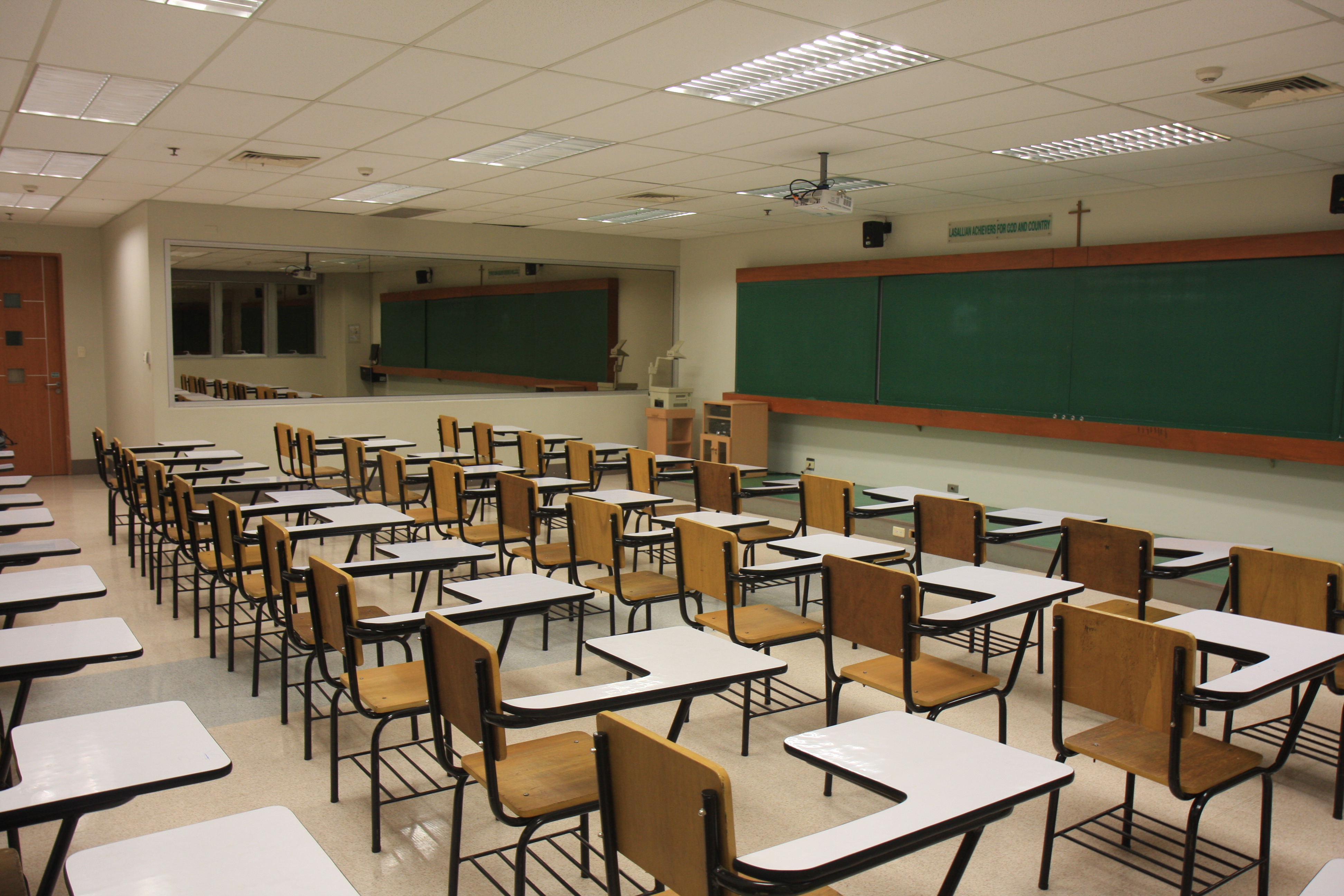
At our recent heads' meeting there seemed to be support for the idea of our school being a comprehensive, community school that serves everyone, but we struggle to run essential sections because parents resist putting their children into it, the board doesn't section us to run smaller essential classes and many teachers in our school would rather be teaching academic students.  It's an uphill struggle to create a comprehensive local school that supports everyone in our community.

Because we aren't sectioned for essential classes (those smaller sections are given to the specialist school in Guelph), we end up populating applied level classes with essential students.  It is so difficult to align parent perception, board support and student ability that we place all non-academic (university bound) students into the same room.  This is where the proliferation of fifties comes in.

A teacher in our school recently said, and in retrospect I agree, that we place essential students into applied classes and lower course expectations to accommodate them.  This not only does the essential students no favours, it also dilutes applied curriculum goals.

The people running the education system tend to be successful professional educationalists; very experienced with the system having spent little time outside it.  These educators see kindred spirits in academically streamed students who are successful in school and make effective use of the system.  These teachers want to teach students like themselves.  Asking them to work with students who find school a challenging environment or aren't on the same academic trajectory they experienced is difficult for them.

The predisposition of teachers makes academic curriculum somewhat sacred, but applied classes aren't.  Applied students should be on apprenticeship and college skilled labour tracks that demand hands on (applied) skills.  While less theoretical in approach, applied classes are meant to be rigorously skills focused.  When you put students who lack basic literacy and numeracy into a grade 10 applied class you make grade appropriate learning nearly impossible for everyone else.

How do teachers manage this?  If you fail a student, you get called into promotion meetings at the end of the semester where the grade you've given becomes the starting point for an inflationary process that floats fails up to passes.  The best way to avoid this is to simply award a 50%.  What is a fifty when it's really a 42?  At its best a fifty means a student has not reached minimal expectations for a class.  Would you want the mechanic working on your brakes to have gotten there with fifties?

The teacher I was talking to suggested that the number of fifties being handed out has mushroomed in the past few years.  Those statistics aren't made available to us because they would make a travesty of curriculum expectations, but I suspect he is right.  A fifty means the government gets to say graduation rates are up.  A fifty means the educational journey ends at graduation because no secondary program would accept a student with a D average.  A fifty means you're not sitting in promotion meetings watching your semester of careful assessment being swept away to support policy.

The range of student skill in my classes is astonishing.  My current grade 9 classes range from students who could comfortable complete grade 11 computer engineering curriculum next to students who appear unable to read, yet I'm supposed to address that range of skills in a 50-100% range in a single course.

Perhaps we will find a way to reintegrate Ontario's carefully designed secondary school streaming system, but considering the various pressures on it in our area it's going to be an uphill struggle.


NOTE

Re: school busing children...

Time isn't the only resource being spent.  School buses get 6-8mpg, Guelph is about 15 miles away.  A (very conservative) 30 mile round trip (it's much higher if you want to consider all the pickups and drop-offs) is a (very conservative) 15 litres per day of diesel (probably double that for your typical start/stop run), per bus, and we have a number of buses making that trip 194 days per year.

Someone better than I can calculate the overall environmental impact (how many other vehicles are also held up burning fuel while these buses grind down to and back from Guelph every day?).  Making an economic (let alone moral) argument for shipping our essential students out of their home communities seems impossible.

Friday, 22 May 2015

Cheaper Teachers for a Cheaper World

I'm reading The World Beyond Your Head, the latest from Shopclass As Soulcraft writer Matt Crawford.  In this chapter he's been working out how experts manipulate their environment in order to expedite their mastery.

How an expert arranges the space around them in order to perform allows non-experts a window into skills that might otherwise be beyond them; you can comprehend mastery indirectly by observing how an expert arranges the space around them.  The difference between an amateur and professional chef becomes obvious from this assessment.

This is an interesting observation that goes to the core of much of the friction in teaching nowadays.  Most of the lay public has no idea how teaching works yet they feel capable of criticizing the profession.  'I was once in school, so I know how to teach' makes as much sense as, 'I once had surgery so now I'm a surgeon'.  By looking at how teachers 'jig' learning spaces someone who has never taught might get a glimpse into the complexity of the craft.

The idea that experts manipulate the space around them is something that many people might intuitively understand without thinking through the why.  With few exceptions a master will create an organized system around them that allows them to efficiently operate; the space around them becomes an extension of their mind used to organize and expedite their activity.  The process of learning how to jig your environment to support your expertise is one of the most obvious indicators of mastery.  Disorganization, clutter and lost tools are an apprentice's battle.  This sheds some light on my mechanic father's constant frustration at the state in which I left his work bench.  

The generic workspace is even worse.  This space is designed for you by the thinking class and you are reduced to a simplistic component with limited expectations.  You don't need professionalism or mastery in an environment like that.  This is the world most teacher critics inhabit. Their limited education has made them ideal simplistic components.
What a jig is and how it's vital to the expert.  Do you jig your
classroom, or do you rock the assembly line?  Via Google Books.

You can often see expertise in teaching through how a teacher arranges their classroom.  The learning environment that is jigged by the teacher to enable them to educate more effectively also reflects a deeper understanding of the art of instruction.  This teacher's classroom contains nothing extraneous.  The teacher knows where everything in there is and how to use it.  There are no dusty, unused text books on shelves or out of date posters on the wall.  You can see intent in how the classroom is designed.

Not only is the equipment at hand, but how its arranged can also facilitate how a lesson is presented; structured meaning is hidden in everything from floor plans to decorations to seating arrangements.  By contrast the classroom that looks like an assembly line indicates a teacher of the McDonalds variety.  It's hard to argue for professional dignity in teaching when so many teachers are more than happy to follow fast food methods.  Take a walk around any school.  Do all the rooms look the same?  Are they expected to?


A great example of how an expert creates and uses their own jigs to
enable them to produce results well beyond the layman.
The idea that a job can be done more efficiently (read: more cheaply) using a tightly controlled, top down system is the way of things in our increasingly computerized world.  We have machines making life and death decisions for us now instead of demanding human expertise.  Machines are only going to get better at making these decisions as humans only become more atrophied at them

The comparison between the McDonald's assembly line with its rigid, dictated jig and the cook who controls her own space is stark.  Both environments are designed to aid the person inhabiting them create a better product, but one is authored by the person themselves while the other is instituted (and enforced) by unseen management.  One is designed for cogs, the other demands expertise.  One demands respect for the worker's mind, the other makes them disposable hands.

We're offloading the value of skilled labour onto organizational structures.  The initial idea is that this saves money, but I suspect the long term implications are lowered expectations, workers made powerless and ultimately a less democratic division of knowledge.  If mastery is dying thanks to a neoliberal drive to lowest cost production (experts are more expensive and difficult to manage than easily exchangeable and cheaper unskilled labour, especially when we can oversee them with continually improving surveillance technology), we can expect some of the last bastions of professionalism to eventually dry up and take on the minionized labour processes that have infected private business.

"Cheap men need expensive jigs; expensive men need only their tools" rings true in the direction many people seem to want education to go.  A centrally controlled system with 'facilitators' instead of 'teachers' that lean on the burgeoning might of educational technology not only satisfies the possibility of selling technology to education systems (perhaps even monopolizing them!), but it also scratches the itch of the moneyed class to centralize both profits and knowledge.  We can expect less from facilitators in pre-jigged classrooms with assembly line learning couched in centralized cloud based computing with ready made lessons aimed at standardized tests.  You need only show up, start the video and let Khan at 'em on their clearly branded corporate learning devices.  You could probably hire three facilitators in that environment for the price of one teacher:  cost savings!


It's much cheaper to watch sanitized  media and sit in rows preparing
for standardized tests than it is to actually do things.  Fortunately, people
who actually do things aren't really needed in our efficiently designed future.
Since going mainstream digital technology is intent on market share rather than serving the user. Getting machines into as many hands as possible is the mandate now and that mandate is served by simplistic, closed ecosystems designed to create consumers.  I'm not sure if neoliberalism has incorporated digital technology or it's the other way around, but no matter how you look at it the two social influences work hand in glove.

The expectation of mere competence, let alone mastery, is dying.  You can observe this by watching how fewer and fewer employees are expected to jig their own environments to serve their process (the process isn't theirs any more).  Workplaces are now assembly lines of the mind with dictated jigs.  Employees are assessed on their willingness to adjust to these systems, the less free thought the better.

We are centralizing expertise on a massive scale (just follow the money) and creating a future where everything will look similar and pre-decided, but ever so efficient. The classroom is one of the last bastions of professionalism where an expert can apply their own jig but the days of reasonable class sizes and hands on learning that allow for this kind of jigging are drawing to a close.  Teachers should enjoy the final days of self determination in their workplace, the future is designed for cheap, disposable people.  Fortunately the world is full of them.


Once in the top five, Canada is beginning to follow the US down the education rankings
as de-professionalization reduces teachers (and the students they teach)

into low paid, disposable labour.