Saturday, 14 December 2019

Dirty Vocational Subjects Sullying the August Disciplines

https://www.wired.com/story/how-we-learned-to-love-pedagogical-vapor-stem/

"just tell me what STEM is. Above all, I want to know how science, a byword for all knowledge, and mathematics, the great harmonies of the universe—two august disciplines that have defined education since antiquity—yoked themselves to the vocational field of engineering and, worst of all, to “technology,” which could mean almost anything from space mirrors to VSCO girls."

... I can't tell if Virginia is being faceitious or not.  Probably not.  Brains are paramount in academics, they may as well be in jars.
I wonder what Matt Crawford would say about this dismissal of manual intelligence.

https://temkblog.blogspot.com/2019/09/there-is-no-stem.html


As one of those vocational teacher types the 'august disciplines" have yoked themselves to, I'm once again thumped in the head with just how classist the education system is, but it was a bit of a shock to see WIRED advocating it.  I wrote about how there really is no such thing as STEM, at least in Ontario classrooms, in September.   Nice to see WIRED weighing in on the pedagogical smokescreen that is STEM, though I don't think they disentangled it very effectively.


Good to remember that not all academics are so prejudiced.

Mathematics (aka: 'the great harmonies of the universe') and science ("a byword for knowledge") are pretty much all STEM are about when it comes to application in the classroom.  There has been no real movement on technology and engineering in the high schools where we are.  All STEM has done is paid for math manipulables and fund science.  Technology and especially engineering are still an afterthought at best.  If you've been fooled by the STEM smokescreen to think that there is any collaboration between those august disciplines and the filthy vocational classes, you can relax, because there isn't.  If you want to be an engineer in university, take science and maths courses, because that's all there are in most high schools.


If you've ever wondered why technology students (and their teachers) feel disenfranchised in their own schools, WIRED has made that adundantly clear in this month's edition.  We're less than, we get it.
An op-ed piece on how the august disciplines that have defined education since antiquity have yoked themselves to vocational fields, along with a cover article about one of those vocational types who dropped out of engineering to make things.  WIRED's come here go away editorial stance is a bit hard to follow.
You'd expect academic types in The Atlantic to rip on skills based education in favour of their own university disciplines, but WIRED ripping on engineering and technology?  I'm at a loss to understand the end game there.  The philosopher in me wants to pull out Aristophanes' Clouds and take a swing at the hallowed halls of academia while the technician wants to point out that people were apprenticing in the trades millenia before anyone was throwing square hats in the air, if we're going to talk about what has defined education since antiquity.

STEM is indeed nonsense, and I don't disagree with a lot of what Virginia says about how the STEM smokescreen has gone down, other than to say that STEM never really happened at all for those of us at the bottom end of the educational value spectrum.


... because there isn't.  It's a just SM, as it's always been: https://temkblog.blogspot.com/2019/09/there-is-no-stem.html

Wednesday, 4 December 2019

Easy Money

Superpower...  and then gave it away.

There is a strong undercurrent of animosity about what teachers get paid and a lot of misinformation about teacher average pay. Like anything, it's more complicated than it appears. Here's my stab at trying to explain how Ontario teacher pay works, though the people complaining about it probably aren't interested in any facts:

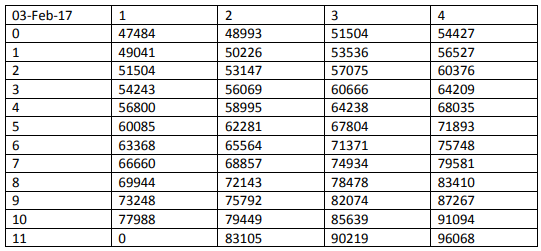
The latest Ontario secondary teacher salary grid from my board:
http://www.d18.osstf.ca/-/media/districts/d18-staging/ugdsb-occasionals/2017_2/central-agreement/1-electronic-collective-agreement-signed.ashx?la=en-CA
To get your foot in the door on this grid you need to have spent 4 years in an undergraduate degree and then another 2 years getting your bachelor of education. If you've ever had any trouble with the law you're already out of contention. You need to have a clean criminal record to be a teacher.

Your average cost for a university degree in Canada these days is about $6500 a year.
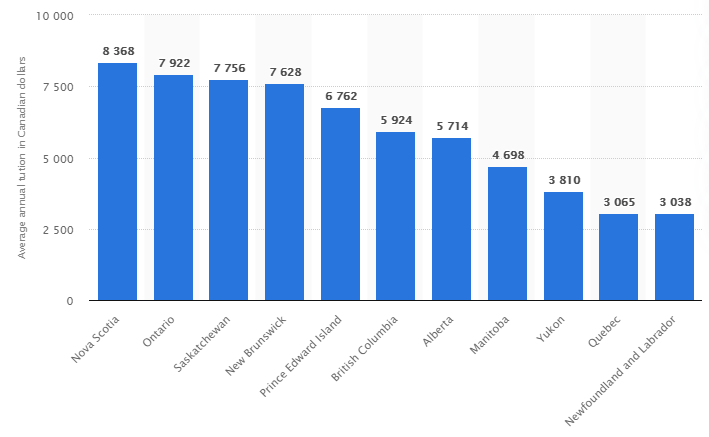
So you’re about $40,000 in debt before you even get a whiff of that ‘super’ teacher pay. Ontario is (of course) one of the most expensive places in Canada to get your post-secondary education:


https://www.statista.com/statistics/733512/tuition-fee-for-full-time-canadian-undergraduates-by-province/

So that $6500 Canadian average turns into almost $8000 a year and your Ontario teacher is typically sitting under about fifty grand in debt to get onto the grid.

Six contract sections don’t exist for new teachers these days. From what I've seen, you’d be hard pressed to find any Ontario teacher under 30 years old who has six contract sections (full time equivalence - six sections is a full year of work). It’s fair to expect most teachers to take 5-6 years to get to full contract these days, many give up on the process. There are a number of teachers who, for various reasons, never get to six contract sections and are part time throughout their career.

It takes the typical Canadian
student 10 years
 to get out
from under student loan debt,
so I put that in too - but didn't
count the ongoing debt required
to pay for your teacher training.
Remember that salary grid? To get up the sharp end of it you need to have an honours degree in what you’re teaching and then take additional qualification (AQ) courses after teaching experience to earn your ‘honours specialist’ and get into the top ‘level 4’ section of the salary grid.

A number of teachers never get there because they don’t have the university background or aren’t willing or able to spend thousands more dollars when they aren’t teaching to get additional qualifications. You can look up any teacher on OCT to see what their qualifications are and whether they’ve spent more of their own time and money to get additional qualifications:  
https://www.oct.ca/Home/FindATeacher

So, to get up to the top end of the teacher’s salary, currently $96,068 in my board, you need to have dropped at least fifty grand on university degrees plus another couple of thousand on honours specialist additional qualifications. Most teachers don’t stop there and get other AQs in other specializations as well (I have 2 other subjects I've AQ'd in as well as my honours specialist).

Because of all these variables, calculating what the actual average teacher salary is in Ontario is a tricky business, which is why no one has bothered, but I'll give it a go:

Your first year you're teaching as an occassional teacher at the bottom of the grid. Let's be wildly optimistic and say you're teaching six sections (full time) on a short term contract, but many aren't. From years 2-6 let's say you're getting one contract section a year and are still able to fill up the rest of your time table with short term contract jobs (again, many aren't). Let's assume you've got an honours degree in what you're teaching. In your third year you drop another couple of thousand bucks on getting your honours specialist and move up to level four on the salary grid and keep climbing year over year.
 

That eighty-three grand average is mighty optimistic.  It ignores the endemic under-employment in new teachers these days.  It also ignores maternity leaves and any other family or medical leaves that happen in people's lives as well as the fact that a sizable portion of teachers never get to that level four on the grid.  I'd estimate that the average Ontario teacher is making something more like seventy grand a year, with many making substantially less.

Wild eyed conservative leaning reporters will bleat on and on about how the average Ontarian should rise up against these overpaid teachers, but when you look into statistics around pay and education level, the typical degree carrying Ontarian makes about $85,000 a year. Your average teacher salary is significantly less than that:

https://www12.statcan.gc.ca/census-recensement/2016/as-sa/98-200-x/2016024/98-200-x2016024-eng.cfm
Playing that rhetorical game and equating people who have spent years of their lives and tens of thousand so their own dollars to earn a qualification with people who haven't is a nasty bit of neo-con politics.  The people playing that game are trying to sell you on equality when they're actually selling the opposite.  We live in a society that rewards dilligence, competence and effort, don't we?  We want our dentists to be able to fix teeth, our mechanics fix cars and our teachers teach our children the skills they need to survive in an increasingly competitive world facing some very big challenges.  Professionalism matters, doesn't it?  Maybe it doesn't in our new, blue, Ontario.

The benefits and pension piece are another angle that gets a lot of air play.  I pay almost eight hundred bucks a month into my pension.  If everyone paid that much into a pension plan, they too would have a good one waiting for them.  The only difference between teachers and everyone else is that we're forced to do it.  My take home pay as a teacher only equalled my take home pay as a millwright from 1991 in 2015, after eleven years in the classroom and tens of thousands of dollars spent on training and qualifications.  I'll have a better pension when I retire as a teacher than I would have as a millwright (though National Grocer's millwrights were well looked after until they broke the union and fired them all in the late '90s).

There is another side to these conservative attacks on teaching that often goes unnoticed.  I'm always left with the vague feeling that there is some good old fashioned sexism implicit in the politics levelled against educators.  Almost 70% of teachers in Canada are women, and there is no glass ceiling in it because we're paid equally for the work we do.  I imagine this grates on the nerves of the manly conservative men who are looking for reasons to hate on the job and the unions that enabled this equity, but I gotta tell ya, most of those dudes wouldn't last five minutes in a classroom.

If you're able to handle the crushing student debt, the hatred of people who couldn't or wouldn't do what it takes to do the same job and have the resiliency to survive in classrooms (stats show that typically about 30% of people who do the degree work drop out of teaching), then teaching is a rewarding profession, and one of the few remaining that let you lead a middle class life.

If you think you can handle all that and don't mind being attacked and belittled publiclly by the very government you work for while producing educational outcomes that are envied the world over, then go for it, but don't ever assume it's easy money.  

I just spent most of the day making no money and walking the picket lines
for better learning conditions for my students while we all struggle under
an almost psychotically vindictive provincial government who seem intent
on hurting the most vulnerable students in our system.

Some stats to consider:

There has been a lot of mis-information around Ontario teachers making the highest salary in Canada.  That’s not true either:  www.narcity.com/life/these-are-the-highest-and-lowest-paying-canadian-cities-for-teachers
Toronto is 4th out of 8 on this 2018 list.  Teachers get paid more in Nunavut, Alberta and Manitoba, and only make a couple of grand more than teachers in Nova Scotia and Saskatchewan.  I’m sure you can quickly figure out the difference in housing costs between Toronto and Halifax or Toronto and Saskatchewan…
Ontario pays less per student for education than most other provinces while producing results that raise us into the top 10 world wide - but this is Ontario so expect to be attacked for that.
         
Canada is close to the world average in terms of education spending as a percentage of government spending.  Again, Ontario is the largest single system in the country, so we wag that dog too, but expect to be attacked for it.
In terms of cost we're pretty much neck and neck with the USA, but Canada is top 10 in the world, the US isn't in the top 30.  If you want to be acknowledged and rewarded for a job well done don't teach in Ontario.

What Finland is really doing to improve its acclaimed schools:
https://www.washingtonpost.com/education/2019/08/30/what-finland-is-really-doing-improve-its-acclaimed-schools/
"We have learned a lot about why some education systems — such as Alberta, Ontario, Japan and Finland — perform better year after year than others in terms of quality and equity of student outcomes. We also understand now better why some other education systems — for example, England, Australia, the United States and Sweden — have not been able to improve their school systems regardless of politicians’ promises, large-scale reforms and truckloads of money spent on haphazard efforts to change schools during the past two decades.

Among these important lessons are:

  • Education systems and schools shouldn’t be managed like business corporations where tough competition, measurement-based accountability and performance-determined pay are common principles. Instead, successful education systems rely on collaboration, trust, and collegial responsibility in and between schools.
  • The teaching profession shouldn’t be perceived as a technical, temporary craft that anyone with a little guidance can do. Successful education systems rely on continuous professionalization of teaching and school leadership that requires advanced academic education, solid scientific and practical knowledge, and continuous on-the-job training.
  • The quality of education shouldn’t be judged by the level of literacy and numeracy test scores alone. Successful education systems are designed to emphasize whole-child development, equity of education outcomes, well being, and arts, music, drama and physical education as important elements of curriculum."


Still want to earn that easy teacher money?  Jump on in, the water's tepid.


Sunday, 10 November 2019

Life Long Learning is The New Degree

Last March Break I attended an industry focused future of the workplace conference in Toronto.  That event aggressively underlined the importance of micro-credentials in the modern workplace.  The idea of years long programs, especially in technology where changes are happening regularly, suddenly feels like a lumbering has-been rather than a vital foundation to your workplace success.  The same conference caused me to examine the purpose of public education (there is much more to it than simply preparing students for work), but the gulf between school and the world beyond our classrooms continues to expand.

Since then I've worked with ICTC on a badging system for Focus on IT students that would allow them to micro-credential their progress through the program.  Anyone involved with the scouting program will know all about analogue badges well before there were any digital ones; badging has a long history of marking progress and expertise.  The military has always used badging to denote rank and expertise.  More recently badging has become popular in gaming culture to show skills and achievements and this has crossed over into the real world in terms of gamification of learning in education.  Badging as a form of micro-credentialing is a cultural phenomenon familiar to everyone, so micro-credentialing is nothing new.


We spent the afternoon yesterday attending the 4th annual CAN-CWiC Conference in Mississauga.  For someone who has been struggling against genderized pathways in his rural high school, attending a conference with hundreds of women in digital technology was like stepping into a future we may never reach where I teach, and isn't the case in the vast majority of Ontario digital technology classrooms.

A couple of conversations prompted by the indomitable Alanna about how some of the women at the conference got into tech were very telling.  We're both on the pathways committee at our school and the divide between high school career planning and what's happening in the real world was shocking.  While we're busy running a system that divides students by some pretty arbitrary standards and then builds up a marks history that defines student pathways into traditional post secondary learning, the rest of the world is struggling to find life long learners, something we only pay lip service to in our schools (don't believe me? Find out how much PD time was spent on EQAO and how much was spent on life long learning).  What we view as a static, established learning schedules (one the vast majority of teachers work in very successfully), is pretty much meaningless in 2019 beyond the walls of our ivory towers.

We just did a staff survey on the last PD day and the data aligned with my anecdotal experience in secondary education.  When you fill a school with university graduates, many of whom have never worked in anything other than than the academic education system as either a successful student or teacher, you end up with a very blinkered view of the where the majority of our graduates go.  Academics tend to overly value their own experience and encourage students to do the same.  Students are directed to follow that long academic trajectory over developing lifelong learning skills valued elsewhere.  The students that do follow it are considered 'the best' ones.

What is happening in the workplace?  Digital disruption is rippling across all industry and is doing what it does, upturning traditional standards of practice and demanding agility before allegiance to tradition.  In everyone we talked to at CAN-CWiC, traditional credentials were nice to have, but by no means were they the standard requirement they used to be.  Industry people said that, sure, they have some post-secondary graduates in specific fields, but even in their case there was something that trumped any other credential:  the willingness to adapt and learn more, even if you have a Ph.D.

Danielle at IBM had a background typical of what many of our strongest female students experience.  She did well in high school, and especially English, but took no tech because she wasn't encouraged to take it - it isn't what academic girls do.  She went to the University of Guelph, ran the student newspaper, got a degree in English and then worked in radio as a writer for a couple of years until this shrinking traditional medium laid her off.  She then found a ten week full time boot camp training program on full stack developing and is now a web developer with IBM Canada.  She said that she greatly values her degree and time spent at Guelph and wouldn't change any of it, but she wishes she'd had access to technology training in high school and university so she wasn't getting into it with no experience in her twenties.  Our tradition education systems plays to traditional stereotypes.

I had what I consider a feminist/woke colleague tell me about how her daughter is now taking bio-technology.  I never saw her once in my computer engineering classes, but if it's an academic girl aiming for university you'd be hard pressed to find anyone in high school telling them to take any applied technology course, even when that's what they're aiming at in post secondary.  It's much more important that all your classes end in a U and are in an academic situation (rows of desks) that prepare you for university.  She's now coding and is glad I put her on to Codecademy.  That's like being handed water wings when there is an olympic swim team you could have trained with in the building.

Whether talking to post-secondary education, skills training organizations or companies, the idea that we need to be able to quickly adapt in a rapidly evolving workplace probably sounds like it's from another planet to an Ontario educator inured in our factory shift driven system.  We aren't skills focused, we're shift focused.  You might be miles ahead of what's happening in your 3U maths class, but that's your shift and you're going to sit through it, for months on end.  You might be miles behind in your 4U English class, but you'll get passed along with the rest of your cohort with a mark that is pretty much meaningless.  What does a 60% in 4U English do for you?  What does a 100% in 3U math mean?  It keeps you with your cohort and does very little in terms actual learning.  We're all held prisoner by our 19th Century education production line schedule that churns out grades.  Every time the bell goes off to signal a shift change I wonder what year I'm in.  But considering how difficult it is to timetable a grossly simplistic, generalized curriculum, I shudder to think what would happen if the system actually did need to schedule itself around individual student need.

Does this mean the end of traditional, years long learning programs?  No, specialists still need that depth of training, but for many these years long, financially crippling programs aren't leading to a job, so we have to change that expectation.  I had a student last year who struggled in traditional classrooms but had good hands.  He went to college because that's what everyone expected him to do but dropped out in the first semester due to a lack of maths fundamentals (he probably got passed through everything with a 60% - gotta keep 'em with their cohorts!).  My suggestion before and after all that was to start knocking out industry ICT qualifications and gaining experience in the workplace.  Demonstration of your willingness to learn and evidence showing that you have a good work ethic will take you where a college diploma won't.  ICT is still a pretty new industry, so it doesn't have the embedded, historically recognized apprenticeship pathways that other technology  pathways do, but it should.  Apprenticeship training with its mentored, skills focused, individualized learning is what the majority of applied training should be modelled around, but that system is foreign to all the Bachelor carrying people doing the teaching.


Nice eh? One of only a handful of people in Canada with
this qualification, but it doesn't count in our
academics-only education system.
After my degree I went to work in ICT and ended up getting my qualifications as a technician.  Those were micro-credential bootcamp style courses I was taking way back in 2000.  I AQ'd (AQs are micro-credentials) frequently when I started teaching and recently did two more ICT qualifications just to stay current and give my students access to material.  OCT is very stingy around what it shows in teachers qualifications - mine shows only academic qualifications, but none of the technical qualifications including my apprenticeship because they are "less than" in our academically focused education system.  Teacher training only matters if a university had a hand in it.  Ironically, my board paid me nothing for my technical upgrading, even though it directly serves my students (thankfully my union did help me cover it).

Micro-credentialing is the new normal in the world beyond our school walls.  A big degree or diploma also shows your willingness to learn, but if it's all you've got in 15 years on the job, then most companies will ignore you.  If you think it's your passport to a good paying job, you'll find yourself stuck in customs.  Micro-credentialing shows an employer that you're always willing to upgrade your learning and stay relevant in a changeable workplace.  What they're looking for is life long learners, not a one trick pony with a single degree or diploma from years ago, no matter what your grades.  Aiming for an outcome like that (earn my degree and I'm set) is aiming for failure in 2019, no matter what grades you're getting and how excited guidance counsellors are about your opportunities.  If we were focusing our students on developing the confidence needed to always be open to learning something new, and the hunger and resiliency needed to leap into learning opportunities, they'd be in the right mindset to survive in the 21st Century workplace.  Dragging unwilling kids through months of instruction isn't doing that.

What this has done for me is underline all the extracurricular training and competition work we do in our program.  All of those awards and the effort that goes into them highlights that go-the-extra-mile lifelong-learning skills that are so in demand in the world.  That these efforts aren't integrated into our curriculum is yet another failure of our marks based, traditional model.

Maybe in the future Ontario classrooms we'll begin to break down our schedules into micro-credentials.  Students aiming at current and emerging technologies could take quickly updated, personalized, micro-credentials that focus them on the specific skills they need without months long classes.  Traditional subjects like English could be broken down into their fundamental components.  While everyone would need to take the literacy strand, not everyone needs to take the historical literature piece.  What would our maths and sciences classes look like if students were working on particular, skills based micro credentials rather than grinding through months long, generalized curriculum aimed at a mythical average student?   Digital disruption has produced differentiated production lines focused on more high value, bespoke products. Education could follow the same evolution and begin using ICT to differentiate student scheduling and specify learning so that it wasn't locked into a pedantic and ineffective 19th Century model.

In 2011 I imagined a fictional account of what a system designed around student differentiation rather than enabling our traditional model would look like.  The divide between what's happening in our classrooms and the digitally disrupted workplace our students are graduating into has never been wider.  If the various stakeholders in the education system can rejig the system while maintaining the highest standards (this isn't about cheaper, it's about greater flexibility in service of our students), then it needs to happen yesterday - we're falling further and further out of relevance for too many of our students.

Saturday, 2 November 2019

Cyber Dissonance: The Struggle for Access, Privacy & Control in our Networked World

Back in the day when I was doing IT full time (pre-2004), we were doing a lot of local area networking builds for big companies.  There was web access, but never for enterprise software.  All that mission-critical data was locked down tight locally on servers in a back room.  When I returned from Japan in 2000, one of my jobs as IT Coordinator at a small company was to do full tape backups off our server at the end of each day and drop off the tapes in our offsite data storage centre.  Network technology has leapt ahead in the fifteen years since, and as bandwidth has improved the idea of locally stored data and our responsibility for it has become antiquated.

We were beginning to run into security headaches from networked threats in the early zeroes when our sales force would come in off the road to the main office and plug their laptops into the network.  That's how we got Code Redded, and Fissered, and it helped me convince our manager to install a wireless network with different permissions so ethernet plugged laptops wouldn't cronk our otherwise pristine and secure network where all our locally stored, critical business data lived.  We had internet access on our desktops, but with everyone sipping through the same straw, it was easy to manage and moderate that data flow.  Three years later I was helping the library at my first teaching job install the first wireless router in Peel Board so students could BYOD - that was in 2005.

Back around Y2K,  IT hygiene and maintenance were becoming more important as data started to get very slippery and ubiquitous.  In a networked world you're taking real risks by not keeping up with software updates. This is still an issue in 2019, at least in education.  We're currently running into all sorts of headaches at school because our Windows 7 image is no longer covered by Microsoft.  Last year one of our math teachers got infected by a virus sent from a parent that would be unable to survive in a modern operating system, but thanks to old software still infesting the internet, even old trojans get a second and third chance.  Our networked world demands a degree of keep-up if everyone is going to share the same online data - you can't be ten paces behind and expect to survive in an online environment like that, you're begging to be attacked.
The hard sell on cybersecurity perils only lasted a minute.
The possibility of nuanced control of users was much of
the rest of the presentation. When you work through an
IaaS lense, you're not on the public internet any more.

Last summer I took Cisco's Cyber Operations Instructor's Program, which was a crash course in just how fluidly connected the modern world is, and how dangerous that can be.  After logging live data on networks and seeing just how much traffic is happening out there from such a wide range of old and new technology, it's a wonder that it works as well as it does.  Many cybersecurity professionals feel the same way, our networks aren't nearly as always on as you think.

This past week I attended Cisco's Connect event which once again underlined how much IT has changed since I was building LANs in the 90s and early 00s.  The drive to cloud computing where we save everything into data centres connected to the internet comes from a desire for convenience, dependability and the huge leap in bandwidth on our networks - and you ain't seen nothing yet.  There was a time when you had to go out and buy some floppy disks and then organize and store them yourself when you wanted to save data.  Now that Google and the rest are doing it for you, you can find your stuff and it's always there because you've handed off that local responsibility to professionally managed multi-nationals who have made a lot of money from the process, but there is no doubt it's faster and more efficient than what we did before with our 'sneaker-nets'.


You probably spend most of your day with
a browser open.  Ever bothered to understand
how they work?  Google's Chrome Intro Comic
is a great place to start.
If you ever look behind the curtain, you'll be staggered by how many processes and how much memory web based applications like Google Chrome use.  Modern browsers are essentially another operating system working on top of your local operating system, but that repetition will soon fade as local operating systems atrophy and evolve into the cloud.  Those local operating systems allowed us a great deal of individual control over our computing, but we give that away when we hand off management of our data to someone else in the cloud.

At Cisco Connect there was a lot of talk around how to secure a mission critical, cloud based business network full of proprietary IP when the network isn't physically local, has no real border and really only exists virtually.

Cisco Umbrella and other full service cloud computing security suites do this by logging you into their always on, cloud based network through specific software.  Your entire internet experience happens through the lens of their software management portal.  When you lookup a website, you're directed to an Umbrella DNS server that checks to make sure you're not up to no good and doing what you're supposed to be doing.  Systems like this are called IaaS - infrastructure as a service, and they not only provide secure software, but also integrate with physical networking hardware so that the IaaS provider can control everything from what you see to how the hardware delivers it.


In 2019 the expectation is for your business data to be available everywhere all the time.  It's this push towards access and connectedness, built on the back of our much faster network, that has prompted the explosion of cloud based IT infrastructure.  In such an environment, you don't need big, clunky, physically local  computer operating systems like Windows and OSx.  Since everything happens inside one of the browser OSes, like Chrome, all you need is a thin client with fast network access.


The irony in Chromebooked classrooms is that the fast network and software designed to work on it aren't necessarily there, especially for heavy duty software like Office or Autocad, so education systems have migrated to thin clients and found that they can't do what they need them to do.  If you've ever spent too much time each day waiting for something to load in your classroom, you know what I'm talking about.  A cloud based, networked environment isn't necessarily cheaper because you should be building network bandwidth and redundancy out of the savings from moving to thin clients.  What happened in education was a cash grab moving to thin clients without the subsequent network and software upgrades.  This lack of understanding or foresight has produced a lot of dead ended classrooms where choked networks mean slow, minimalist digital skills development.  Ask any business department how useful it is teaching students spreadsheets on Google Sheets when every business expectation starts with macros in Excel.

Seeing how business is doing things before diving back into my classroom is never wasted time.  The stable, redundant wireless networks in any modern office put our bandwidth and connectivity at school to shame.  In those high speed networks employees can expect flawless connectivity and collaboration regardless of location with high gain software, even doing complex, media heavy tasks like 3d modelling and video editing in the cloud - something that is simply impossible from the data that drips into too many classrooms onto emaciated thin clients.  Data starvation for the less fortunate is the new normal - as William Gibson said, the future is already here, it's just not evenly distributed.

Seeing the state of the art in AI driven cybersecurity systems is staggering when returning to static, easily compromised education networks still struggling to get by with out of date software and philosophies.  The heaps of students on VPNs bypassing locks and the teachers swimming through malware emails will tell you the truth of this.  The technicians in education IT departments are more than capable of running with current business practices, but administration in educational IT has neither the budget nor the vision to make it happen.  I have nothing but sympathy for IT professionals working in education.  Business admin makes the argument that poor IT infrastructure hurts their bottom line, but relevant, quality digital learning for our students doesn't carry the same weight for educational IT budgets.

In addition to the state of the ICT art display put on at Cisco's conference, I'm also thinking about the University of Waterloo's Cybersecurity & Privacy Conference from last month.  The academic research in that conference talked at length about our expectations of privacy in 2019.  Even a nuanced understanding of privacy would probably find some discomfort with the IaaS systems that cloud computing is making commonplace.  The business perspective was very clear: you're here to work for us and should be doing that 24/7 now that we've got you hooked up to a data drip (smartphone) in your pocket.  Now that we can quantify every moment of your day, you're expected to be producing. All. The. Time.  I imagine education technology will be quick to pick up on this trend in the next few years.  Most current IaaS systems, increasingly built on machine learning in order to manage big data that no person could grasp, offer increasingly detailed analysis (and control) of all user interaction.  Expect future report cards to show detailed time wasted by your child data on report cards, especially if it can reduce the number of humans on the payroll.

These blanket IaaS systems are a handy way of managing the chaos that is an edgeless network, and from an IT Technician and Cybersec Operator point of view I totally get the value of them, but if the system gives you that much control over your users, what happens when it is put in the hands of someone that doesn't have their best interests at heart?


WIRED had an article on how technology is both enabling and disabling Hong Kong protestors in the latest edition.  While protestors are using networked technology to organize themselves, an authoritarian government is able to co-opt the network and use it against its own citizens.  I wonder if they're using business IaaS software that they purchased.  I wonder if many of the monitoring systems my students and I are becoming familiar with in our cybersecurity research is being purchased by people trying to hurt other people.


As usual, after an interesting week of exploring digital technology I'm split on where things are going.  We've seen enough nonsense in cybersecurity by criminals and government supported bad actors on the international stage that there is real concern around whether the internet can survive as an open information sharing medium.  Between that and business pushing for greater data access on increasingly AI controlled internets of their own that could (and probably are) used by authoritarian governments to subjugate people, I'm left wondering how much longer it'll be before we're all online through the lens of big brother.  If you're thinking this sounds a bit panicky, listen to the guy who invented the world wide web.

The internet might feel like the wild west, but I'd rather that than blanket, authoritarian control.  Inevitably, the moneyed interests that maintain that control will carve up the internet, reserving clean, usable data for those that they think deserve it and withholding it, or leaving polluted information from everyone else.  I get frustrated at the cybercriminals and state run bad actors that poison the internet, but I get even more frustrated at the apathy of the billions who use it every day.  If we were all more engaged internet citizens, the bad actors would be diminished and we wouldn't keep looking for easy answers from self-serving multinationals looking to cash in on our laziness.  I've said it before and I'll say it again, if I could help make a SkyNet that would protect the highest ideals of the internet as its only function, I'd press START immediately.

The internet could be one of the most powerful tools we've ever invented for resolving historical equity issues and allowing us to thrive as a species, but between criminality, user apathy and a relentless focus on cloud computing and the control creep it demands, we're in real danger of turning this invention for collaboration and equity into a weapon for short term gain and authoritarian rule.


“It’s astonishing to think the internet is already half a century old. But its birthday is not altogether a happy one. The internet — and the World Wide Web it enabled — have changed our lives for the better and have the power to transform millions more in the future. But increasingly we’re seeing that power for good being subverted, whether by scammers, people spreading hatred or vested interests threatening democracy."
- Tim Berners Lee

"The internet could be our greatest collaborative tool for overcoming historical inequity and building a fair future, or it could be the most despotic tool for tyranny in human history.  What we do now will decide which way this sword will fall.  Freely available information for all will maximize our population's potential and lead to a brighter future.  The internet should always be in service of that, and we should all be fighting for that outcome in order to fill in the digital divide and give everyone access to accurate information.  Fecundity for everyone should be an embedded function of the internet - not voracious capitalism for short term gain, not cyber criminality and not nation state weaponization.  Only an engaged internet citizenship will make that happen."
- my comment upon signing a contract for the web.

Thursday, 10 October 2019

Cybersecurity and the AI Arms Race

We had a very productive field trip to the University of Waterloo for their Cybersecurity and Privacy Conference last week. From a teacher point of view, I had to do a mad dance trying to work out how to be absent from the classroom since our school needs days got cut and suddenly any enrichment I'm looking for seemingly isn't possible.  I managed to find some board support from our Specialist High Skills Major program and pathways and was able not only arrange getting thirty students and two teachers out to this event, but also to do it without touching the school's diminished cache of teacher out of the classroom days.

We arrived at the conference after the opening keynote had started.  The only tables were the ones up front (adults are the same as students when it comes to where you sit in a room).  Sarah Tatsis, the VP, Advanced Technology Development Labs at BlackBerry, kindly stopped things and got the students seated.  The students were nervous about being there, but the academic and industry professionals were nothing but approachable and interested in their presence.


What followed was an insightful keynote into Blackberry's work in developing secure systems in an industry famous for fail fast and early.  Companies that take a more measured approach to digital technology can sometimes seem out of step with the rock-star Silicon Valley crowd, but after a day of listening to software engineers from various companies lamenting 'some companies' (no one said the G-word), who tend to throw unfinished software out and then iterate (and consider that a virtue), the hard work of securing a sustainable digital ecosystem seems further and further out of reach.  The frustration in the air was palpable and many expressed a wish for more stringent engineering in online applications.

From Sarah Tatsis I learned about Cylance, Blackberry's AI driven cybersecurity system.  This reminded me of an article I read in WIRED recently about Mike Beck, a (very) experienced cybersec analyst who has been working on a system called Darktrace, that uses artificial intelligence to mimic his skills and experience as a cybersecurity analyst in tracking down incursions.

 I spent a good chunk of this past summer becoming the first high school teacher in Canada qualified to teach Cisco's CCNA Cyber Operations course which, as you can gather from the name, is focused on the operational nature of cybersecurity.  After spending that time learning about the cyber-threatscape, I was more and more conscious of how attackers have automated the attack process.  Did you know criminals with little or no skill or experience can buy an exploit kit that gives them a software dashboard?  From that easy to use dashboard, complex attacks on networks are a button push away.

So, bad actors can perform automated attacks on networks with little or no visibility, or experience.  On the other side of the fence you've got people in a SOC (so much of this is the acronyms - that's a Security Operations Centre), picking through anomalies in the system and then analyzing them as potential threats. That threat analysis is based on intuition, itself developed from years of experience.  Automating the response to automated attacks only makes sense.

In the WIRED article they make a lot of hay about how AI driven systems like Darktrace or Cylance could reduce the massive shortage of cybersecurity professionals (because education seems singularly disinterested in helping), but I don't think that will happen.  In an inflationary technology race like this, when everyone ups their technology it amplifies the complexity and importance of jobs, but doesn't make them go away.  I think a better way to look at this might be with an analogy to one of my other favourite things.

Automating our tech doesn't reduce our effort.  If
anything it amplifies it.  The genius of Marc Marquez
can only be really understood in slow motion as he
drifts a 280hp bike at over 100mph.  That's what an

AI arms race in cybersec will look like too - you'll only
be able to watch it played back in slow motion to
understand what is happening.
What's been happening to date is that bad actors have automated much of their work, sort of like how a bicycle automated the pedaling by turning into a motorcycle.  If you're trying to race a bicycle (human based cyber-defence) against a motorcycle (bad actors using automated systems) you're going to quickly find yourself dropping behind - much like cybersecurity has.  As the defensive side of things automates, it will amplify the importance of an experienced cybersec operator, not make it irrelevant.  The engines will take on the engines, but the humans at the controls become even more important and have to be even more skilled since the crashes are worse.  Ironically, charging cyber defence with artificial intelligence will mean fewer clueless script kiddies running automated attack software and more crafty cybercriminals who can ride around the AI.  I've also been spending a bit of time working with AI in my classroom and can appreciate the value of machine learning, but it's a data driven thing, and when it's working with something it has never seen before you quickly come to see its limitations.  AI is going to struggle, especially with things like zero day threats.  There's another vocab piece for you - zero day threats are attacks that have never been seen before, so there is no established defence!

Once a vulnerability is found in software it's often held back and sold to the highest bidder.  If you discovered a backdoor into banking software, imagine what that might sell for.  Did you know that there is a huge market for zero day threats online?  Between zero day attacks, nation-state cyberwar on a level never seen before and increasingly complex cybercriminals (some of whom were trained in those nation state cyber war operations), the digital space we spend so much of our time in and more and more of our critical infrastructure relies on is only going to get more fraught.  If you feel like our networked world and all this cybersecurity stuff is coming out of nowhere, you ain't seen nothing yet.  AI may very well help shore up the weakest parts of our cyber-defence, but the need for people going into this underserved field isn't going away any time soon.

***


Where did the Cybersecurity & Privacy Conference turn next?  To privacy!  Which is (like most things) more complicated than you think.  The experts on stage ranged from legal experts to sociologists and tackled the concept from many sides, with an eye on trying to expose how our digitally networked world is eroding expectations of private information.

I found the discussion fascinating, as did my business colleague, but many of the students were finding this lecture style information delivery to be exhausting.  When I asked who wanted to stick around in the afternoon for the industry panel on 'can we fix the internet', only a handful had the will and interest.  We had an interesting discussion after about whether or not university is a good fit for most students.  Based on our time at the conference, I'd say it isn't - or they just haven't grown into the brain they need to manage it yet.  What's worrying is that in our increasingly student centred, digital classrooms we're not graduating students who can handle this kind of information delivery.  That kind of metacognitive awareness is gold if you can find it in high school, and field trips like this one are a great way to highlight it.

The conference (for us anyway) wrapped up with an industry panel asking the question, "Can the Internet be saved?"  In the course of the discussion big ideas, like public, secure internet for all (ie: treating our critical ICT infrastructure with the same level of intent as we do our water, electrical and gas systems) were bandied about.  One of my students pointed out that people don't pirate software or media for fun, they do it because they can't afford it, which leads to potential hazards.  There was no immediate answer for this, but many of the people up there were frustrated at the digital divide.  As William Gibson so eloquently said, "the future is already here - it's just not evenly distributed."  That lack of equity in entering our shared digital space and the system insecurity this desperation causes was a recurring theme.  One speaker pointed out that a company only fixated on number of users has a dangerously single minded obsession that is undermining the digital infrastructure that increasingly manages our critical systems.  If society is going to embrace digital, then that future better reach everyone, or there are always going to be people upsetting the boat if they aren't afforded a seat on it.  That's also assuming the people building the boats are more interested in including everyone rather than chasing next quarter earnings.

This conversation wandered in many directions, yet it always came back to something that should be self-evident to everyone.  If we had better users, most of our problems would disappear.  I've been trying to drive this 'education is the answer' approach for a while now, but interest in picking up this responsibility seems to slip off everyone from students and teachers to administration at all levels.  We're all happy to use digital tools to save money and increase efficiencies, but want to take no individual responsibility for them.


I've been banging this drum to half empty rooms for over a year now.  You say the c-word (cybersecurity) and people run away, and then get on their networked devices and keep doing the same silly things they've always done.  Our ubiquitous use of digital technology is like everyone getting a new car that's half finished and full of safety hazards and then driving it on roads where no one can be bothered to learn the rules.  We could do so much better.  How digital skills isn't a mandatory course in Ontario high schools is a mystery, especially when every class uses the technology.

I was surprised to bump into Diana Barbosa, ICTC's Director of Education and Standards at the conference.  She was thrilled to see a troop of CyberTitans walk in and interrupt the opening keynote.  The students themselves, including a number of Terabytches from last year's national finalist team who met Diana in Ottawa, were excited to have a chat and catch up.  This kind of networking is yet another advantage of getting out of the classroom on field trips like this.  If our pathways lead at the board hadn't helped us out, all of that would have been lost.

We left the conference early to get everyone back in time for the end of the school day.  When I told them we'd been invited back on the bus ride home they all gave out a cheer.  Being told you belong in a foreign environment like an industry and academic conference full of expert adults is going to change even more student trajectories.  If our goal is to open up new possibilities to students, this opportunity hit the mark.

From a professional point of view, I'm frustrated with the lack of cohesion and will in government and industry to repair the fractured digital infrastructure they've made.  Lots of people have made a lot of money driving our society onto the internet.  The least they could do is ensure that the technology we're using is as safe as it can be, but there seems to be no short term gain in it.


The US hacked a drone out of the sky this summer.
Some governments have militarized their cyber-capabilities and are building weapons grade hacks that will trickle down into civilian and criminal organizations.  In this inflationary threat-scape, cybersecurity is gearing up with AI and operational improvements to better face these threats, but it's still a very asymmetrical situation.  The bad actors have a lot more going for them than the too few who stand trying to protect our critical digital infrastructure.  

Western governments have stood by and let this happen with little oversight, and the result has been a wild west of fake news, election tampering, destabilizing hacks and hackneyed software.  There are organizations in this that are playing a long game.  If this digital revolution is to become a permanent part of our social structure, a part that runs our critical infrastructure, then we all need to start taking networked infrastructure as something more than an entertaining diversion.

One of the most poignant moments for me was when one of the speakers asked the audience full of cybersecurity experts who they should call, police wise, if their company has been hacked.  There was silence.  In a room full of experts no one could answer because there is no answer.  That tells you something about just how asymetrical the threat-scape is these days.  Criminals and foreign powers can hack at will and know there are no repercussions, because there are none.

Feel safer now?  Reading this?  Online?  I didn't even tell you about how many exploit kits drop hidden iframe links into web pages without their owners even knowing and then infect any machine that looks at the page anonymously.  Or the explosion of tracking cookies designed to sell your browsing habits to any interested party.


***

AI isn't just helping the defenders:  https://www.globalsign.com/en/blog/new-tool-for-hackers-ai-cybersecurity/


I'm beating this drum again at ECOO's #BIT19 #edtech Conference in Niagara Falls on November 6, 7 and 8...